.png)
 4 hours ago
2
4 hours ago
2
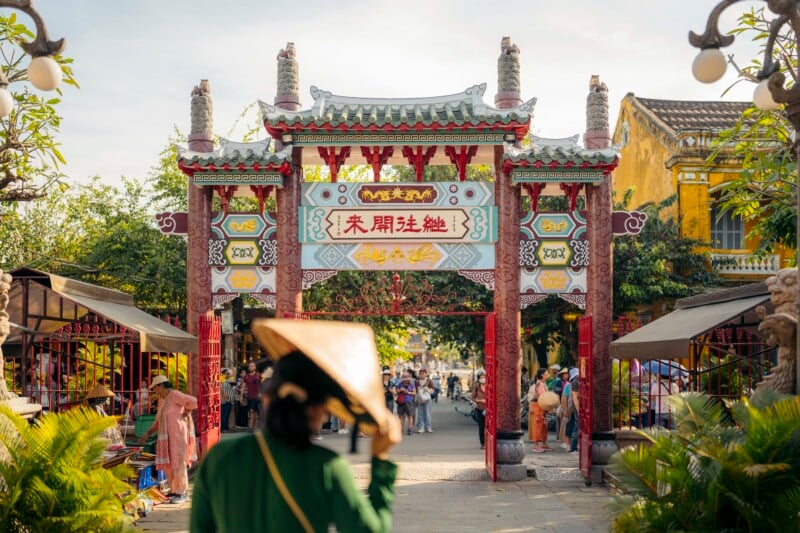
A few months ago, I traveled to Vietnam with my family, and I only had 11 days to experience as much of the country as I could. From the chaotic energy of Hanoi’s streets, to the preserved stillness of Hoi An, the calm waters of Ha Long Bay, and the temples of Da Nang, each place felt visually and emotionally distinct—almost like traveling through different worlds in a single trip.
Full Disclosure: This story was sponsored by Sigma.
For a trip like this, it would’ve been extremely easy to over pack. I’d never been to Vietnam and I didn’t really know what to expect, but for the first time in a while, I made a deliberate choice to simplify my kit. I knew I’d be traveling with my family and that we’d be moving from place to place pretty quickly, so I decided to travel with just two prime lenses: the Sigma 35mm f/1.2 Art and 50mm f/1.2 Art lenses. I was definitely a little bit nervous that I’d want something wider than 35mm for landscape scenes, but I wanted to challenge myself on this trip to go without my 16-35mm lens and see what I could create.
Limiting myself in that way changed how I photographed the trip. Rather than reacting by swapping lenses or simply zooming as I usually do, I had to move, anticipate, and commit to compositions more intentionally. It forced me to slow down in quiet places and be decisive in chaotic ones. Over the course of those 11 days, the lenses started to really influence how I was seeing Vietnam and how I could work with the given focal lengths rather than against them.
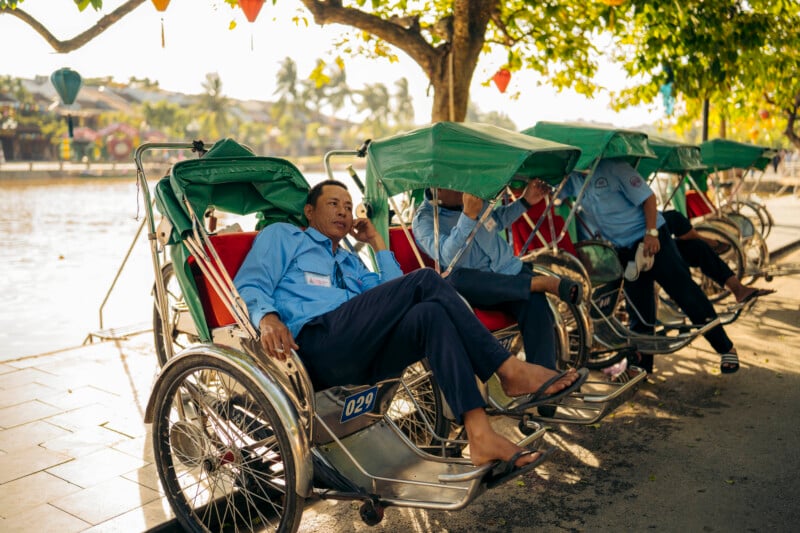
Why I Chose the 35mm and 50mm
When you limit yourself to just two lenses, the focal length choice you make at any given moment absolutely matters. For Vietnam, I wanted a setup that could handle energy and intimacy equally well.
The 35mm became my default lens for storytelling. It’s wide enough to show subjects in context without feeling detached, which made it ideal for street photography in places like Hoi An, where the streets are narrow and the scenes are dense. With the 35mm, I could stand close, react quickly, and still capture the environment that gives each moment its meaning. On top of that, it was still wide enough that I’d be able to capture wider scenes and landscapes in Da Nang and Ha Long Bay.
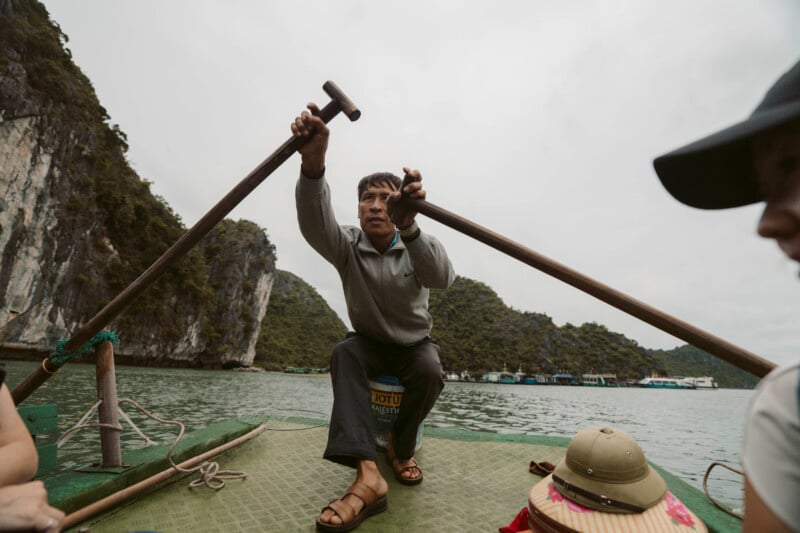
The 50mm, on the other hand, was more about intimacy and focus. It let me step in slightly, isolate details, and notice stillness in the chaos, especially in places like Hanoi. Whether I was photographing a person, an architectural detail, or a moment of stillness, the 50mm helped strip away distractions and guide the viewer’s eye exactly where I wanted it to go.

Together, the two lenses felt like a nice balance, and I was surprised I actually didn’t miss having a wider lens on the trip. The 35mm handled movement and environmental context. The 50mm handled emotion and compression. Both lenses share a similar rendering, a wide f/1.2 aperture, and the similar weight and form factor made switching between them feel like a seamless transition. They were both great walk-around lenses that I really enjoyed using throughout my trip.
Capturing Context with the 35mm
Most of my 35mm photographs in Vietnam were taken in Hoi An, where the narrow streets and layered architecture made a wider focal length essential. The city’s old town is visually dense, and the 35mm gave me enough space to capture everything within a single frame. It allowed me to stay close to the action while still preserving context, which is critical in a place where stepping back often isn’t an option.


At night, the 35mm became even more valuable. Hoi An completely transforms after dark, with hundreds of lanterns lining the street and flooding the central river. Shooting wide open at f/1.2 made it possible to work in low light without losing the atmosphere that defines the city at night. I shot everything handheld and was really happy with how sharp the photos turned out.


I also relied heavily on the 35mm in Da Nang, but for very different reasons. Where Hoi An feels compressed, Da Nang opens up. Temples, large Buddha statues, and coastal landmarks exist at a much larger scale, and the 35mm let me capture that sense of scale without reaching for an ultra-wide lens. It was wide enough to show scale and environment while still maintaining a natural perspective.


Across both cities, the 35mm became my lens for context and scale. It allowed me to photograph movement, space, and atmosphere in a way that felt consistent, even as the environments around me changed completely.
Capturing Movement with the 35mm
I also used the 35mm extensively in Hanoi when I wanted to lean into motion rather than freeze it. Hanoi’s streets never really stop moving, and slowing the shutter allowed me to translate that constant energy into the photo, with motorcycles and bicycles streaking past, pedestrians blurring through intersections, and layers of movement filling the frame. I played around a lot with twisting the camera in different directions to convey the energy and chaos of Hanoi.


Capturing Portraits and Intimate Moments with the 50mm
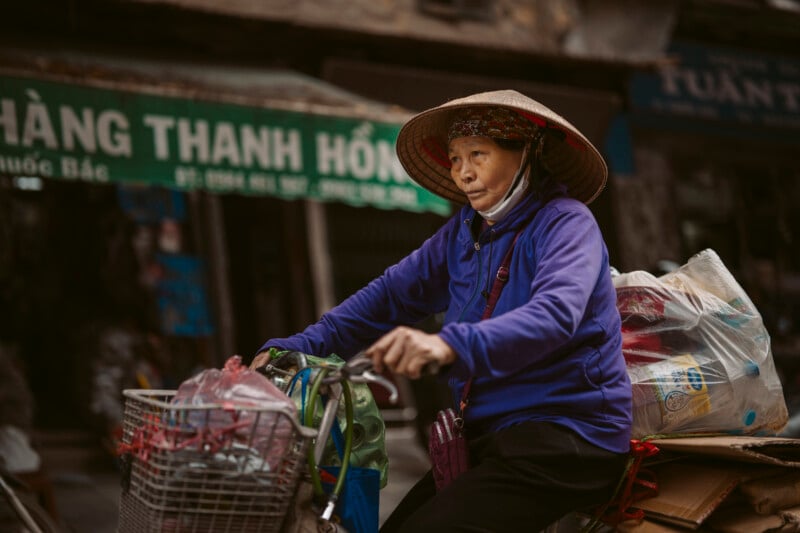
While the 35mm helped me capture context and movement, the 50mm was the lens I turned to when I wanted to focus on individuals. For street portraits across Vietnam, it struck the right balance between proximity and distance by being close enough to feel personal, but far enough to remain unobtrusive.

In places like Hanoi, the 50mm worked especially well for candid portraits on the street and at the local market. Shooting wide open at f/1.2 created gentle separation and super creamy backgrounds that drew attention to expressions while still preserving the atmosphere of the scene.


What I appreciated most was how the 50mm influenced the way I interacted with people. It allowed for a more observational approach and made me slow down and wait for the right moment to come by. The result was a series of portraits that feel quiet and honest, like little snippets of daily life in Vietnam.


Decisive and Intentional
Traveling through Vietnam with just two prime lenses forced me to be more present, more decisive, and more intentional with every frame. Without the option to zoom or over pack, I had to rely on movement, timing, and instinct, whether I was navigating the narrow streets of Hoi An, capturing motion in Hanoi, or photographing the open, monumental spaces of Da Nang.
The combination of a 35mm and 50mm proved to be more than enough to tell a complete story. One lens helped me capture context and movement, the other helped me slow down and focus on people. Together, they created a consistent visual language across very different cities/environments, and switching between the two lenses felt natural and seamless.
I was initially pretty nervous to only have two lenses with me, but in the end, bringing fewer tools pushed me to be creative in new ways and it all turned out better than I thought it would.
Full Disclosure: This story was sponsored by Sigma.





 English (US) ·