.png)
 6 days ago
18
6 days ago
18
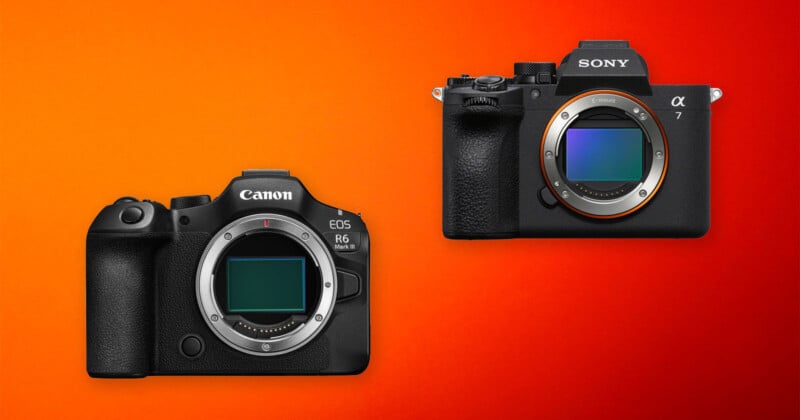
Japanese market analyst BCN+R’s digital camera sales rankings for December 2025 are available now, and the Sony a7 V, which released last month, finished higher on the sales charts than the Canon R6 III did the month prior.
As noted by Sony Alpha Rumors, the a7 V landed in seventh place and was the best-selling full-frame camera on the list, joined in the top 20 by only the Nikon Z5 II in 18th, which has been a mainstay on the list since its release last spring.
While seventh place may not sound all that high, it is worth considering a few factors concerning BCN rankings data. BCN+R’s rankings compile aggregated data from a vast pool of Japanese consumer electronics retailers, not just photography retailers. This skews the sales data toward much more affordable, entry-level models. Of course, more affordable cameras sell in higher numbers, so for a camera like the a7 V, which is far from cheap, to reach the seventh spot is very impressive.
BCN+R also splits different camera colorways and kits into various positions on its sales charts. Ahead of the a7 V in seventh are two Sony ZV-E10 II kits and two Canon EOS R50 bundles. If those had been combined, the a7 V would have cracked the top five, which sounds more impressive than seventh.
It is difficult to predict how long the a7 V will stay on the BCN rankings. PetaPixel‘s Camera of the Year, the Canon EOS R6 Mark III, which launched in November, debuted at 11th on BCN’s November sales charts but fell off the top 20 entirely in December. That says little about the Canon EOS R6 III’s capabilities or appeal to photographers and hybrid creators, but much more about how challenging it is for a camera at that price to have mass appeal across the entire consumer electronics segment.
It is also worth noting that BCN+R does not provide specific sales numbers; it only offers relative camera sales performance. It is possible the R6 III sold more total units in November than the a7 V did in December, despite the a7 V finishing higher on the charts.
Having launched about a month apart with nearly identical prices, the Sony a7 V and Canon EOS R6 III will always be tied to each other in a way. They both target the same audience, have 33-megapixel image sensors, feature AI-powered autofocus, and offer fast shooting speeds. They are also both fantastic. There is very little to separate the two cameras when it comes to features and performance, so how well they sell is fascinating. It says something about how photographers value the minor differences between the two cameras, not only relative to each other, but relative to their predecessors. The R6 III may be somewhat undermined by just how good the R6 II was (and still is), while the a7 IV’s shortcomings may aid the a7 V’s sales efforts.
Unfortunately, there is no data like BCN+R’s for the United States market. PetaPixel previously reported that preorders for the Sony a7 V were “strong” at major retailers ahead of its launch, although retailers, which spoke on the condition of anonymity, did not offer hard numbers; they seldom do. PetaPixel was given the indication that those pre-orders were higher than was experienced at the launch of the R6 III, however.
Camera manufacturers are happy enough to claim being #1, but even that comes with acrimony and disagreement.
As has been the case for a few years in the mirrorless camera space, it seems Canon and Sony will continue to battle hard for the top spot, although they may ultimately both claim it no matter what. The Sony a7 V undoubtedly made a very strong debut in Japan last month, as did the Canon EOS R6 III in November. Photographers in the enthusiast or mid-range segment are simply spoiled for choice these days.
Image credits: Header photo created using an asset licensed via Depositphotos.






 English (US) ·