.png)
 1 week ago
17
1 week ago
17
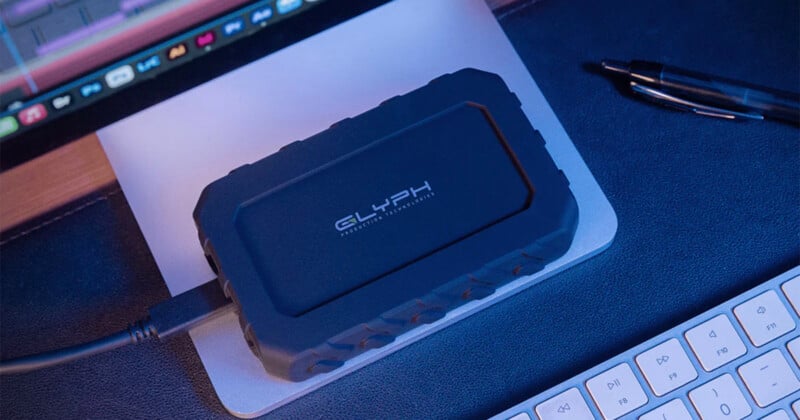
Glyph has announced two new portable SSDs: the Atom EX40 and the Atom EX20. Both are described as rugged, high-speed NVMe portable SSDs that are built for high-intensity, demanding creative workflows. The company says most other SSDs aren’t designed for this kind of work, “but their spec sheets won’t admit it.”
It is rare to see a line of memory products designed specifically for high-end creative professionals. It’s not unheard of — ProGrade Digital did something similar with its PG10 series SSDs — but most memory manufacturers bundle all levels of photo and video professionals into one bucket or group them in with any type of customer who could use digital storage.
Glyph says that the term “high-intensity” isn’t just a marketing term but that, for the company, it actually means something.
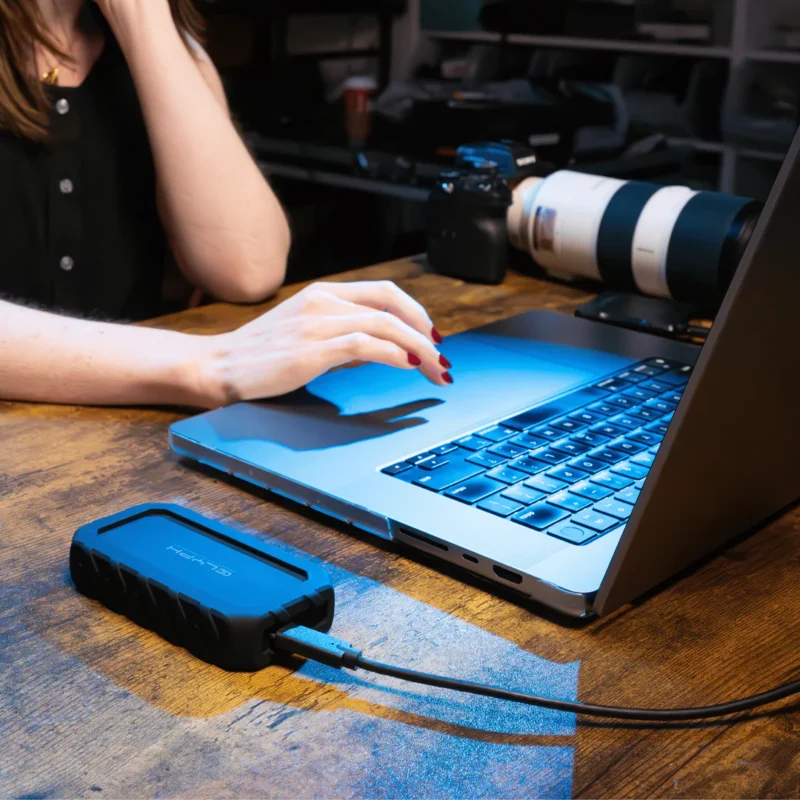
“These drives are built for real production environments. Long takes, large files, continuous writes, and deadlines that don’t pause for thermal throttling. When you’re dumping cards on set, backing up a full day of footage, or working directly off an external drive, performance isn’t about a momentary burst. It’s about whether your SSD can maintain speed hour after hour, terabyte after terabyte. That’s what we mean by high-intensity SSDs: sustained performance under sustained pressure,” the company says.
To that end, the Atom EX40 and the Atom EX20 offer two tiers of performance. The EX20 uses the pretty uncommon USB 3.2 Gen 2×2 interface to promise up to 2,100 MB/s read and write speeds. However, because this interface is special, any device that doesn’t have it (which means virtually every Apple computer available and all of the computers running Apple Silicon) will only peak at half that speed. That still might be plenty for photographers, though, as they often don’t need the super high speeds that video professionals demand.
For that latter group, the Atom EX40 is probably the better bet. That leverages a USB-4 connection for up to 4,000 MB/s read and write speeds, which is enough for even 8K or 12K production, RAW photo and video, virtual reality, and multicam workflows. USB-4 is also backward compatible with previous USB protocols and works with Thunderbolt 3, 4, and 5 ports, too.
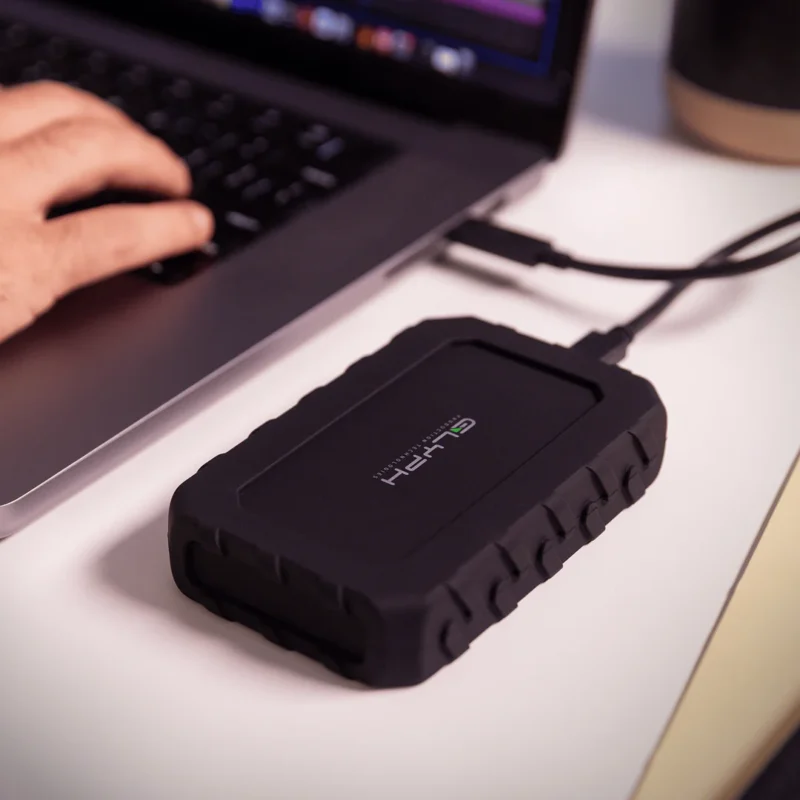
Both the EX20 and EX40 have what Glyph calls an “increased thermal ceiling,” which it describes as a solid aluminum core and outer shell that allows it to disperse “significantly more heat from the internal components,” which allows it to sustain higher transfer speeds and improves its overall reliability.
“Nearly every drive on the market is advertised using peak speeds measured in short, idealized bursts. In real workflows, those speeds collapse once caches fill and heat builds. The result: transfer times that stretch unpredictably and slowdowns you can feel in the middle of a job,” Glyph says. “We design our drives around sustained throughput, not headline numbers.”
Glyph supports its SSDs with a “3-2-1 warranty,” which translates to three years of hardware warranty, two years of level-1 data protection, and one year of replacement should a product fail entirely.
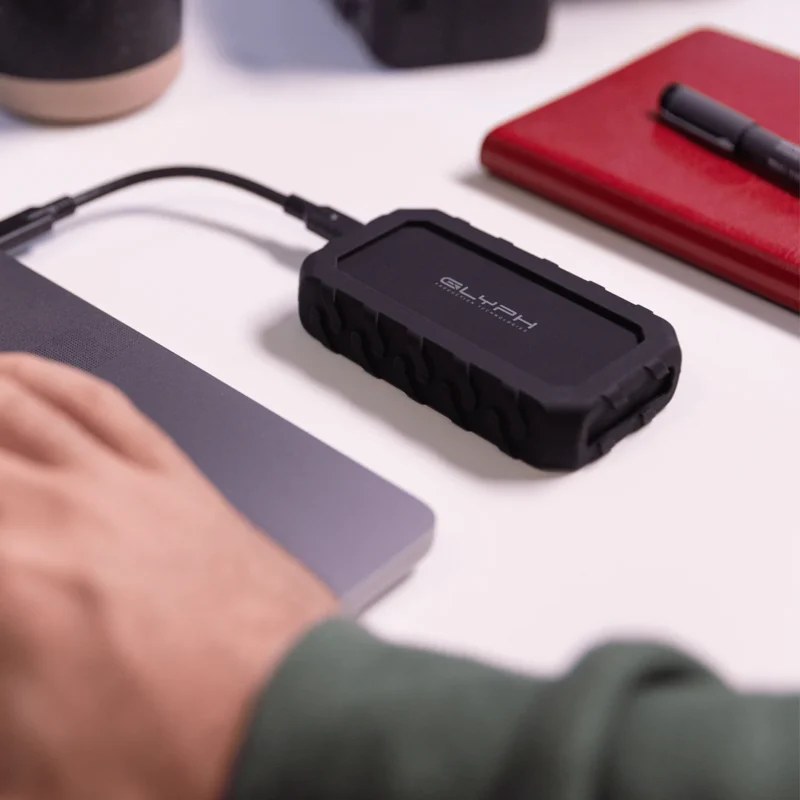
The Atom EX SSDs are available in 1, 2, 4, and 8 TB configurations. The Atom EX20 starts at $250 while the EX40 starts at $350.






 English (US) ·