.png)
 4 days ago
17
4 days ago
17
For years, the idea of a retro-styled Canon mirrorless camera lived in the realm of wishful thinking. Forum threads speculated. Rumor sites teased. And Canon stayed silent, content to let Fujifilm and Nikon own a market segment that seemed to grow more lucrative by the quarter. But something has shifted.
The rumors have become more specific, the executive comments more telling, and the calendar more significant. April 2026 marks the 50th anniversary of the Canon AE-1, and if there was ever a moment for Canon to finally enter the retro camera market, this is it.
The question is no longer whether Canon could build such a camera. The question is whether they have been waiting for exactly this moment all along. (For the record, the "RE-1" name circulating on rumor sites is a placeholder, not an official Canon designation. But it has stuck, so we will use it here.)
Being Late Is the Strategy
If you have followed Canon's product decisions over the past decade, you have seen this pattern before. Canon rarely leads. They watch, they wait, and then they arrive with something mature and refined (usually).
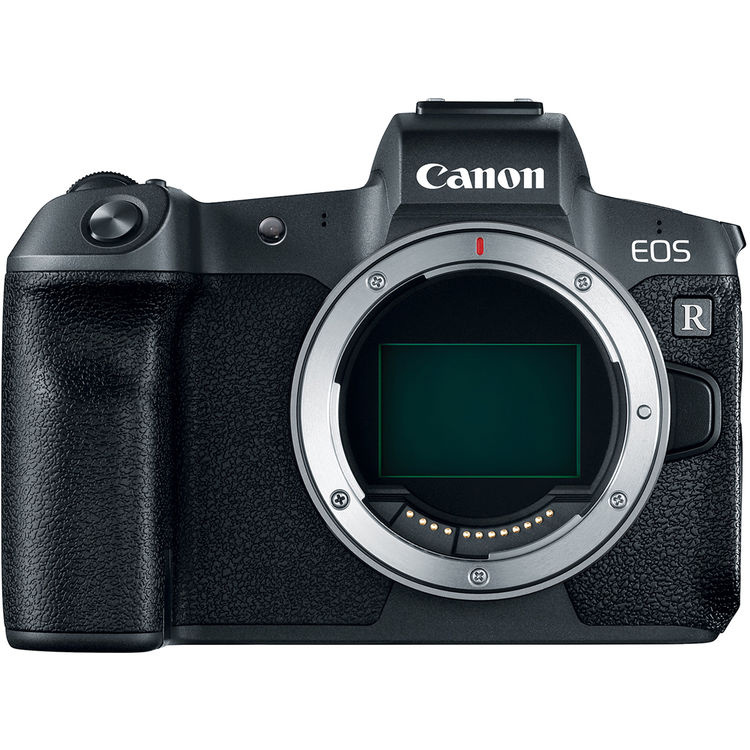
Sony released the original a7 in 2013, becoming the first manufacturer to put a full frame sensor inside a mirrorless body. Canon did not respond with a full frame mirrorless camera until 2018, and when the EOS R finally arrived, the reception was lukewarm at best. Critics pointed to the single card slot, the cropped 4K video, and the limited native lens selection. Some wondered if Canon had simply missed the mirrorless transition entirely.
But Canon was not panicking. They were building.
The RF lens system that launched alongside that first EOS R body was not an afterthought. It was the groundwork for Canon's eventual dominance. By the time the R5 and R6 arrived in 2020, Canon had assembled a lens lineup that rivaled what Sony had spent seven years constructing. The narrative shifted overnight. Suddenly Canon was not the company that had fumbled mirrorless. They were the company that had waited until they could do it right.
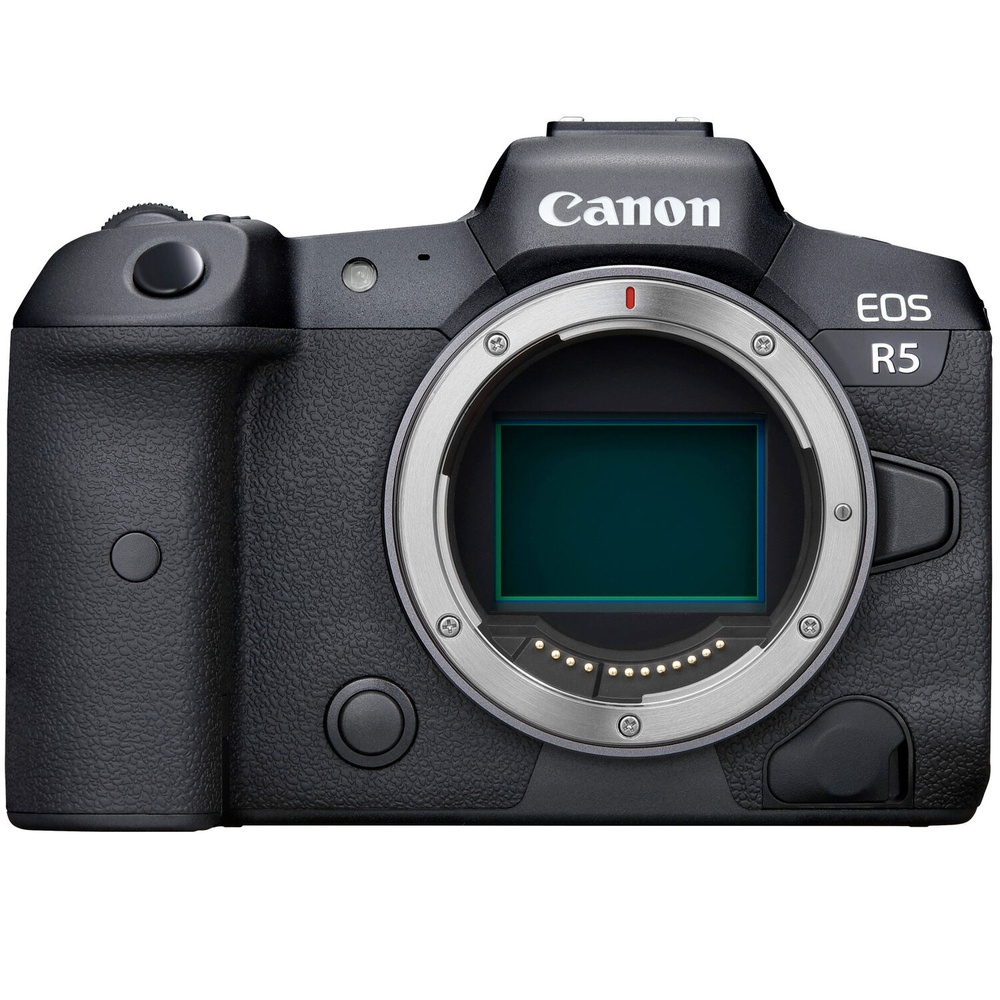 The numbers tell the story. Canon claims the number one position in the global interchangeable lens camera market for the 22nd consecutive year, a streak stretching back to 2003. Nikkei-based estimates put their share of Japanese makers' total digital camera sales at over 43% in 2024. The company that arrived five years late to full frame mirrorless now dominates the category.
This is not accidental. This is the playbook.
Let others validate the market, learn from their mistakes, and enter when the timing is right with a product that feels complete rather than experimental. Apple built an empire on this exact approach. Canon has been quietly running the same strategy in cameras for years. The retro camera market has now been validated. The timing has arrived. If Canon follows its usual playbook, a move looks increasingly likely.
An Anniversary Too Perfect to Ignore
The Canon AE-1 debuted in April 1976 and went on to become one of the most influential cameras in the history of photography. It was the first SLR to incorporate a microprocessor for automated exposure control, a technical achievement that allowed Canon to keep the body compact and the price accessible. Over 5.7 million units sold worldwide.
The AE-1 did not just succeed commercially. It changed who could participate in serious photography by making capable equipment available to a much broader audience.
For Canon, this is not merely nostalgia. This is foundational corporate heritage. The AE-1 represents everything the company wants to believe about itself: technical innovation in service of accessibility, premium quality at reasonable prices, and products that define their era rather than simply participating in it. A 50th anniversary celebration practically writes itself, and Canon has never been shy about leveraging its history when the marketing opportunity aligns with the product strategy.
The timing here is almost too convenient. If Canon were to announce a retro-styled camera in April 2026, they would not need to manufacture a reason for the product to exist. The anniversary provides the narrative. The market has provided the proof of concept. All Canon needs to provide is the camera.
The Market Already Did the Research
This is perhaps the most important factor in understanding why 2026 feels different from previous years of speculation. Canon does not need to take a leap of faith on whether consumers actually want retro-styled cameras. That experiment has already been run, and the results are unambiguous.
The Fujifilm X100VI was the best-selling camera at Japan's Map Camera in 2024. It beat every compact, every Fujifilm interchangeable lens body, and every full frame camera on the list on the retailer's annual rankings despite being perpetually backordered and selling at prices well above MSRP on the secondary market. The demand was so intense that Fujifilm publicly acknowledged the shortages and outlined efforts to ramp up production.
The Nikon Zf tells a similar story from a different angle. Here was a full frame retro body priced at $1,999 that managed to become the best-selling Nikon in Map Camera's 2024 rankings, landing at number four overall. A camera designed primarily around aesthetic appeal and tactile controls ranked above every other Nikon body on that list.
Meanwhile, the broader industry has experienced something remarkable. According to GfK Japan data reported by Nikkei, domestic digital camera sales grew in 2023 for the first time in 13 years. CIPA shipment data from Japanese manufacturers confirmed that 2024 continued the trend, marking the first year-over-year increase since 2017. The market is not just stable. It is growing again, driven largely by interchangeable lens cameras and the renewed interest that products like the X100VI and Zf have generated.
Canon executives are not blind to these numbers. They see the same data everyone else sees. And the data says that retro cameras are not a niche curiosity. They are a genuine market segment with proven demand and premium pricing power.
Canon Is Talking Now
For years, Canon's official position on a potential retro camera was the corporate equivalent of a blank stare. No comment. We do not discuss future products. Thank you for your interest. The wall was impenetrable.
That wall has developed cracks. At CP+ 2025, Canon executive Manabu Kato spoke directly about the AE-1 in an interview with PhotoTrend. He acknowledged the upcoming anniversary. He discussed the design challenges involved in blending vintage aesthetics with modern ergonomics and usability. And he confirmed that Canon is actively listening to the demand for such a product.
 That kind of candor from Canon is rare. Canon does not discuss products they have no intention of building. The company's communication strategy is famously disciplined, almost to the point of being opaque. When a senior executive starts talking publicly about how difficult it would be to make a retro camera feel right in the hand while still being practical to use, that is not idle speculation. That is a preview of internal conversations that have already happened.
The December 2025 rumors reported by Canon Rumors added technical specificity to the picture. According to their sources, the coming retro body will use a 32 MP full frame sensor, possibly the same unit found in the Cinema EOS C50 and EOS R6 Mark III. If accurate, this suggests Canon is not building a compromised nostalgia product. They are building a serious camera with current-generation imaging capabilities wrapped in vintage clothing.
The Competition Wrote the Playbook
Canon's late arrival has one significant advantage: they have watched everyone else figure out what works and what does not.
Nikon proved that a full frame retro body can command a $1,999 price point and still outsell more conventionally designed cameras. Fujifilm proved that film simulations and physical controls are not gimmicks but genuine selling points for a large and enthusiastic audience. Both companies also demonstrated the pitfalls Canon can avoid.
The Nikon Zf, for all its success, launched into a Z-mount lens ecosystem that lacks aperture rings on most lenses. You can buy a beautiful retro body, but the moment you mount a modern Z lens, the aesthetic coherence breaks down. The camera has dials. The lens has buttons. The experience feels slightly fractured.
Canon has an opportunity to solve this problem on day one.
Rumors suggest the RE-1 may launch alongside retro-styled RF prime lenses, potentially including aperture rings that complete the vintage aesthetic. This remains speculative, and most current RF lenses rely on control rings and camera dials rather than classic aperture rings, though those control rings could easily pull double duty. But if Canon commits to the concept, they could offer a fully integrated retro system where body and lens share the same design language. And Canon has spent six years building the RF mount ecosystem that would support such lenses. The infrastructure is already in place.
If the rumored $1,999 price point holds, Canon would position the RE-1 below the EOS R6 Mark III's $2,799 body price while targeting a completely different buyer. This is not cannibalization. This is market expansion. The person shopping for a retro camera is often not the same person shopping for a conventional mirrorless body. They want dials instead of menus. They want a camera that feels like an object worth owning rather than a tool that happens to take pictures. They want the experience of photography to feel different than it does with a modern black brick.
Canon knows how to sell to professionals. The question is whether they can sell to romantics.
The Only Question That Matters
At this point, the business case for a Canon retro camera seems obvious. The market is validated. The anniversary provides perfect timing. The lens ecosystem is mature. The competition has proven demand while also revealing weaknesses Canon can exploit. The conditions for a successful launch have aligned.
But commercial logic does not guarantee a great product. The real question is whether Canon can build something that actually feels like heritage rather than a corporate exercise in nostalgia extraction. This is harder than it sounds. The temptation will be to slap chrome trim on an existing body, add some cosmetic dials, and call it a day. That approach would generate initial sales and disappointed reviews. It would be the retro equivalent of the original EOS R: technically adequate but spiritually hollow.
The AE-1 succeeded for reasons that went beyond its appearance. It succeeded because it made serious photography accessible to people who had been priced out of the category. It succeeded because the engineering matched the ambition. It succeeded because Canon understood that democratizing technology was more important than protecting professional market segments.
If the RE-1 chases that philosophy rather than simply imitating the chrome, Canon has the potential for a genuine hit. A camera that combines modern sensor technology with intuitive physical controls, that prioritizes the experience of shooting over the complexity of menus, that feels like an invitation to photography rather than a barrier to entry. That would be worthy of the AE-1's legacy.
Canon has been here before. They watched Sony define mirrorless for half a decade, then arrived with the R5. They have the engineering talent, the manufacturing capability, and the lens ecosystem to dominate any segment they choose to enter. The retro market is smaller than the professional market, but it is passionate, it pays premium prices, and it has been waiting for Canon to show up.
Based on how Canon has handled previous late entries into validated markets, there is reason for optimism. Canon rarely arrives first. But when they finally show up, they usually show up ready. Hopefully, we'll hear more come April.
Lead image by Charles Lanteigne - Own work, CC BY-SA 3.0.






 English (US) ·