.png)
 6 days ago
16
6 days ago
16
The demand for storage in mobile devices has staggeringly increased in recent years due to high demand in mobile content creation workflows, especially with smartphones supporting professional video formats such as ProRes. With more and more people creating with their phones, Hohem aims to fill the gap in supporting these market needs with the SSD-01. It not only acts as an external SSD, but also as a compact, all-in-one solution designed specifically for creators who record, charge, and capture audio simultaneously.
Positioned as a portable SSD with a built-in 3-in-1 USB-C hub, the Hohem SSD-01 targets vloggers, filmmakers, and influencers who rely heavily on smartphones, particularly the pro iPhone models that support direct external recording. By combining the functionality of high-speed storage, microphone receiver support, and fast charging into a single cable-free device, Hohem aims to eliminate the need for additional dongles, hubs, and accessories in mobile shooting setups—keeping the filming rig simple, as it should be.
Build Quality
The Hohem SSD-01 immediately stands out for its ultra-compact and lightweight design. It measures just 61 mm × 33 mm × 13 mm and weighs approximately 29 grams. Given its 2 TB capacity, this is actually pretty mind-blowingly lightweight and small. For those who are more familiar with Apple’s products, it matches the size of an AirPods case quite closely. This makes it highly suitable for portable gimbal setups, and even for use with handheld mobile rigs where balance and weight distribution matter, as it offers such a huge storage expansion without taking up much real estate.
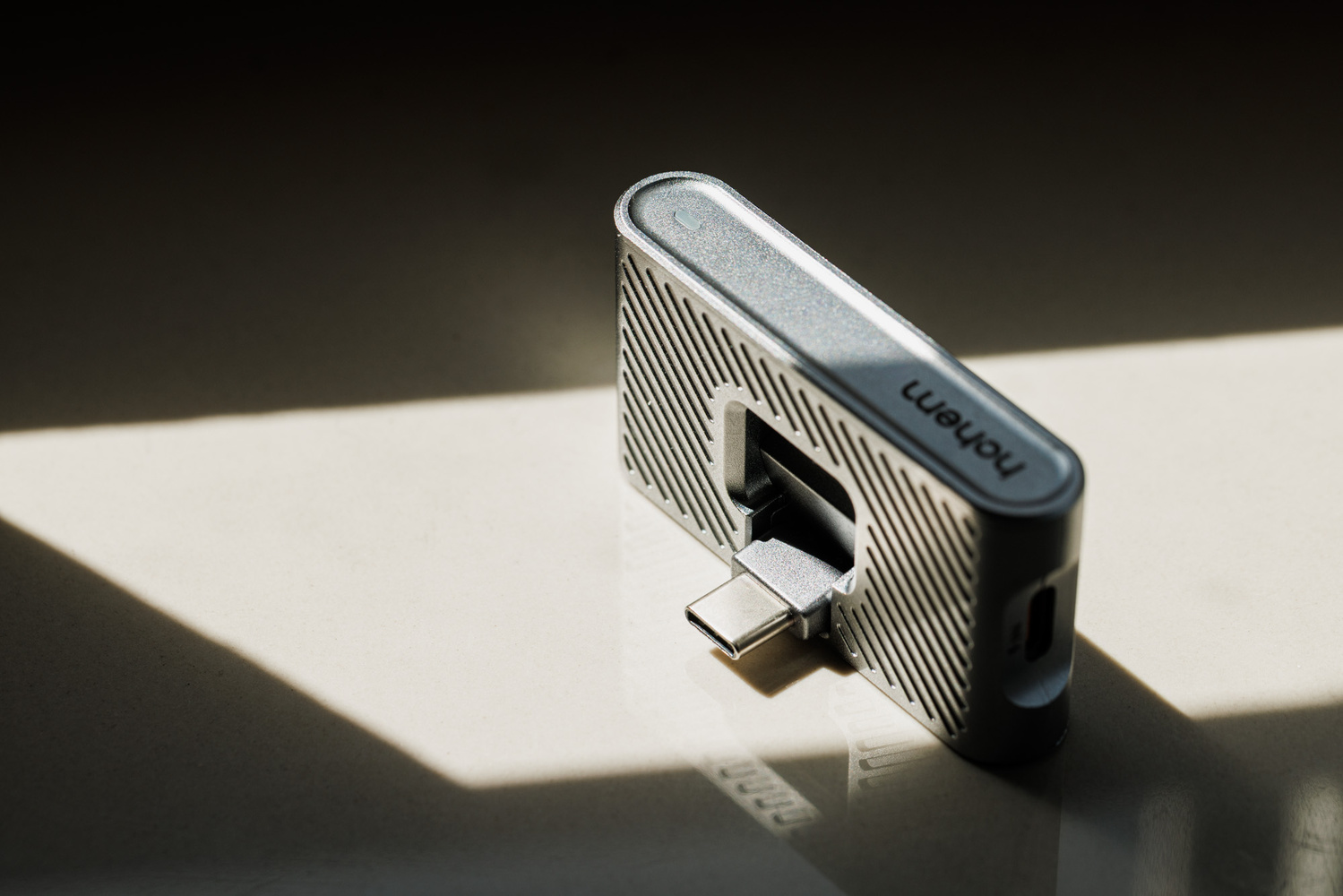
The physical enclosure mainly uses aluminum for the body, combined with ABS in some parts around the ports, offering a solid feel to the overall construction while maintaining a relatively low weight. Hohem has also implemented a thoughtful fold-in protective port design, which I personally feel is a double-edged sword. On one hand, it helps shield the USB-C connectors when not in use, but on the other, if the hinge breaks, there is no way to replace it. That might render the SSD useless, with no way to extract the information using the other available ports.
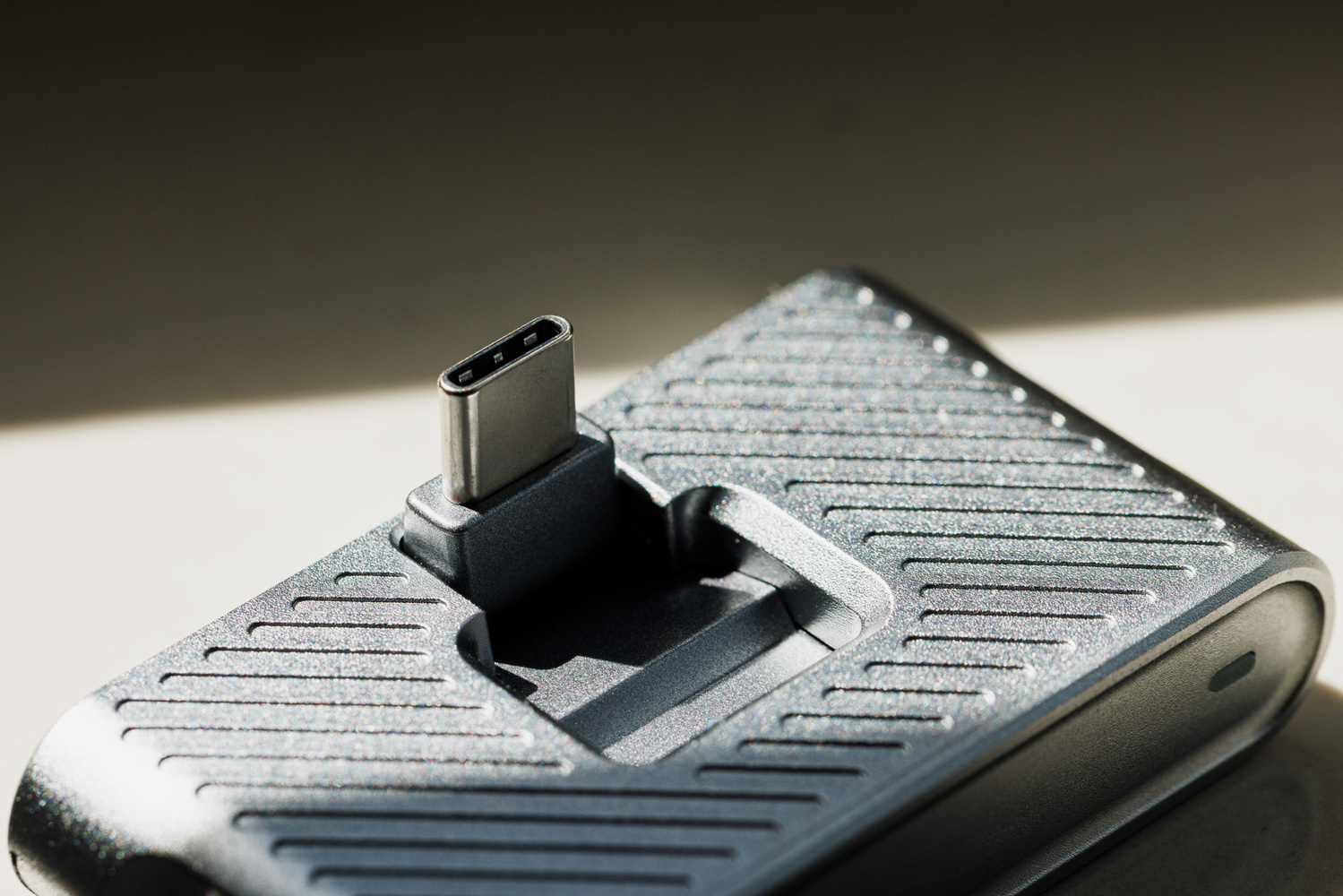
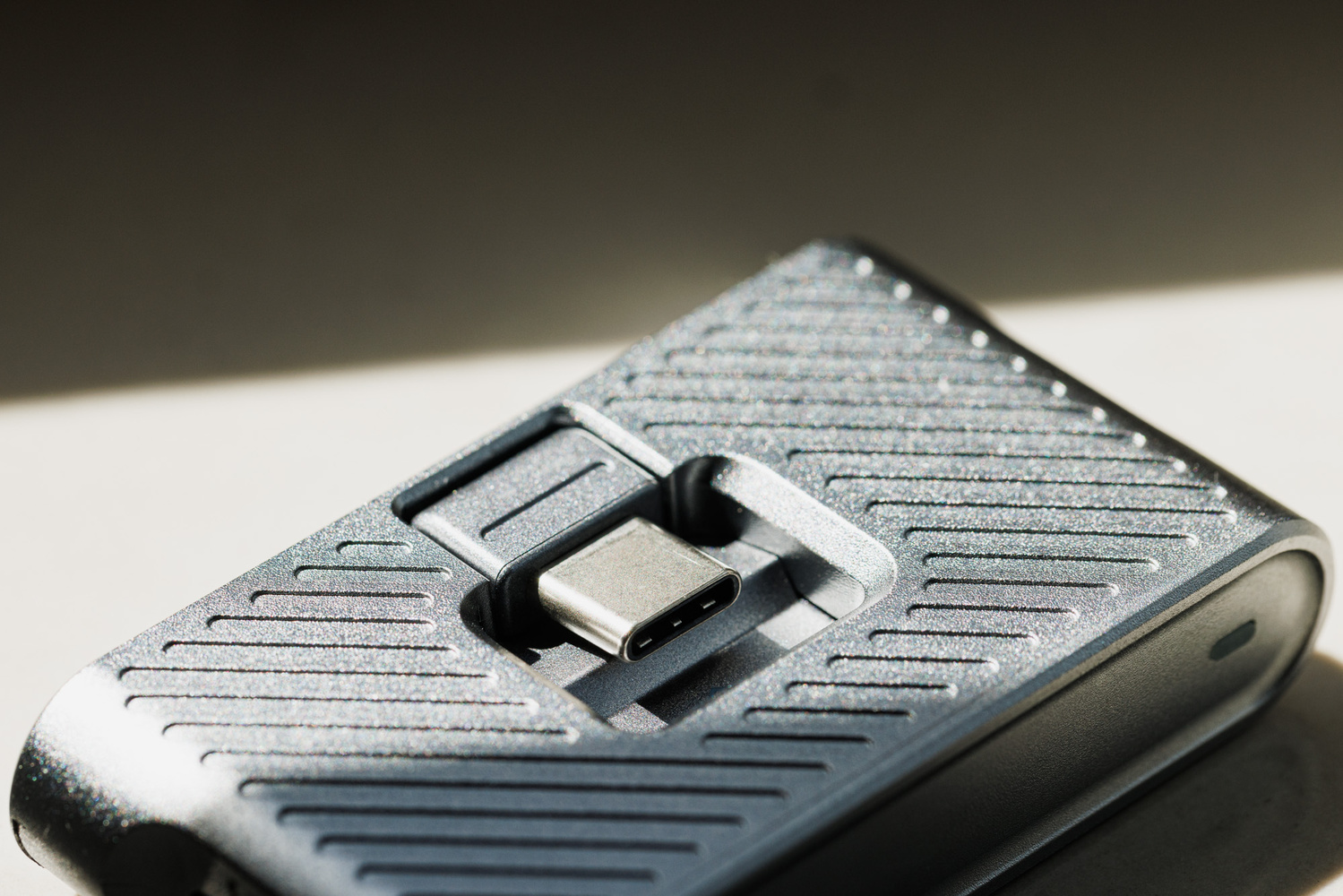
You can also find two other USB-C ports on each side of the SSD for mic input and up to 65 W power delivery. As mentioned previously, they are not for data transfers out of the SSD drive, though you can use the mic input port to connect to other external drives for data transfer to the host—this port supports a transfer speed of up to 480 Mbps. It is worth pointing out that the foldable port sits quite closely to the edge of the casing, not in the middle of the SSD. This smart design choice allows the phone or your laptop to sit completely flat on the table with the SSD plugged in.
Although the physical design does seem pretty rugged, I would still be more careful, especially around wet and tough environments during use, because it is not waterproof. As advised by Hohem in their safety guideline booklet: “Do not expose the product to any liquid. Never immerse it in water or allow it to get wet. Avoid using the product in rain or humid environments, as moisture may cause internal corrosion and lead to product malfunction.” Other precautions include keeping the product away from strong heat sources, preferably below 70 °C when storing and 40 °C when in use.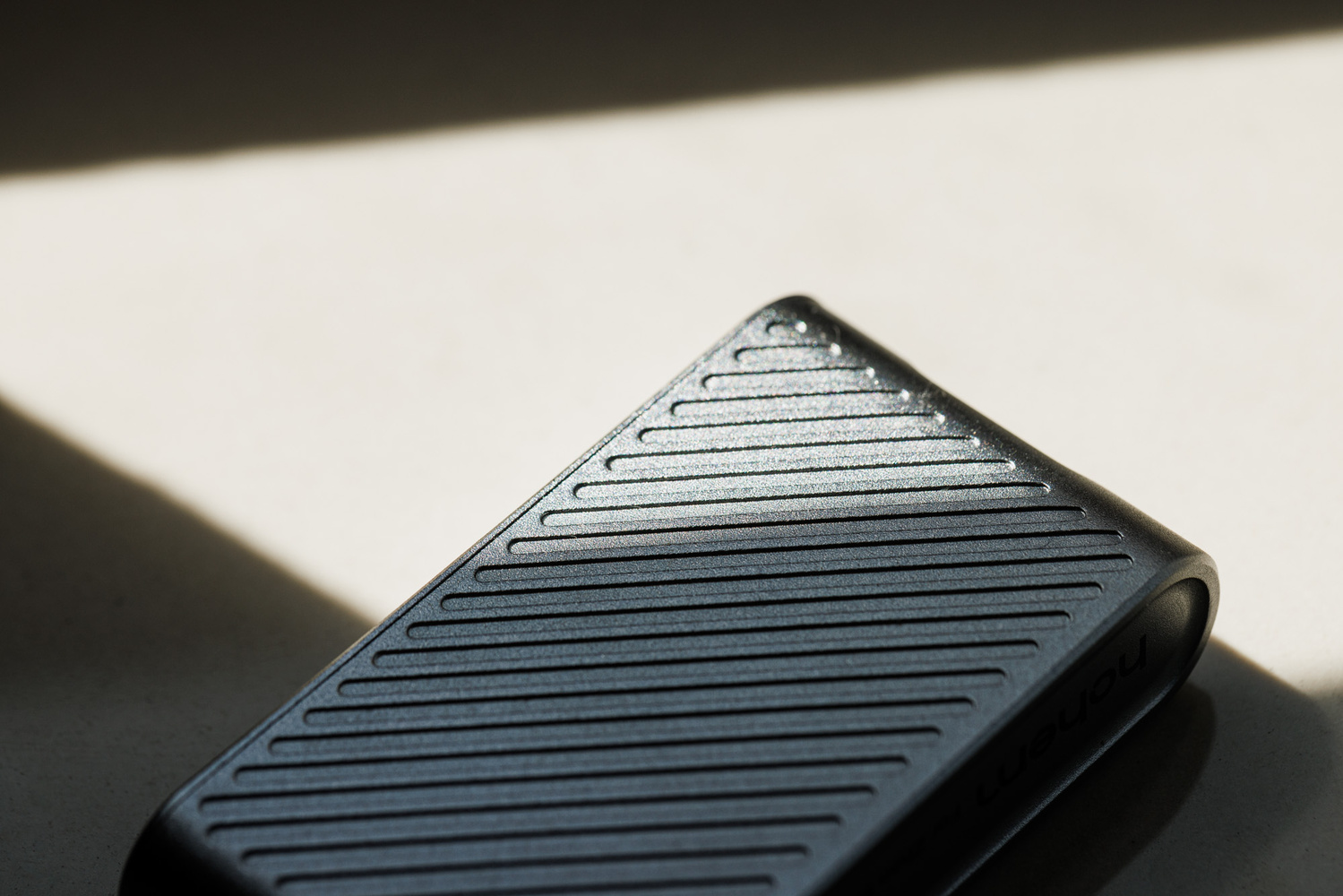
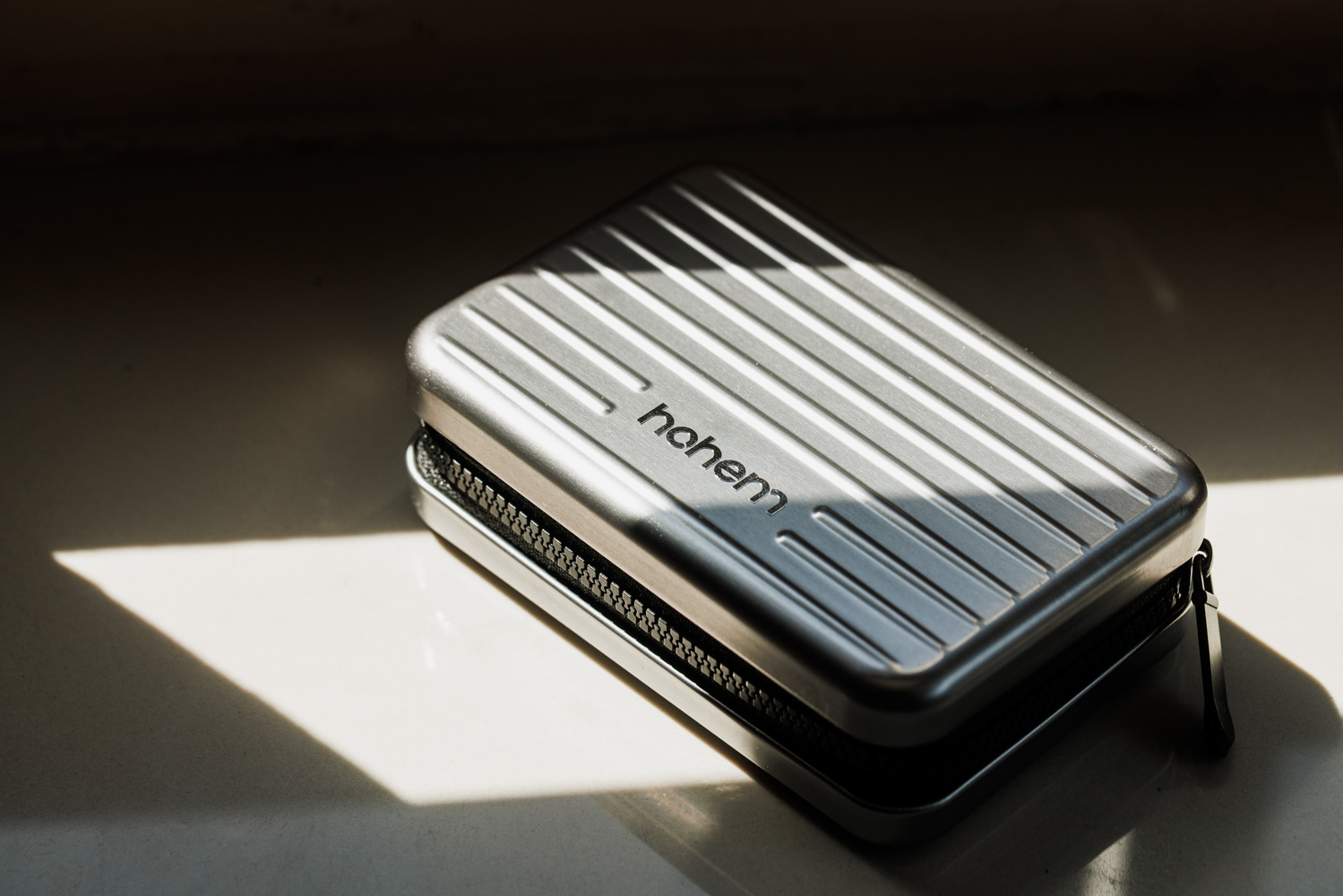
Also, do not use the drive in environments prone to electrostatic discharge (ESD), and avoid subjecting the SSD to strong impacts, as that may cause malfunction or data loss. The good part is that it comes with a very nice protective case with similar design language and proper internal padding for safe transport.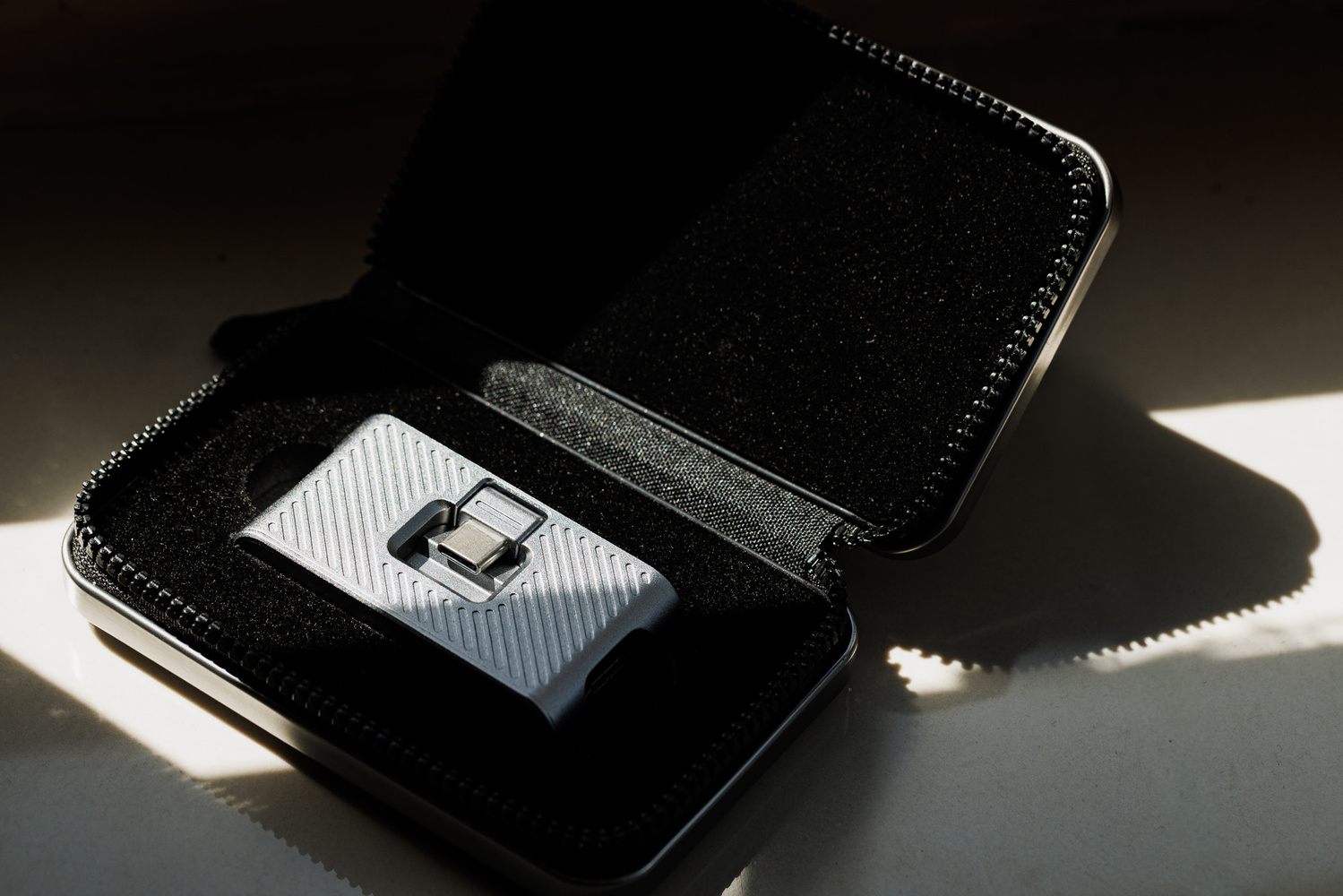
Key Features
High-Speed Storage Performance
At its core, the Hohem SSD-01 is a high-performance external SSD using a USB 3.2 Gen 2x2 interface. Despite its small size, it is capable of offering peak read speeds of up to 2,000 MB/s and write speeds of up to 1,800 MB/s, placing it well above many conventional portable SSDs. Putting these speeds into context, it can transfer 1 GB files in 1 second and 1,000 photos (5 MB each) in 5 seconds. These speeds are particularly relevant not only to ensure smooth direct recording of large-format video files, but also to allow fast offloading after recording is done.
In terms of capacity, Hohem offers the SSD-01 in 1 TB and 2 TB options, allowing users to choose based on their workload. Casual creators may opt for the lower 1 TB model, and professionals working with high-bitrate formats can go for the 2 TB option. According to manufacturer data, the 2 TB version can store up to 372,000 images at 5 MB each or approximately 156 minutes of 4K 60 fps ProRes footage before needing to perform a backup in between takes.
Direct ProRes Recording Support and Universal Compatibility
One of the key selling points of the Hohem SSD-01 is its support for direct external recording with ease. It is designed to handle ProRes raw, Open Gate recording, and frame rates up to 4K 120 fps. This enables cinematic-quality video capture directly onto the connected SSD, bypassing internal phone storage entirely.
An auto-save protection feature is also built in, helping users safeguard files during unexpected interruptions such as power loss or accidental disconnection—a critical consideration, especially when we are going to be relying on the single port for recording.
Officially, the SSD-01 is positioned clearly within the mobile filmmaking ecosystem. It is also announced as being directly compatible with iPhone 17 Pro and iPhone 17 Pro Max, but practically, it can work with any USB-C device flawlessly. It is also compatible with tablets and computers without the need to install any drivers, making it useful not only in the field, but also during post-production, where you can edit files on the SSD drive itself. Files can also be transferred seamlessly between devices without additional cables or converters, reinforcing its role as a flexible, cross-platform storage solution.
Integrated 3-in-1 USB-C Hub
Unlike traditional portable SSDs, the Hohem SSD-01 integrates three USB-C ports directly into the device:
- A primary fold-in port for storage and data transfer
- A dedicated microphone receiver port, compatible with Hohem microphones
- A charging port supporting up to 65 W fast charging
This unique design allows creators to record externally, capture audio, and keep their device powered at the same time, utilizing the single port on the phone—all without additional hubs or adapters. While microphone compatibility with third-party brands is not guaranteed, the inclusion of a dedicated audio receiver port highlights Hohem’s focus on streamlined mobile workflows.
Real-World User Experience
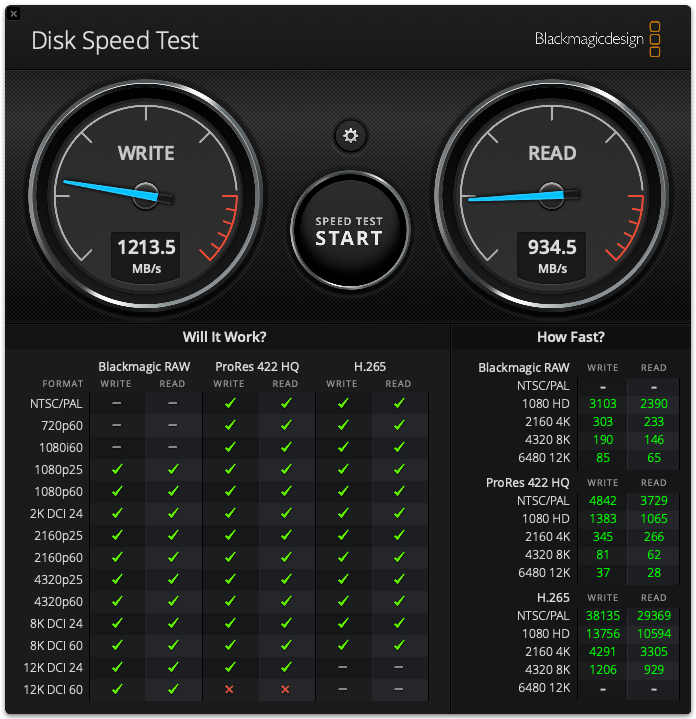
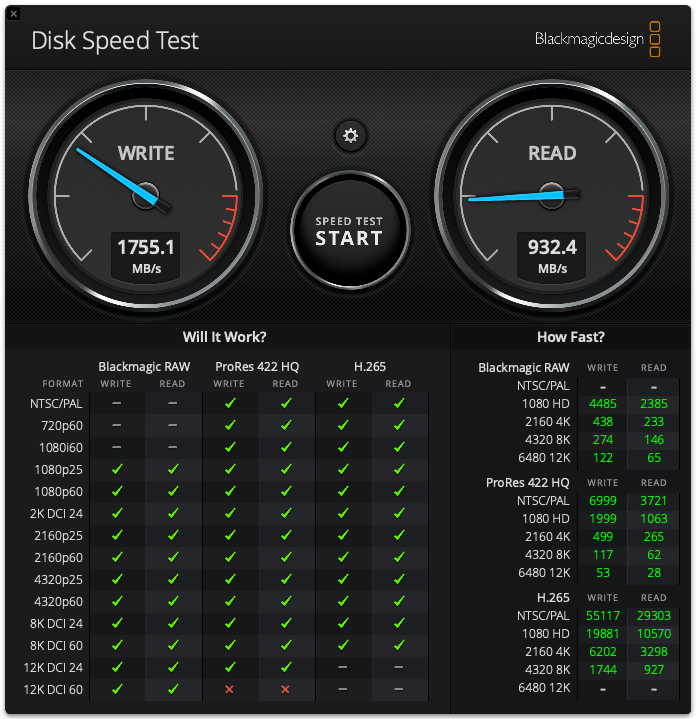
The rated performance of the Hohem SSD-01 impressively peaks at 2,000 MB/s read and 1,800 MB/s write speeds measured with CrystalDiskMark. In terms of raw speed, its peak performance is actually faster than my Samsung T7, which is why I was immediately curious about its sustained speed and how it would behave under more practical workloads. By running multiple 1 GB and 5 GB stress tests using the Blackmagic Disk Speed Test app, I consistently saw average sustained read speeds of around 1,100 MB/s and write speeds hovering at roughly 935 MB/s. Occasionally, I was still able to push the drive to reach read speeds up to around 1.7 GB/s, especially after letting the SSD rest for a short while. The write speed, however, never really went beyond the 940 MB/s mark during all my tests, which may suggest that the SSD might suffer performance loss due to thermal throttling.
It is also worth mentioning that the unit I have been testing is a pre-MP sample, produced for early evaluation and content preparation, so it is possible that final production units may show better sustained performance. Also, note that the manufacturer’s test results and my own tests are based on different software and testing methodologies, which likely explains the large variance in numbers.
 Bringing it into a real-world recording environment, I first tested the Hohem SSD-01 by connecting it directly to my Mac mini M4 Pro via a Thunderbolt 5-compatible port, as it looks like a good portable expansion storage option to move files between my desktop and laptop. I was able to copy around 19 GB of data in approximately 1 minute, which is decent enough for such a large file due to SLC cache—normal for most SSDs. Practically, I am quite comfortable using it as a daily expandable storage solution for my computer, or as a middle platform to quickly transfer content from my phone to my workstation.
For phones that support direct external SSD recording, this is also a good way to offload your clips or edit the content directly on the SSD. Out of curiosity, I also tested the SSD using a third-party USB-C to Lightning adapter on an iPhone 14 Pro, but sadly, it is not supported. One thing to note is that, during extended use, the drive does heat up quite noticeably, but thankfully, it remained stable throughout my testing. I should also say that as my projects continue to grow in size, stability in speed has become a very important criterion for me in selecting SSDs, as the time spent offloading files can quickly add up, and instability can quickly turn into frustration.
Now let’s talk about the positive things in the physical design that I really appreciate on the Hohem SSD-01: the cable-free nature of the design—everything works within the integrated hub (expansion storage, charging, and mic input), whether you are rigging it up for serious mobile phone filmmaking or editing on the go—making the overall setup clean. Practically, having the expansion storage externally also means I will be able to plug the SSD directly into my laptop and edit without transferring files again. Note that if you are using the SSD on the MacBook Air, it is going to block both available ports despite using only one of them.
Thankfully, the fast-charging port on the SSD works flawlessly, delivering power to the MacBook—though I do have my fair share of concerns about longevity if the memory board is sharing the same platform as the charging port. Lastly, while Hohem did mention that third-party mics might not work completely, I am happy to mention that, at the current stage, the DJI Mic 3 did work exactly as it should, despite not being officially listed as supported.
Summary
What I Liked
- The compact form factor makes the SSD easy to integrate into mobile rigs, gimbals, and everyday carry setups without adding noticeable bulk.
- The high-speed performance is impressive, with USB 3.2 delivering up to 2,000 MB/s read and 1,800 MB/s write speeds, making it suitable for large video files and ProRes workflows.
- The versatile built-in hub significantly expands usability, allowing a microphone to be connected while simultaneously charging the phone.
- The ability to plug the SSD directly into a laptop for editing eliminates the need to transfer files, saving time during post-production.
- Universal plug-and-play compatibility across smartphones, tablets, and computers makes it easy to use across different devices.
- Up to 2 TB of storage at such a small size provides ample space for high-bitrate video and large photo libraries.
- The cable-free design results in a cleaner, more reliable mobile setup with fewer points of failure.
- The SSD features a clean and well-executed design that looks and feels purpose-built for creators.
What Could Be Improved
-
A more rugged, weather-resistant design would increase confidence when shooting outdoors or in challenging environments.
-
Providing a way to cover the charging and mic USB-C ports for better protection, as not all users use them all the time.
-
Replaceable fold-in port parts would help extend the product’s lifespan, especially given frequent plugging and unplugging during daily use.
-
Integrating a button to extend the fold-in port to reduce contact with the USB-C connection point, which is prone to damage from sweat and moisture.
-
Allowing the charging or mic input port to function as a data port as well would further enhance the versatility of the built-in hub.
Final Closing Thoughts
All in all, we should be aware that since this is still a very new product, I cannot comment on its long-term reliability or longevity, and it is a good practice that we should always have a second backup whenever possible when using an SSD. That said, throughout my usage, the
Hohem SSD-01has been stable with no random disconnections or data issues. Priced at $219 for the 1 TB version and $339 for the 2 TB version, the
Hohem SSD-01is a great addition for those who are looking to bring their mobile filmmaking to the next level while streamlining their workflow.






 English (US) ·