.png)

Published Jan 27, 2026, 10:30 AM EST
Jazmin Kylene is a Miami-bred writer and editor with a decade-long career that spans all editorial genres, though she has a particular passion for music journalism. Upon graduating Florida Atlantic University with a degree in Multimedia Journalism, she went on to write dozens for outlets and interview counless artists.
When Jazmin isn't typing the day away, she enjoys exploring nature, taking dance classes, going to the movies, and hanging out with her besties (mom and dog.) You can find her on Instagram @JazminKylene.
Bob Dylan stands as one of the most important voices to emerge from the 1960s. A central voice within the folk music realm, he’s often regarded as one of the greatest songwriters of all time, penning socially conscious tunes that went on to serve as anthems for social change. However, not all of his songs were written with the intention of making the world a better place. In fact, some songs had quite the opposite intention.
His 1966 hit song "4th Time Around” is often mistaken for a standard folk ballad or tribute, but its true objective is far from it. The song is actually a pointed challenge to John Lennon, responding to The Beatles’ 1965 song, “Norwegian Wood (This Bird Has Flown).” While there’s never been a definitive statement from Dylan that he intended the song as a diss, critics and fans alike agree that the evidence is far too clear. Here’s a closer look into "4th Time Around” and the history behind its messy meaning.
"4th Time Around" vs "Norwegian Wood"
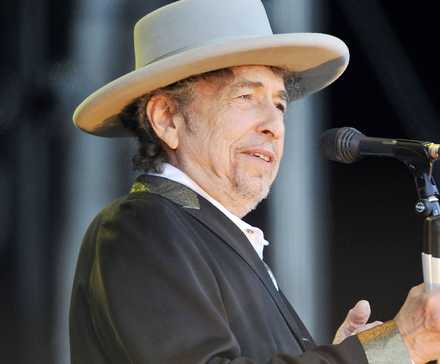
 Image via Bettmann Archive
Close to a year before Bob Dylan’s “4th Time Around” emerged from his 1966 album Blonde on Blonde, The Beatles’ released “Norwegian Wood (This Bird Has Flown)” from their 1965 album, Rubber Soul. Primarily written by John Lennon, the track served as a melodic storytelling about an awkward romantic encounter.
I once had a girl
Or should I say she once had me
She showed me her room
Isn't it good Norwegian wood?
She asked me to stay
And she told me to sit anywhere
So I looked around
And I noticed there wasn't a chair
Related
While “4th Time Around” and “Norwegian Wood (This Bird Has Flown)” share a similar narrative style, there’s most certainly an intentional distinction between the two. Dylan’s lyrics skew much darker and more cynical, telling the same story with a sharper, emotional edge. His encounter is much more unsettling, with animosity at its core. Rather than paying homage, he mirrored "Norwegian Wood" by warping it and quietly mocking it.
When she said, "Don't waste your words, they're just lies"
I cried she was deaf
And she worked on my face until breaking my eyes
And saying "What else you got left?"
It was then that I got up to leave
But she said, "Don't forget
Everybody must give something back
For something they get"
While Lennon’s attempt was more whimsical, Dylan took a similar shot with more grit and bite. Sure, that was just more closely aligned with his own personal artistry, but it’s impossible to negate that there was something deeper under the surface. Many agreed that the song was a parody of “Norwegian Wood,” almost like Dylan was showing Lennon how to do that style more precisely, with lyrical and emotional mastery. In "Norwegian Wood," Lennon’s tone feels like a restrained sense of humiliation. In "4th Time Around," Dylan flips the dynamic to self-empower and asserting authorship over the confessional folk-rock lane that he did not want Lennon thinking belonged to him.
John Lennon vs Bob Dylan
So where does the beef stem from? It’s undeniable that Lennon and the Beatles drew much influence from Dylan’s poetic style, though imitation isn’t the highest form of flattery for everyone. Dylan was famously playful and often defensive about feeling like sound was imprinted on other works, with some accounts even suggesting he joked that he “invented” the style the Beatles had built their sound around. After meeting Dylan in 1964, the Beatles' sound very overtly pivoted from love-song pop to introspective songwriting, with Lennon directly attributing that to Dylan's influence and pushing him to write more honestly and poetically. While Dylan valued Lennon owning up to his imprint, that didn't mean he wasn't going to poke a little fun. He wanted to tease Lennon for borrowing his style, while making it very clear that he'd never be capable of being better at it than him.
But while Dylan never admitted to the song being in relation to “Norwegian Wood (This Bird Has Flown),” Lennon himself has spoken to it. In a 1968 Rolling Stone interview, Lennon said the song made him feel “very paranoid,” admitting that he didn’t like it at first when Dylan played it for him in London before it was recorded. That paranoia could very much have to do with the song's final line, in which Dylan states: “I never asked for your crutch / Now don’t ask for mine.” Many have interpreted this as Dylan warning Lennon not to use his songwriting style as a “crutch,” punishing him for even attempting to go after what he deemed belonged to him. A “heated musical exchange” rather than a feud, what’s most important to note is that both artists pushed each other to be better, resulting in two songs that will forever stand the test of time as some of folk’s best productions. At the core was a rivalry between two brilliant artists who longed to be the voice of their generation, yet deemed themselves far too similar to share the crown.








 English (US) ·