.png)
 1 week ago
17
1 week ago
17
When you shop for cameras online, spec sheets emphasize familiar metrics: 20 frames per second, 30 frames per second, 8K video, blackout-free shooting. These numbers look impressive. They sound impressive. And they are. But they are often misleading when it comes to final image quality.
Here's the uncomfortable truth: frames per second is a measure of quantity. It tells you how many pictures your camera can take in a second. What it doesn't tell you is whether those pictures will be free of geometric distortion, light banding, or rolling-shutter skew in video when you're using an electronic shutter. For that, you need to understand a specification that often doesn't appear on the box, in the marketing materials, or sometimes even in the official technical documents. That specification is sensor readout speed, measured in milliseconds, and it is one of the strongest predictors of rolling shutter distortion and banding risk in both stills and video.
You've probably seen rolling shutter distortion before, even if you didn't know what to call it. It's the bent golf club in a swing sequence. It's the building that looks like it's leaning during a handheld pan. It's the propeller that appears as a curved, gelatinous blob rather than a spinning disc. This distortion happens because modern camera sensors don't capture the entire image at once. Instead, they scan from top to bottom, reading out each row of pixels sequentially. If something moves during that scan, different parts of the image are recorded at different moments in time, and the result is spatial distortion.
The speed of that scan is your readout speed. A sensor with a 30-millisecond readout takes 30 milliseconds to scan from the top of the frame to the bottom. During those 30 milliseconds, a car at highway speed travels several feet. A baseball pitcher's arm moves through a significant arc during a fastball delivery. A bird's wingtip can cover a substantial distance. All of that motion gets encoded as geometric warping across your image, often impossible to fully correct in post. This isn't motion blur, which comes from your exposure duration. This is spatial distortion from different parts of the frame being captured at different moments. You aren't capturing a single instant; you're capturing a sequence of instants stacked on top of each other, and the geometry bends accordingly.
The problem compounds when you start shooting under artificial light. LED lights and fluorescent fixtures don't produce constant illumination. They flicker at frequencies often tied to the electrical grid (100 or 120 times per second depending on your country), though modern LED drivers can introduce PWM modulation at other frequencies entirely. When your sensor scans slowly, different parts of the frame are exposed during different phases of that flicker cycle, producing horizontal bands of varying brightness across your image. This banding is especially vicious in gymnasiums, indoor arenas, and modern office buildings where LED lighting has become ubiquitous. You can sometimes mitigate it with anti-flicker modes, but those modes work by timing your shots to the flicker cycle, which means sacrificing burst rate and responsiveness.
This brings us to the honest burst rate problem. A camera that advertises 40 frames per second sounds incredible until you consider what tradeoffs can be involved. Some cameras achieve high burst rates on slower sensors by dropping bit depth, cropping the frame, or both. And regardless of those tradeoffs, if the underlying readout is sluggish, you aren't getting 40 clean captures per second. You're getting 40 frames per second with elevated risk of geometric distortion and banding in each one. The marketing number tells you how many lottery tickets you're buying. The readout speed tells you the odds of any ticket being a winner.
The Quality of Life Upgrades You've Been Missing
Beyond pure image quality, sensor readout speed determines a constellation of practical shooting capabilities that manufacturers rarely discuss in their promotional materials. The most significant of these is flash synchronization with electronic shutters.
When you use a mechanical shutter, a physical curtain travels across the sensor to control exposure. Flash synchronization works because the entire sensor is exposed simultaneously for a brief moment when the curtain is fully open. Electronic shutters don't have this luxury. They expose the sensor by reading it out row by row, which means there's never a moment when the entire sensor is exposed at once. Slow readout usually forces severe restrictions on flash with electronic shutter, or manufacturers disable the combination entirely. You might technically be able to fire a flash, but you're limited to speeds so slow they're useless for freezing action, and banding often ruins the result anyway.
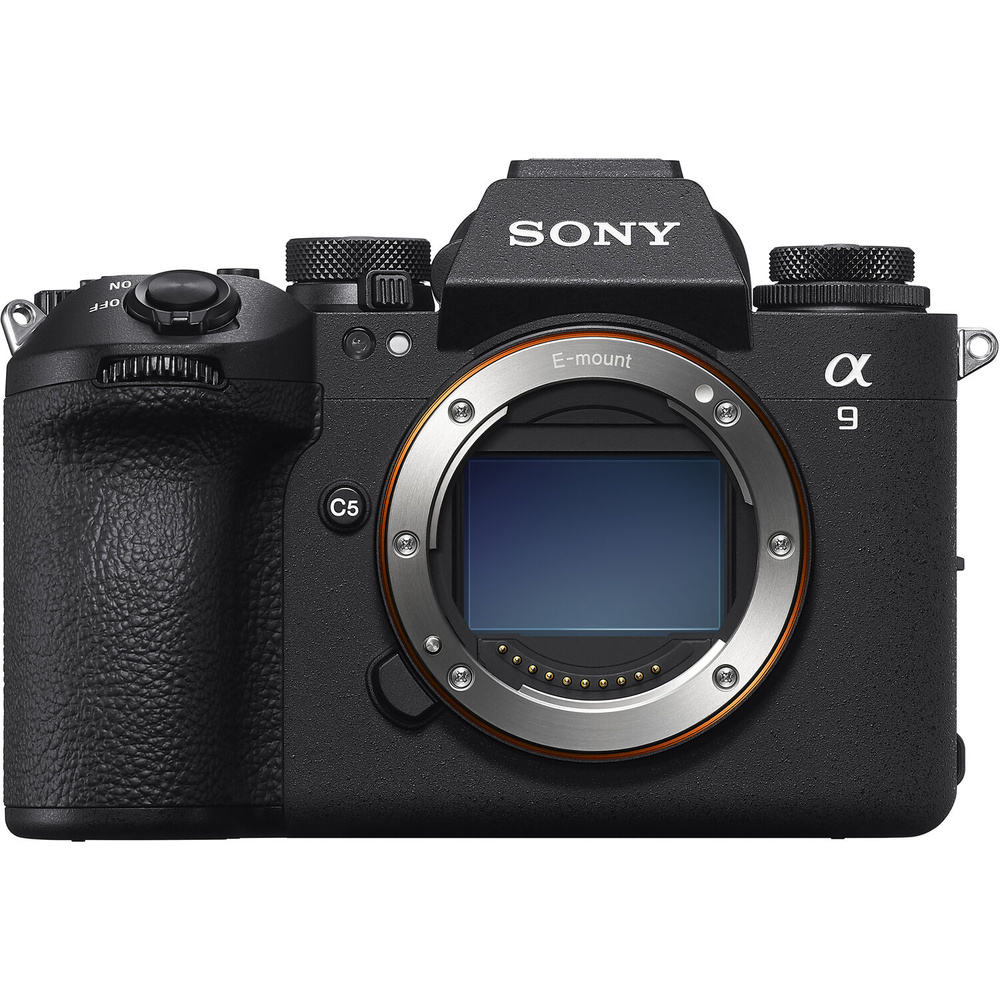 Faster readout expands what manufacturers can safely allow, though firmware choices still vary between cameras with similar sensor capabilities. Global shutter changes the game completely by capturing the entire frame simultaneously. The Sony a9 III offers flash sync at any shutter speed up to 1/80,000 of a second, though flash duration and power still impose their own limits on what's practical. This capability means you can shoot weddings with a completely silent camera and still use flash for reception photos. You can photograph golf tournaments without the telltale click that might distract a player during their backswing. You can work in theaters, courtrooms, and wildlife hides where silence isn't just preferred but required.
EVF latency and blackout behavior are influenced by readout speed, processing pipelines, buffering, and display refresh rates. Faster readout is a prerequisite for the best implementations, but not sufficient by itself. With a slow sensor, your viewfinder is showing you where your subject was tens of milliseconds ago, not where they are now. For static subjects, this delay is imperceptible. For fast action, it's the difference between tracking a subject smoothly and watching a stuttering series of positions that are already obsolete by the time you see them. Stacked sensors with fast readouts enable genuinely responsive viewfinder feeds that make tracking erratic subjects dramatically easier, assuming the rest of the pipeline keeps up.
Video shooters feel these effects even more acutely. Rolling shutter in video manifests as the infamous "jello" effect, where the entire frame wobbles and distorts during handheld pans or when shooting from moving vehicles. This is the same phenomenon as rolling shutter distortion in stills, just more obvious because you're watching it unfold across continuous frames. The effect scales with resolution because higher resolutions require reading out more pixels.
The 2026 Sensor Landscape
Understanding the technology tiers available helps explain why some cameras excel at action while others struggle despite impressive-sounding specifications. The market has stratified into three categories, each with distinct capabilities and price points.
The slowest tier consists of cameras with readout speeds of roughly 20 milliseconds or more, depending on resolution, bit depth, and shooting mode. These sensors are often non-stacked designs; their readout architectures tend to be optimized for image quality and cost rather than minimum scan time. The Sony a7 IV and Sony a7R V fall into this tier in most modes, as do many older mirrorless bodies across brands. These are excellent cameras for portraits, landscapes, and studio work where subjects aren't moving rapidly and mechanical shutters remain practical. The a7R V is particularly instructive: it's an expensive, high-resolution camera with a very slow electronic shutter readout that makes it essentially unusable for action in that mode. Price doesn't equal readout speed. These cameras struggle with fast action when using electronic shutters and produce noticeable rolling shutter in video. As always, check specific measurements for the modes you intend to use.
The exciting development in recent years is the emergence of a middle ground: sensors with readout speeds fast enough to handle action without requiring full stacking. Some achieve this through partial stacking, where processing circuitry (including analog-to-digital converters) sits directly beneath the photodiode layer while the memory remains separate. Others use optimized traditional architectures to punch above their weight class. Readout speeds in this category typically fall into the high single digits to low teens in milliseconds, though exact numbers vary significantly by shooting mode, bit depth, and whether you're measuring stills or video. The Nikon Z6 III uses partial stacking, while the Canon EOS R6 III achieves similar performance (around 13 ms in common modes) without it. Both deliver readout speeds that handle the vast majority of sports and action scenarios while maintaining a price point accessible to serious enthusiasts rather than only working professionals. This is the 2026 value proposition: enough speed for most demanding shooting situations without the flagship price tag.
The professional tier comprises fully stacked sensors and global shutters. Fully stacked designs place both processing circuits and dedicated memory directly beneath the photodiode layer, creating an extremely short path for data and enabling fast readouts typically in the single-digit millisecond range for their fastest modes. The Nikon Z8 and Nikon Z9, Canon EOS R1 and Canon EOS R5 Mark II, and the Sony a1 represent this category. These cameras can handle virtually any action scenario with electronic shutters, provide responsive viewfinder feeds during continuous shooting, and deliver video with minimal rolling shutter even at high frame rates. Note that "stacked" doesn't guarantee identical performance across all cameras and modes; check specific measurements for your intended use case. At the extreme end sits the Sony a9 III with its global shutter, which captures the entire frame simultaneously rather than scanning row by row. This eliminates rolling shutter entirely, enabling flash sync at any speed and producing zero geometric distortion regardless of subject motion or camera movement, though global shutter sensors can have tradeoffs in dynamic range and noise.
The Cheat Sheet
For quick reference when evaluating cameras, here's what different readout speed bands mean in practical terms.
Global shutter sensors capture the entire frame simultaneously rather than scanning row by row. This eliminates rolling shutter distortion entirely and enables flash sync at any shutter speed, subject to flash duration and system compatibility. Currently this means the Sony Sony a9 III, with a price tag to match. These sensors can have tradeoffs in dynamic range and noise, but for action and flash work, they represent the pinnacle.
Single-digit millisecond readouts represent elite action capability, typically achieved through fully stacked sensor architectures. These handle the vast majority of sports and action scenarios with electronic shutters. Rolling shutter is minimal enough to be invisible in most real-world shooting. This tier includes flagship bodies from Sony, Nikon, and Canon, though exact performance varies by camera and mode.
 Readouts in the high single digits to low teens of milliseconds occupy the sweet spot for most photographers. Cameras like the Nikon Z6 III and Canon EOS R6 III deliver viable performance for most action shooting with only occasional issues under difficult artificial lighting. The price-to-performance ratio is excellent, and these cameras represent the best choice for enthusiasts who shoot action but don't need absolute perfection.
Readouts of 20 milliseconds or longer belong to the static tier. These cameras excel at landscapes, portraits, and studio work but require mechanical shutters for action. Electronic shutter use produces visible rolling shutter with significant motion and problematic banding under artificial light. These cameras are not inferior; they're simply optimized for different use cases.
The Detective Work: How to Find the Milliseconds
You might reasonably wonder why manufacturers hide this specification if it matters so much. The answer is simple: they don't want their cheaper cameras to look bad in comparison to their expensive ones. Revealing that your $2,500 camera has a 30-millisecond readout while your competitor's similarly priced model achieves 12 milliseconds would be an obvious problem for sales.
Fortunately, the photography community has done the work that manufacturers won't. Crowdsourced databases like the Horshack Rolling Shutter Database on GitHub compile readout speeds for hundreds of cameras across multiple brands. A quick Google search for your camera model plus "rolling shutter" or "readout speed" will usually surface the measurements you need.
If you want a rough sense of a camera's readout before buying, set it to electronic shutter mode and attach a flash. If the camera allows higher e-shutter flash sync speeds, it suggests faster readout, though some bodies restrict e-shutter flash by policy even when the sensor could support more. Cameras with slow sensors will either disable flash entirely in electronic shutter mode or limit you to very slow sync speeds. You can also pan the camera rapidly while shooting video or photograph ceiling fans. The degree of distortion correlates with readout speed. These informal tests can inform your research, but they're no substitute for looking up actual measurements.
The 2026 Buying Guide
The next time you're browsing cameras on B&H, resist the urge to be impressed by burst rate numbers. A camera advertising 30 frames per second isn't a reliable indicator of e-shutter performance if those frames are compromised by a slow sensor. Instead, ask the question that actually matters: what is the sensor readout speed in milliseconds?
Most spec sheets won't list readout speed directly, but you now know where to find the answer yourself. You know that a sensor reading out in 10 milliseconds will serve you better for e-shutter action than a 25-millisecond sensor regardless of how many frames per second the marketing materials promise. You know that silent flash sync requires fast readouts and that viewfinder lag during tracking is influenced by the same limitation. You know that video jello and photo rolling shutter are the same problem with the same cause. A quick Google search before you click "Add to Cart" will tell you whether that camera's sensor can actually deliver on its burst rate promises.
To be clear: fast readout won't compensate for poor AF tracking, a shallow buffer, or a slow lens. Those factors dominate other aspects of action shooting. But when it comes to electronic shutter artifacts specifically, readout speed is the specification that matters most.
Here's the counterintuitive truth: when shooting with electronic shutters, a lower-FPS camera with faster readout will usually deliver fewer distorted frames than a high-FPS camera with slow readout. The frames per second number tells you how many chances you get. The milliseconds number tells you whether those chances are free of rolling shutter and banding. So, stop shopping for quantity. Start shopping for quality. Stop shopping for frames per second. Shop for milliseconds.






 English (US) ·