.png)
 4 hours ago
1
4 hours ago
1
In an era of AI perfection, your biggest asset is reality. Here is how to make your portfolio more authentic.
For the last decade, professional photography was an arms race for perfection. We wanted cleaner high-ISO files, sharper lenses, and smoother skin. We invested in full frame sensors with incredible dynamic range, we learned frequency separation until we could do it in our sleep, and we obsessed over eliminating every distraction from our frames. The goal was always the same: create the cleanest, most polished image possible. And we got there. The problem is that the machines got there too.
AI generators now default to "perfect." They create flawless lighting, creamy bokeh, and poreless skin in seconds. They produce images with technically impeccable exposure, idealized compositions, and subjects who exist in pristine, contextless voids. When perfection becomes the default output of a text prompt, perfection stops being impressive. It becomes suspicious. To differentiate yourself in 2026, you cannot compete on perfection. You must compete on humanity.
The new "pro" look is not about how clean the file is. It is about how much life remains in it. What follows are five distinct shifts in approach that will make your work unmistakably, verifiably human.
1. The "Texture First" Retouching Policy
We spent years learning advanced retouching techniques to make brides look like porcelain dolls and executives look like they had never encountered stress in their lives. We smoothed and softened and polished until skin looked like it had been rendered rather than photographed. Today, that aesthetic triggers what I call "AI Fatigue." If it looks too smooth, the viewer assumes it is fake. The uncanny valley has shifted. We used to worry about images looking too artificial because of bad compositing or obvious manipulation. Now we worry about images looking too artificial because they look too good.
The solution is not to abandon retouching entirely, but to adopt the "Temporary vs. Permanent" rule. Delete temporary distractions: pimples, areas of redness, lint on clothing, stray hairs crossing the face. These are things that happened to be there on that particular day and do not define the subject. Keep permanent character: moles, scars, freckles, and especially laugh lines. These are not flaws that need to be corrected. They are evidence of someone's life lived. When you leave the crow's feet on a smiling subject, you prove the emotion is genuine. Smoothing them out turns a unique human being into a generic avatar, indistinguishable from the millions of AI-generated faces flooding the internet.
 Consider dialing back your clarity and texture sliders globally. Instead of applying smoothing across the entire image, use localized dodging and burning to shape the face while keeping the skin texture completely intact. (If you want to refine your dodge and burn technique, Fstoppers offers an excellent Master Dodge and Burn course that covers precisely this kind of localized skin work.) You can still sculpt light, still flatter your subject, still create beautiful portraits. You just do it while preserving the biological evidence that this is a real person who exists in the physical world. Wrinkles and pores are not problems to solve. They are proof of authenticity in an age when authenticity has become the scarcest commodity in visual media.
2. Switch from "Posing" to "Prompting"
Static poses feel stiff and calculated. "Hand on hip, chin down, shoulder toward camera" produces technically correct positioning, but it also produces images that look like the subject is holding their breath and waiting for permission to move again. More importantly, AI struggles with the complex physics of weight distribution and momentum. When AI generates a static figure, it often produces something that looks subtly wrong, like a wax figure or a mannequin. The proportions might be correct, but the sense of gravity and physical presence is missing.
The shift here is to move from nouns to verbs. Stop giving static commands and start giving active prompts. Instead of "tilt your chin up slightly," try "walk toward me like you are running late for something important." Instead of "put your hand on his shoulder," try "whisper your coffee order to her and see if she can remember it." Instead of "look over your left shoulder," try "spin around until you get a little dizzy and then look at me." The key is to shoot through the transition. Do not wait for them to stop moving. Do not wait for them to "land" in a pose. The image you want is happening while they are in motion.
A subject in motion creates visual evidence that is incredibly difficult to fake. Hair swinging with momentum, a dress flowing with the physics of fabric, weight shifted dynamically to one leg as balance adjusts, these are all things that require a real body moving through real space. The "best" shot is often the one immediately after the pose, when the subject laughs at how awkward the prompt felt or exhales after completing the action. That moment of genuine reaction, captured in the milliseconds after the "performance" ends, is where authenticity lives. No amount of prompt engineering can generate the specific way someone's face relaxes after they stop trying to pose. For photographers looking to master the art of directing subjects and capturing authentic expressions, Peter Hurley's Perfecting the Headshot offers invaluable techniques for getting beyond stiff poses.
3. Stop Obliterating the Background
Shooting wide open at 85mm f/1.2 creates a well-known look. The subject is tack sharp, separated from a background that has been rendered into a smooth, creamy blur of unidentifiable color. For years, this was the premium aesthetic. It demonstrated expensive glass and technical skill. Bokeh was a flex. The problem is that it removes all context. Without context, an image could have been created anywhere. Or nowhere.
AI-generated portraits almost universally feature this contextless aesthetic because it is easier to generate a blurred background than a detailed, physically coherent environment. When everything behind the subject is an abstract smear of color, there is no need for the AI to understand architecture, spatial relationships, or the complex way light interacts with real materials at various distances. By defaulting to shallow depth of field for every image, we inadvertently trained ourselves to create photos that look exactly like what AI produces most easily.
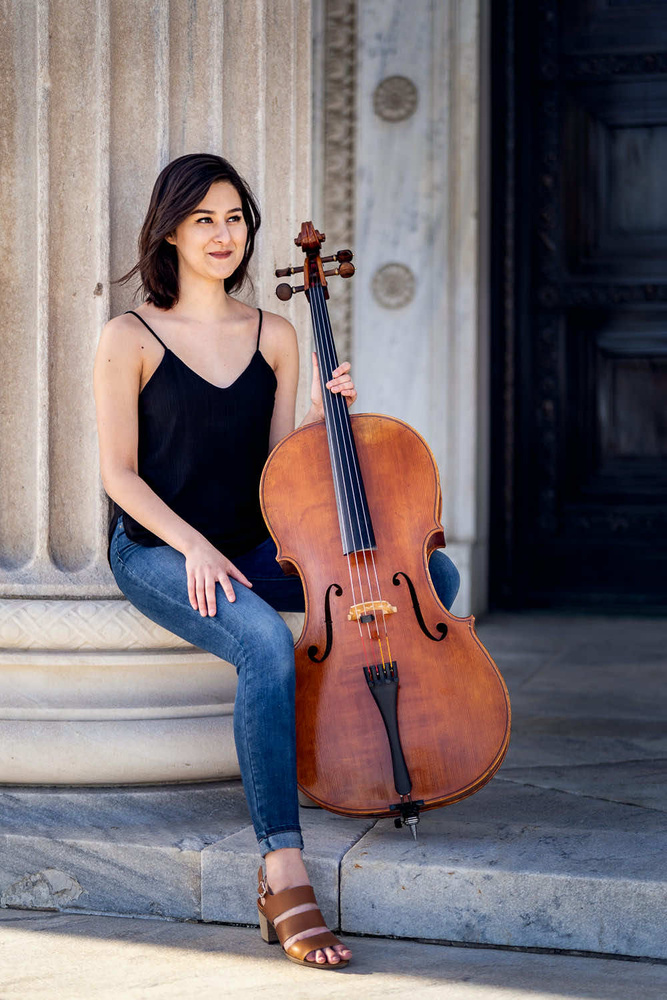 The technique here is what I call "contextual aperture." Stop down to f/4 or f/5.6. Force the background to be recognizable. If you booked a beautiful venue, show it. If you are shooting in a city, let the brick texture and the window reflections and the street signs remain legible. If there is interesting architecture behind your couple, do not turn it into an abstract gradient. Context is the ultimate authenticator. The specific texture of a weathered wall, the way afternoon light hits a distant building, the geometry of a room with its particular furniture and fixtures: these details ground the subject in the real world. They prove that the photographer and the subject were physically present in a specific location at a specific time. Bokeh is no longer a flex. Environmental storytelling is the new premium. The background is not a distraction from your subject. It is evidence of their existence.
4. Stop Cropping Out the "Junk"
We are trained to "clean the frame" aggressively. Crop out the trash can at the edge. Wait for the waiter to move out of the background. Remove the street sign in post. Eliminate anything that distracts from the subject. This instinct made sense when our goal was idealized perfection. But AI generates idealized worlds where nothing is ever out of place. Every AI-generated image exists in a pristine void where there are no errant coffee cups, no strangers walking through the background, no evidence of the messy reality that surrounds any real moment.
 The shift here is to embrace the clutter. Did a waiter walk into the edge of the frame during the toast? Leave them there. Is there a messy table with half-empty glasses in the foreground of the party shot? Keep it. Can you see someone's phone screen glowing in the background of the ceremony? Maybe that is actually more interesting than a sanitized frame would be. Real life has clutter. Real events have bystanders. Real spaces have objects that were not placed there by a set designer optimizing for visual cleanliness.
Including the chaos of the environment provides subconscious proof of a candid moment. It proves the photo was not "prompted" into existence in a pristine digital void. It was captured in a living, breathing space where things were happening that the photographer could not control. This subtle shift in approach moves the genre from "Portraiture" to "Documentary," and documentary carries an inherent authenticity that idealized portraiture cannot claim. The "distractions" we trained ourselves to eliminate are actually authenticating details. They are visual evidence that this moment happened in the real world, surrounded by the beautiful mess of actual human activity.
5. The Blown-Out Highlight
Camera marketing has sold us on dynamic range for years. Fifteen stops of dynamic range. Shadow recovery that can pull detail from near-black. Highlight protection that preserves information in even the brightest regions of the frame. This technical capability led to what might be called the "HDR Look," where shadows are lifted and highlights are clamped and every pixel in the image contains recoverable detail. It looks digital. It looks processed. It looks like data rather than a photograph.
AI and HDR algorithms are obsessed with balancing every pixel. They want smooth histograms and even tonality across the entire frame. But real light is messy and overpowering. Real sunlight blasting through a window does not politely stay within the dynamic range of your sensor. It explodes. It overwhelms. It wraps around your subject with a hazy, blooming quality that signals an actual light source rather than a carefully balanced digital file.
The technique here is to expose for the shadows and let the highlights go. Let the sky behind your subject become pure white. Let the window turn into nuclear brightness. Allow the light to wrap around your subject's edges with halation and bloom. This is not carelessness. This is an intentional choice to let light behave the way it actually behaves, rather than computationally constraining it into artificial balance. Letting highlights clip creates a dreamy, hazy atmosphere that feels organic and almost chemical, like film, rather than a perfectly processed data file. It signals an artistic choice rather than an algorithmic one.
When every shadow is lifted and every highlight is recovered, the image reads as "corrected." When light is allowed to behave with its natural intensity and the photographer has clearly made choices about what to prioritize, the image reads as "captured." That distinction matters more now than it ever has.
The Challenge
You do not need to downgrade your gear or intentionally shoot blurry photos to look authentic. The techniques above are not about introducing errors or abandoning technical skill. They are about stopping the instinct to sanitize every trace of reality from your images. They are about recognizing that the "photographer brain" we developed over decades of chasing perfection is now, counterintuitively, working against us. For photographers looking to develop a more holistic approach to their craft, The Well-Rounded Photographer offers perspective from eight instructors across different genres on what makes images truly compelling.
In 2026, ask yourself this question before you deliver any image: Does this photo look like it happened, or does it look like it was made? If the skin is too smooth, if the background is an unidentifiable blur, if the frame has been cropped to eliminate every trace of environmental context, if every highlight has been carefully recovered, if the subject looks frozen in a static pose: you have created something that looks exactly like what AI produces by default. If it looks too perfect, mess it up. Leave the texture. Show the environment. Include the chaos. Let the light blow out. Capture the moment between poses.
Your humanity is your competitive advantage now. The question is whether you are willing to let it show.



 English (US) ·