.png)
Universal Pictures
We may receive a commission on purchases made from links.
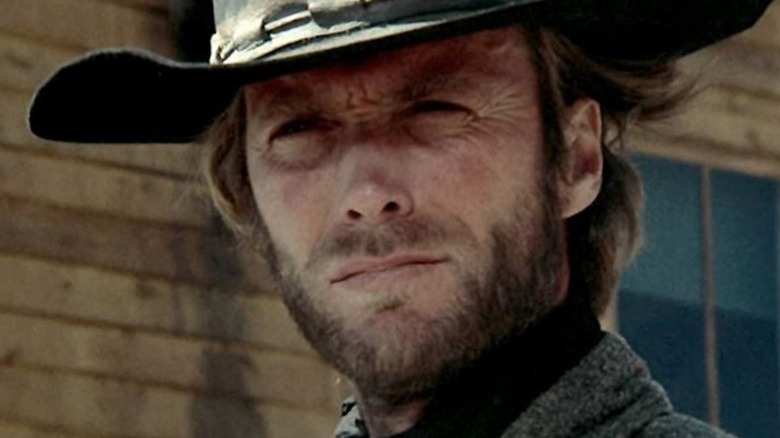
Given that he launched his career as Rowdy Yates on the CBS Western "Rawhide," and became a full-fledged movie star as the lead of Spaghetti Western maestro Sergio Leone's "Dollars Trilogy," it's fair to say Clint Eastwood is an authority on the oater genre. He was an active participant in the Western's transition from its traditional era to a more cynical, revisionist phase, and he won Academy Awards for Best Picture and Best Actor with his gunslinger masterpiece "Unforgiven." So when Eastwood opines on the genre, you'd best listen up.
Eastwood is not a particularly modest man, so it's not a surprise to learn that he considers two of his own movies, "The Outlaw Josey Wales" and "Unforgiven," to be exemplary Westerns. He's also a huge fan of Howard Hawks' classic "Red River" and Sergio Corbucci's relentlessly downbeat "The Great Silence."
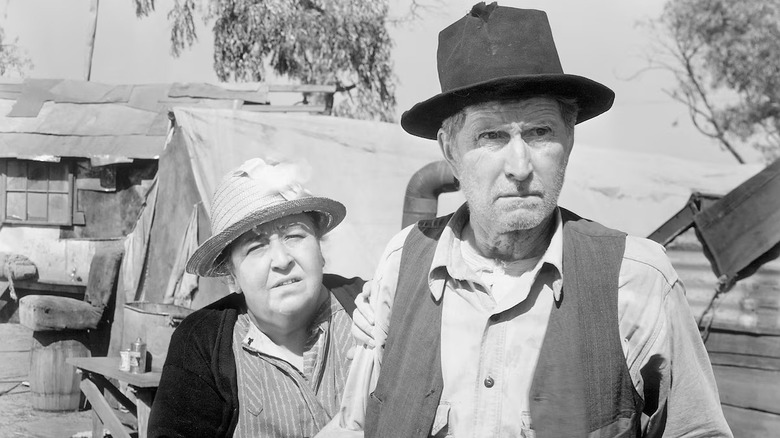
Obviously, Eastwood thought quite highly of John Ford, who essentially established the conventions of the Hollywood Western with 1939's "Stagecoach." He's quite fond of "My Darling Clementine," which features superb performances from Henry Fonda (as Wyatt Earp) and Victor Mature (as Doc Holliday). But he's also enthusiastic about a non-traditional Western from Ford, one that earned the filmmaker his second of four Academy Awards for Best Director. You can take issue with my categorization of "The Grapes of Wrath" as a Western, but it is about people embarking on an arduous journey to find a better life in the expanding American West. Eastwood adores this movie and holds it up as a perfect example of how to make a movie.
Clint Eastwood admired John Ford's efficacy
20th Century Fox
In a 1980 interview with Ric Gentry (which you can find in the book "Clint Eastwood: Interviews, Revised and Updated"), Eastwood singled out Ford's adaptation of John Steinbeck's Pulitzer Prize-winning 1939 novel as a peak achievement in cinema, admiring how Ford ran an efficient production.
Speaking with Gentry, Eastwood mentioned he'd read a piece in The Hollywood Reporter that mentioned Ford exposed only 37,000 feet of film in shooting "The Grapes of Wrath," a record low at the time. "Now here's a guy who makes a classic that people want to see forever. Long after the man's dead, people will be running it, for years and years, and he did it with a record low of exposed film for that time, and that's because Ford knew exactly what he wanted and knew when he had it."
Eastwood is famous for making films quickly and bringing them in under budget, so of course, he'd be laudatory of Ford's method. He then took his wasteful colleagues to task. Per Eastwood:
"He didn't go out there for six or eight months or a year and do 50 takes on everything. When he saw the prints that he liked he went off to the next thing ... 'The Grapes of Wrath' had tremendous energy and it's a classic on every score. What makes you think you're going to make any more of a classic by exposing 50 times the amount of film he did? It just doesn't make any sense."
Perhaps Michael Bay, who was once gifted a case of champagne for exposing over 1,000,000 feet of film during the shooting of "Armageddon," has a good answer for this. However, at the age of 95, I doubt Eastwood wants to hear it.







 English (US) ·