.png)
 2 hours ago
3
2 hours ago
3
Stop buying spec sheets. These oddballs prioritize fun over perfect and might just make you fall in love with photography again.
The Novelty You Actually Need
There's a persistent myth in photography that better gear makes better photographers. It doesn't. No amount of money will buy you an improved eye for composition, a deeper understanding of light, or the patience to wait for the decisive moment. Skills come from practice, failure, and the slow accumulation of visual wisdom that no credit card can expedite.
But here's the thing: sometimes you don't need better skills. Sometimes you need a jolt. A disruption. A reason to pick up the camera when the thought of shooting the same subjects with the same reliable equipment fills you with a particular kind of creative dread. Money can't buy you better skills, but sometimes, you need a little novelty to remember why you started shooting in the first place.
The problem with modern flagship cameras is that they've become almost too competent. Your mirrorless wonder from Sony, Canon, or Nikon will nail focus on a hummingbird's eye at 30 frames per second. It will recover shadows you forgot existed. It will shoot usable images at ISO values that would have been science fiction a decade ago. And gradually, imperceptibly, all that competence starts to feel like a trap. When the camera can do everything, the photographer becomes a technician managing settings rather than an artist making decisions. The challenge evaporates, and with it, the joy.
The solution isn't a camera with more megapixels or faster burst rates. The solution is a camera that fights back. What you need is something with limitations baked into its DNA, something that forces you to slow down, think differently, and rediscover the problem-solving that made photography exciting when you first picked up a camera. You need something weird.
These five cameras are gloriously, unapologetically weird. They prioritize experience over specifications, process over output, and creative friction over seamless convenience. They won't help you nail focus on that hummingbird. But they might remind you why you wanted to photograph birds in the first place.
Fujifilm X Half: The Vertical Challenge
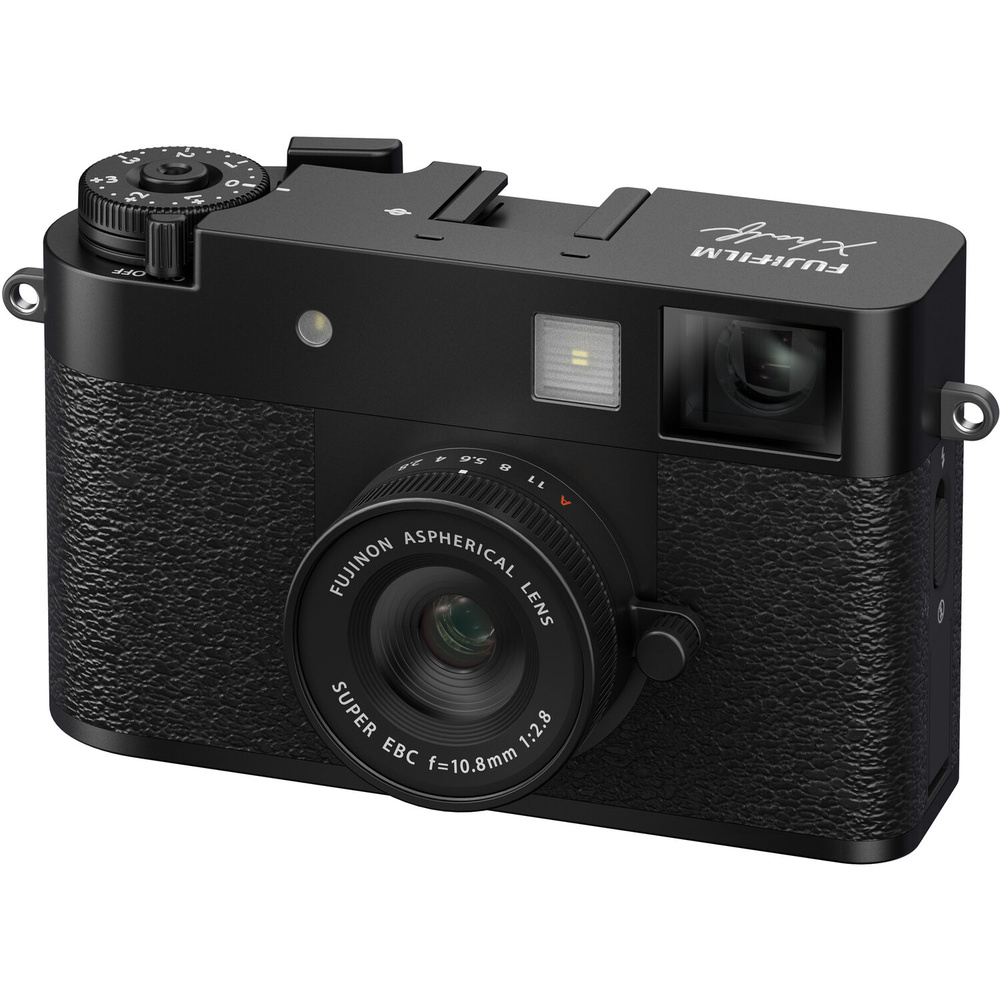 Fujifilm has spent the past decade building a reputation for cameras that feel different, and the Fujifilm X Half, released in mid-2025, might be their most audacious statement yet. I've been reviewing this camera for the past few weeks, and what strikes me most is how thoroughly it channels the vibe of 90s point-and-shoots, those chunky, confident little machines that prioritized personality over spec sheets. The headline feature is disarmingly simple: the sensor is oriented vertically. By default, natively, without rotation, this camera shoots in portrait orientation.
This sounds like a gimmick, but then you actually try it. For years, we've been trained to think of landscape orientation as the "normal" way to see, with portrait reserved for specific subjects like headshots or tall buildings. The X Half inverts that assumption entirely. Want a landscape-oriented image? You'll need to physically rotate the camera ninety degrees, which suddenly feels unnatural in a way that makes you question why you ever defaulted to horizontal framing in the first place.
But Fujifilm didn't stop there. The camera includes a mechanical film advance lever that, in certain shooting modes, must be pulled between frames to re-cock the shutter. This isn't necessary from an engineering standpoint; it's pure tactile theater. But that theater serves a purpose. The physical act of advancing the "film" creates a pause between shots, a moment of intention that disrupts the spray-and-pray muscle memory that digital photography has trained into us.
The real creative unlock comes from the 2-in-1 diptych mode, which combines two consecutive frames into a single image file, displayed side by side. This transforms every shutter press into a storytelling exercise. You're no longer capturing a moment; you're constructing a relationship between two moments. Wide and tight. Before and after. Question and answer. It's the kind of constraint that sounds limiting on paper but opens up entirely new ways of thinking about sequence and narrative.
My favorite, though, is the film mode, where you select a film stock, and the camera refuses to show you image previews or let you use the back screen for image composition, just like a 90s film camera. If you miss the feeling of point and shoot cameras from when you were a kid, this is the device you want.
Pentax K-3 Mark III Monochrome: The Color Detox
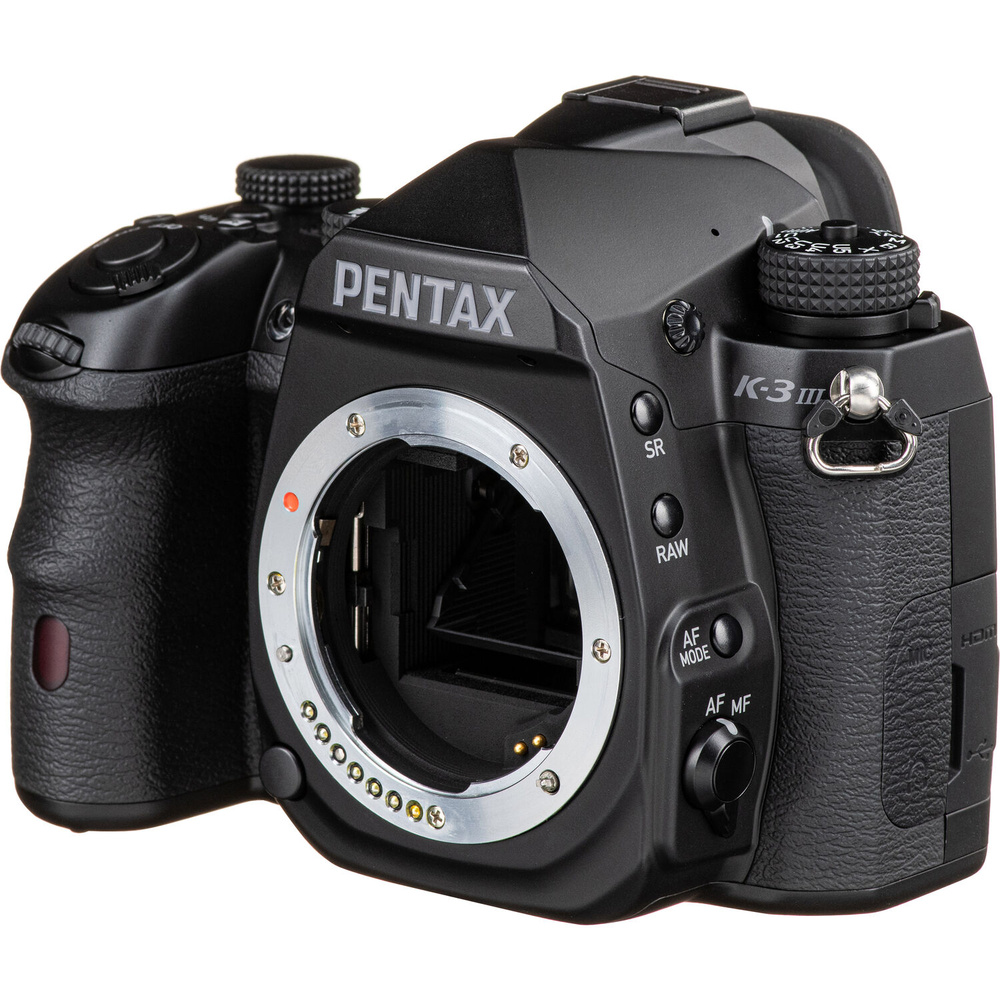 The Pentax K-3 Mark III Monochrome commits to a bit so thoroughly that it becomes a genuine creative statement. This is a camera that cannot shoot color. Not "can be converted to black and white later" but fundamentally, at the silicon level, incapable of recording color information. There is no Bayer filter array on the sensor. The files it produces are pure luminance data, and no amount of post-processing will ever extract a color image from them.
This sounds like a limitation, and it is. But the Monochrome demonstrates how the right limitation can function as liberation. When you remove color from the equation entirely, you stop seeing color. Your eye begins to hunt for the things that actually matter in black and white photography: the quality of light, the texture of surfaces, the graphic interplay of shadow and highlight, the tonal separation between subject and background.
Every photographer has experienced the disappointment of a scene that looked magical in person but fell flat in color. The golden hour glow that seemed so special becomes just another warm-toned image in a feed full of warm-toned images. The Monochrome sidesteps that problem entirely by forcing you to evaluate scenes on structural terms rather than chromatic ones. That boring midday light with harsh shadows? It's now dramatic contrast begging to be photographed. The overcast day that would produce flat, gray color images? It's now a softbox from the sky, perfect for revealing texture and form.
There's also something to be said for the psychological effect of committing to black and white before the shutter opens. When you can convert to monochrome in post, there's always a voice in the back of your head wondering if the color version might be better. The Monochrome silences that voice entirely. You've made your choice, and now you have to make it work.
The sensor, freed from the color filter array, also gains genuine technical advantages. Each pixel receives full luminance information rather than interpolating from neighboring filtered pixels, resulting in increased sharpness and reduced moiré. At low ISOs, the files have a tonal richness and micro-contrast that can be difficult to replicate through color conversion, no matter how sophisticated your processing.
Sigma dp2 Quattro: The Slow Foveon
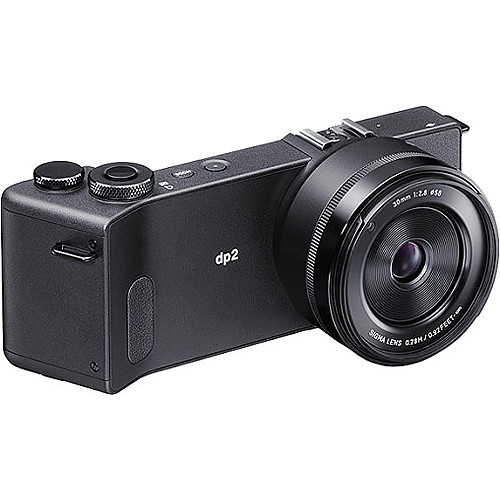 The Sigma dp2 Quattro looks like nothing else on the market. The body resembles a boomerang or possibly a staple gun, with a grip that extends backward at an aggressive angle and a lens that juts forward with industrial confidence. It is not pretty. It is not ergonomic. It does not care what you think about its appearance.
Inside that bizarre body sits a Foveon sensor, and that sensor is the entire point. Unlike conventional Bayer sensors that use a mosaic of color filters and interpolate color information from neighboring pixels, the Foveon stacks three layers of silicon, each sensitive to different wavelengths of light. Every single pixel location captures full red, green, and blue information. The result, in good conditions, is a rendering of color and detail that genuinely looks different from anything a conventional sensor produces. There's a three-dimensional quality to Foveon files, a sense of depth and texture that photographers describe as "pop" because no technical term quite captures what's happening.
The catch, and there is always a catch, is that the Foveon sensor struggles at high ISO. At anything above 400 or so, noise becomes significant, and while the Quattro generation improved things enough to make ISO 800 usable in a pinch, you're really losing the sensor's advantages at that point. This is a camera that needs light. Lots of light. The kind of light that made photographers shoot ISO 50 slide film on sunny days with the lens stopped down to f/8 and the shutter at 1/500th.
The workflow reinforces the slow approach. You cannot shoot quickly even if you want to. Every image requires a decision: Is this worth the wait? Is the light good enough? Am I steady enough, or do I need the tripod?
For photographers who have grown accustomed to the instant gratification of modern cameras, the dp2 Quattro can be genuinely frustrating. But that frustration is the point. This camera forces you to work for every frame, and when you nail one at base ISO with good light and solid technique, the results justify every moment of difficulty. There's no free lunch with the Foveon. But the paid lunch is extraordinary.
Hasselblad 907X & CFV 100C: The Waist-Level Perspective
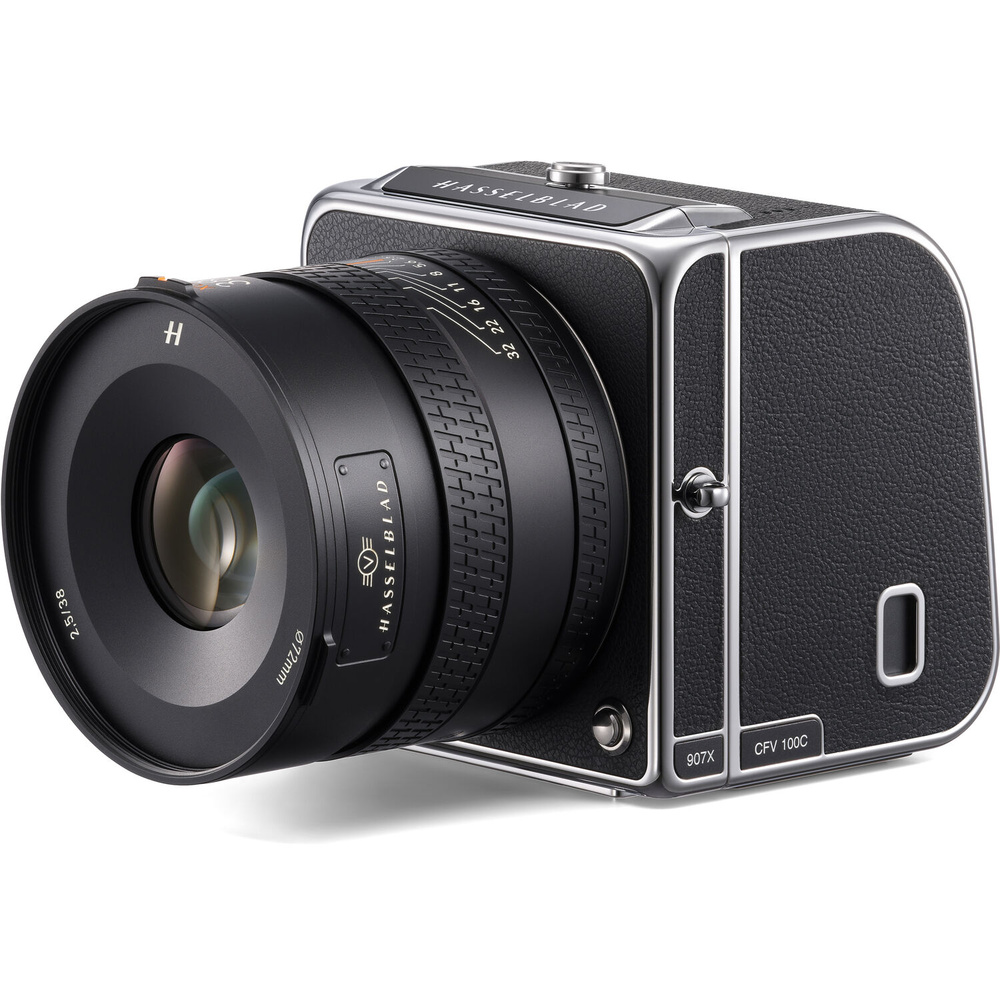 The Hasselblad 907X & CFV 100C is a throwback to the past with modern quality. The body is tiny, barely larger than the medium format sensor it houses. The finish is chrome and leather in a design language that hasn't been updated since the Eisenhower administration. There is no eye-level viewfinder. The only way to compose is to look down at the tilting rear screen, holding the camera at waist or chest level like your grandfather did with his twin-lens reflex in 1955.
This waist-level shooting position changes everything about how you interact with subjects. When you bring a camera to your face, you create a barrier between yourself and the world. You become a photographer, an observer, someone who is explicitly recording rather than participating. The camera-to-eye gesture is a kind of social signal that says, "I am taking your picture now."
Shooting from waist level dissolves that barrier. You're looking down rather than through. Your face is visible, your expression readable. Eye contact becomes possible even while you're composing. Subjects relax because the dynamic has shifted; you're sharing a moment rather than capturing one. Street photography becomes less confrontational. Portraits gain an intimacy that's difficult to achieve when hiding behind a viewfinder.
The lower perspective also changes the geometry of images in subtle but significant ways. Shooting from waist level points the camera slightly upward, giving subjects a statuesque quality, a sense of presence and importance that eye-level shooting rarely conveys. Backgrounds simplify because you're looking up into sky rather than across into visual clutter. The world looks different from down there, and the 907X forces you to discover that difference.
Pentax 17: The Analog Reset
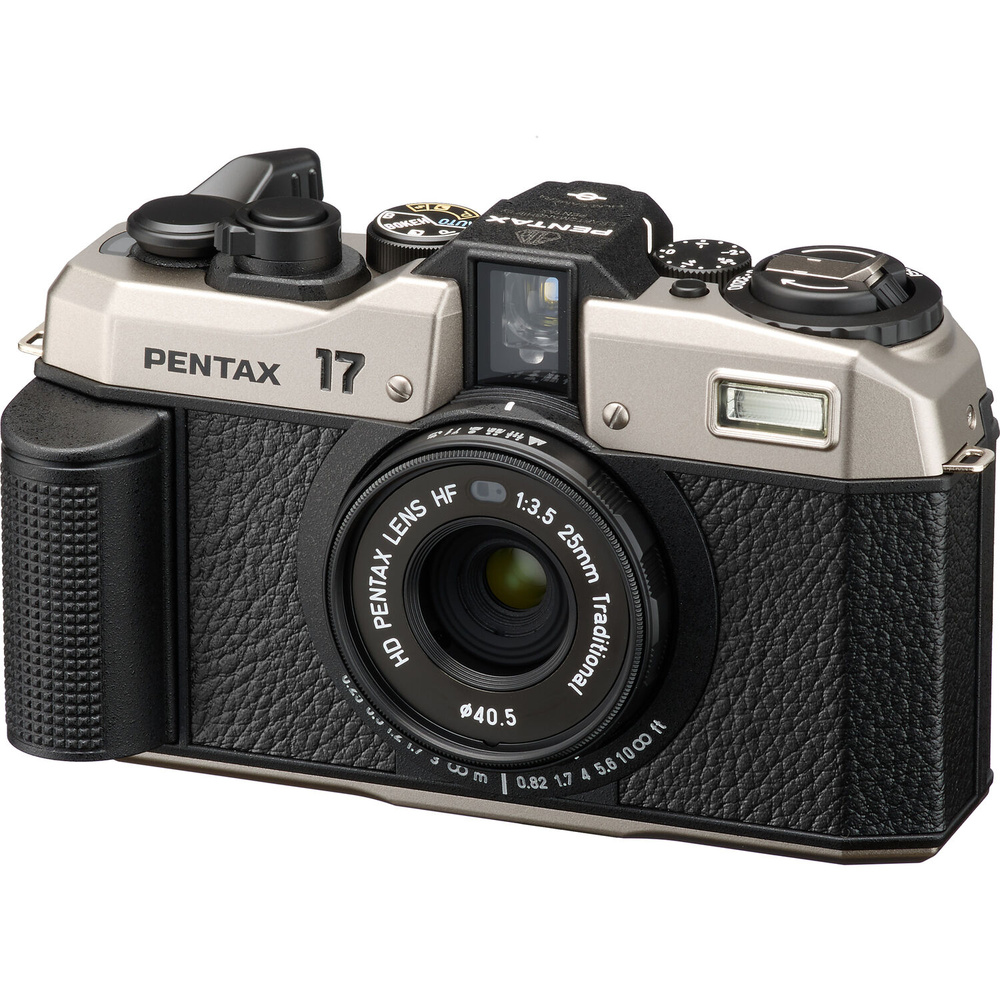 The Pentax 17, released in 2024, might be the most surprising camera announcement of the decade. A major manufacturer released a new film camera. Not a reissue. Not a limited edition. A genuinely new, currently-in-production film camera with modern manufacturing and contemporary design decisions.
The format is half-frame, meaning the camera exposes half of a standard 35mm frame per shot. Load a 36-exposure roll and you'll get 72 images, each natively vertical. Like the Fujifilm X Half, the Pentax 17 defaults to portrait orientation, but here the connection to historical half-frame cameras like the Olympus Pen adds a layer of photographic heritage to the format choice.
Perhaps more significantly, the Pentax 17 has no autofocus. None. Instead, it uses a zone focus system represented by icons: a flower for close-up, a single person for portrait distance, a group for medium range, and a mountain for infinity. You don't focus precisely; you estimate distance and pick a zone, trusting depth of field to cover your errors.
This sounds primitive, and it is. But zone focus is also fast, silent, and requires you to actually think about how far away your subject is. Most photographers have completely outsourced this judgment to autofocus systems, losing the intuitive distance estimation that was second nature to earlier generations. The Pentax 17 rebuilds that skill through repeated practice.
The half-frame format encourages diptych thinking, just like the X Half's 2-in-1 mode, but with a crucial difference: you won't see the results until the film is developed. There's no chimping, no instant review, no opportunity to reshoot if the pairing doesn't work. You commit to both frames based on your visualization of how they'll relate, then you move on and trust yourself. Weeks later, when the scans come back, you'll discover whether your instincts were right.
And with 72 frames per roll, the pressure on each individual image evaporates. Not every frame needs to be a masterpiece when you have that many to work with. You can experiment, take risks, and shoot the weird idea that might not work. Some frames will be throwaways. That's fine. That's the point. The half-frame format gives you permission to fail, which is often exactly what you need to succeed.
The Worse Camera You Actually Need
If you've read this far, you're probably not satisfied with your current creative output. Your camera is likely excellent. Your lenses are probably sharp. Your technique has likely plateaued at "competent" and stubbornly refuses to evolve into "exciting."
The counterintuitive solution is to stop optimizing and start constraining. Pick one of these cameras, or something equally weird from your local used market, and commit to shooting with it exclusively for a month. Not as a backup. Not as a "fun" option when your main camera is charging. As your only camera.
You'll miss shots. You'll get frustrated. You'll produce files that your flagship camera would never have allowed to be so flawed. And somewhere in that frustration, you might rediscover the problem-solving joy that made you pick up a camera in the first place. The constraints won't limit your creativity. They might just rescue it.




 English (US) ·