.png)
Directing a film can feel like an all-consuming job, a true labor of love. But for some directors, that passion compels them to take on more and more responsibilities on their features — not just because they can’t relinquish control, but because they revel in all of the storytelling process.
Some, like Josh Safdie (“Marty Supreme”) Chloé Zhao (“Hamnet”) and Kelly Reichardt (“The Mastermind”) edit their movies — earlier this year, Sean Baker (“Anora”) became just the second director to win an Oscar for editing, following Alfonso Cuarón for “Gravity.” Some directors even wear two hats on the set, either as actors, like Bradley Cooper (“Is This Thing On?”) or as cinematographers, like Steven Soderbergh and Zack Snyder. The smallest Venn diagram overlap is probably directors who write their own scores, with Charlie Chaplin, Clint Eastwood and John Carpenter leading the way.
Directors doubling as editors is the most natural move because it’s a crucial extension of the storytelling.
“Editing is where the film’s meaning is truly born, so I can’t physically stay far from the material,” says Kaouther Ben Hania (“The Voice of Hind Rajab”).

Still, becoming an editor often starts more organically. “In film school, if you didn’t edit your film, nobody would do it for you, and on your first film, you also end up editing out of need,” Cuarón says.
Reichardt recounted in an email interview that she barely had enough money to shoot “Old Joy”: “With no funds to hire an editor, I cut the movie myself.”
Now Reichardt edits her films by choice, wanting to be there as new ideas evolve in the editing suite. “I don’t like to miss out on any part of the process,” she says. “Editing is a place of discovery. I’m still amazed at how a few frames this way or that way can change the vibe of a conversation or the tension in a scene. I just don’t want to miss out on any of that.”
If Reichardt had an editor, she’d be frustrated. “I would just be sitting on a couch watching someone else cut and that would be really boring,” she says.
Ben Hania works with other editors and trusts their ideas but particularly early on, she says, “I need to experiment alone to try things.”
Reichardt and Cuarón, however, say that while they often share their work with collaborators, they’ve learned to be ruthless with their own footage.
“I’m not precious about footage because it looks good or because it was the hardest day of the shoot or the most expensive,” Reichardt says. “I’ve cut out whole sections of a film with actors I love. If I’m on the fence about something, I try living without it. If its absence doesn’t haunt me, I leave it out.”
Cuarón says that when he assembles his first cut, he keeps his director’s hat on to shape the larger story. “Then I kick the director out, and I become merciless,” he says. “I don’t care about how difficult it was to get to that shot or how beautiful the light is or that it took two days to achieve it.”
Sometimes even directors who hand their films off to editors can’t say away. Carpenter says he’d sometimes have a “compulsion” to edit certain scenes. “In ‘Big Trouble in Little China,’ I edited the big alley fight because I just had to get my hands on it,” he remembers.
Carpenter is better known for doubling as his own composer, which, like Reichardt’s editing, was born from necessity. “In the beginning I didn’t have money for good composers and my dad had taught me violin and piano and such — I only had medium chops but once I got hold of a synthesizer I could sound like an orchestra,” he says, adding that it was his father who had taught him the 5/4 time he used to write his iconic “Halloween” theme after an initial screening was deemed not scary enough. He continued writing scores because, while directing is his first love, “it’s fucking hard and has so much pressure attached, but writing music is so much fun.”
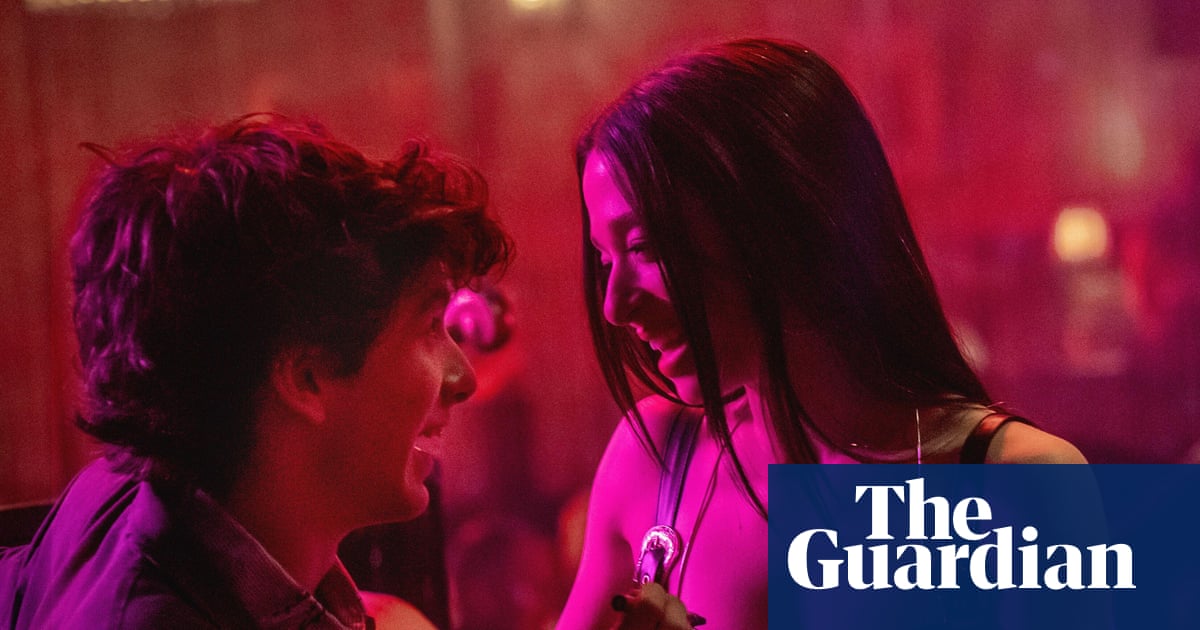
The bigger challenge for multi-hyphenate directors is juggling roles on the set. Ben Jacobson co-wrote and co-starred in his debut film “Bunny” with his best friend Mo Stark, but Jacobson had to constantly switch gears. He did it partly because they’d written his character, Dino, as “a version of myself — a movie-obsessed friendly person who’s a bit of a hothead,” and he couldn’t see anyone else in the role, and partly because he “wanted to play dress-up with my best friend.”
Still, once the cameras started rolling, he says, “I often wished I wasn’t acting” so he could focus on his directing. He’d have to lean on their third writer, Stefan Marolachakis, to look in the monitor and assess his acting performance in each scene. As he and Stark prepare their next film, Jacobson is planning to take on a much smaller acting role. But if a producer said they liked his chemistry with Stark and wanted another buddy comedy, he’d consider it. “It depends on whether they’re giving us money, pay for the movie,” Jacobson says with a laugh.
Snyder says that when he switched from commercial work where he operated the camera to directing movies, he was told being director of photography would be too much work. “I didn’t know anything about the movie business, so I said OK,” he recalls. But on “Dawn of the Dead” and then “300,” he’d often take the B camera or run a small second unit while his cinematographers were lighting a big setup. “We were dying to get everything shot on time so I’d just say, ‘Let me go shoot to move us along.’”
As his budgets grew those opportunities receded. “With giant movies like ‘Justice League,’ it gets so huge and you get pushed further away from the actual production,” he says. “I really got frustrated by that because I really am at my happiest when I have a camera in my hand.”
He always trusted his DPs and encouraged them to “flex their artistic muscles,” but in the last five years, starting with “Army of the Dead,” he has made smaller movies and insisted on being his own cinematographer. “It’s been the most liberating, happy experience — this is the why of making movies for me,” he says.
Still, he acknowledges that it is exhausting. “You never stop,” he says. “From the moment you walk on the set to the moment you finally call wrap — if you’re the director and the DP, nothing can happen without you, so you’re on 24/7.”
That may be why so few directors do double duty and only one, Cuarón, has ever won an Oscar for cinematography. That was for “Roma,” and that happened by accident. Cuarón has always shot some days on his own films to keep things moving and done it for friends as well. But with “Roma,” he was again counting on Emmanuel “Chivo” Lubezki, with whom he’d worked on five features. (Lubezki won an Oscar for “Gravity.”) But mere weeks before shooting started, Lubezki realized there was a scheduling conflict.
Cuarón asked him to recommend another cinematographer. “He said, ‘I have the perfect person. You.’” Daunted, Cuarón talked to other DPs he admired but he realized that “all the conversations were going to be in English and for this film I wanted to completely immerse myself in my language and my memories.”
Without Lubezki around, there was some tension on the set. “The director thought that the DP was very slow and the DP thought the director was an asshole,” Cuarón reports wryly. But he adds that while he doesn’t envision tackling two jobs at once again, “I loved it. I probably enjoyed ‘Roma’ more as a DP than as a director.”





 English (US) ·