.png)
 3 days ago
10
3 days ago
10
The camera industry enters 2026 at a crossroads. Several long-awaited successors are finally approaching their expected release windows, while other cameras we have been hoping for may never arrive at all. Here's what you can expect.
By examining historical release patterns, official manufacturer statements, and strategic market positioning, we can separate the probable from the improbable and understand what each potential release means for working photographers.
The Near-Certainties
Canon EOS R7 Mark II

Line History: Canon EOS R7 (June 2022), Canon's first RF-mount APS-C flagship.
Gap by 2026: 3.5 to 4 years.
Historical Pattern: Canon's APS-C flagships have historically enjoyed long production runs. The 7D (2009) gave way to the 7D Mark II (2014) after a five-year gap. The R7 represents a new mirrorless line, but Canon typically refreshes enthusiast-tier bodies every three to four years.
Thoughts: The strongest evidence for an imminent update comes from Canon executive Manabu Kato himself. Speaking at CP+ 2025, Kato stated unambiguously: "APS-C is a very important aspect of our business, so we are putting a lot of effort into it. Stay tuned: we are committed to meeting expectations, without disappointment." Canon's 2025 releases focused almost entirely on full frame bodies like the Canon EOS R6 III and Canon C50 cinema camera, following the company's established pattern of alternating between full frame and APS-C release cycles. With executive commitment on the record and the calendar aligning, 2026 looks like the year of the R7 Mark II. For wildlife and sports photographers, this matters enormously. The EOS R7 already delivers flagship-level autofocus performance in a crop-sensor body, and a successor would likely further close gaps with the R1 while maintaining that crucial 1.6x reach advantage.
Likelihood: 80-90%
Nikon Z9 II
Line History: D1 (1999), D2 (2003), D3 (2007), D4 (2012), D5 (2016), D6 (2020), Nikon Z9 (October 2021).
Gap by 2026: 4 to 5 years.
Historical Pattern: Nikon's flagship cycle has remained remarkably consistent for over two decades, running four to five years with almost no deviation.
Thoughts: The Z9 will reach the four-year mark by 2026, placing it squarely in refresh territory. Beyond timing, Nikon's April 2024 acquisition of RED Digital Cinema and the subsequent launch of the Nikon ZR cinema camera demonstrate substantial investment in video technology that would logically flow into the flagship platform. However, the Olympic question complicates the timeline. The Winter Olympics begin in Milan-Cortina in February 2026, and professional sports bodies traditionally arrive before the Olympic year begins so wire services can integrate new systems. As of early January 2026, Nikon has made no Z9 II announcement. If the camera has not been revealed by now, the Olympic window for mass professional adoption has effectively closed. The Z9 II is coming, but it will likely arrive too late for Milan-Cortina, positioning it as a post-Olympic refresh rather than an Olympic launch camera.
Likelihood: 70-75% for 2026 release, but only 25-30% for Olympic-window release.
The Strong Contenders
Canon RE-1 (AE-1 Retro Camera)
Line History: New product line. The Canon AE-1 was released April 1976.
Gap by 2026: Not applicable.
Historical Pattern: The Nikon Zf (2023) demonstrated strong market demand for retro-styled full frame mirrorless cameras. The Fujifilm X100VI (2024) showed sustained demand for retro compacts.
Thoughts: April 2026 marks the 50th anniversary of Canon's legendary AE-1, and the company would be unlikely to ignore such a natural marketing opportunity. Manabu Kato addressed this directly in a March 2025 interview with PhotoTrend: "There is indeed a lot of demand for vintage-looking cameras, and that is not something we are ignoring. We are listening." When asked about his personal favorite vintage Canon, he specifically named the AE-1. He acknowledged technological and commercial viability challenges but notably did not dismiss the possibility. Canon's recent emphasis on accessible pricing with products like the RF 50mm f/1.8 STM and the relatively affordable EOS R8 suggests willingness to target the enthusiast segment that a retro camera would occupy. For photographers who care about shooting experience as much as specifications, a Canon retro body would offer something the current lineup lacks: character. You can read a more detailed analysis on the RE-1 here.
Likelihood: 65-75%
Nikon Z7 III
 Line History: Z7 (August 2018), Nikon Z7 II (November 2020).
Gap by 2026: 5 to 6 years.
Historical Pattern: The Z7 cycle showed a 27-month interval for the first update. A 5-to-6-year gap would be more than double that established interval, making it exceptionally long for a high-resolution body in an actively contested market segment.
Thoughts: The competitive pressure is real. The Sony a7R V arrived in October 2022 with a 61-megapixel sensor and AI-based autofocus. The Canon EOS R5 II launched in August 2024 with a 45-megapixel stacked sensor and substantially improved video capabilities. The Z7 II's 45.7-megapixel BSI sensor remains capable, but it uses older readout technology with more pronounced rolling shutter than competitors. Landscape, studio, and commercial photographers who have historically represented Nikon's core strengths increasingly face pressure to consider Sony or Canon systems. The technology to refresh the Z7 line already exists within Nikon: both the Nikon Z8 and Z9 use a 45.7-megapixel stacked sensor that could trickle down. For photographers who have stayed loyal to Nikon, a Z7 III would finally deliver the modern autofocus and readout speeds that competitors have offered for years.
If you are a landscape photographer looking to make the most of high-resolution cameras like these, Elia Locardi's Photographing the World: Landscape Photography and Post-Processing tutorial offers comprehensive guidance on capturing and editing stunning landscape images.
Likelihood: 60%
The Coin Flips
Fujifilm X-T6
Line History: X-T1 (January 2014), X-T2 (July 2016), X-T3 (September 2018), X-T4 (February 2020), Fujifilm X-T5 (November 2022).
Gap by late 2026: 3.5 to 4 years.
Historical Pattern: The X-T cycle averages roughly 26 months, with a range of 17 to 33 months. A late 2026 release would represent a 44-to-48-month gap, the longest ever for the line.
Thoughts: The extended timeline has context. The X-T series is no longer Fujifilm's flagship; that position belongs to the X-H series. Fujifilm's sensor and processor generations typically debut in flagship bodies before trickling down, so if an X-H3 arrives first, the X-T6 would logically follow. The X-T5 remains genuinely competitive, reducing the urgency for a successor. The line's dial-based, stills-focused identity differentiates it clearly from the X-H series, ensuring continued demand from photographers who prefer that shooting experience. A late 2026 release is plausible but depends on Fujifilm's platform development timeline.
Likelihood: 50-60%
Sony a7R VI
Line History: a7R (October 2013), a7R II (June 2015), a7R III (October 2017), a7R IV (July 2019), a7R V (October 2022).
Gap by late 2026: Approximately 4 years.
Historical Pattern: The a7R line shows progressively lengthening refresh cycles: 20 months, then 28 months, then 21 months, then 39 months. The trend suggests Sony has grown more comfortable letting high-resolution bodies mature.
Thoughts: The a7R V's 61-megapixel sensor and AI-based autofocus system remain competitive against anything currently available. Sony's recent focus has been on mainstream bodies like the Sony a7 V and video-centric cameras across the FX and ZV lines. High-resolution bodies have historically refreshed more slowly than mainstream lines, and Sony appears content to let the a7R V continue serving its audience. A late 2026 or 2027 release is plausible, but photographers should not feel urgent pressure to wait.
Likelihood: 45-55%
Leica M12
Line History: M8 (2006), M9 (2009), M Typ 240 (2012), M10 (2017), Leica M11 (January 2022).
Gap by late 2026: 4 to 5 years.
Historical Pattern: The later digital M generations settled into a five-year cadence, placing the M12 most naturally in the 2027 window, though late 2026 remains possible.
Thoughts: The strongest evidence for active development comes from Dr. Andreas Kaufmann, Chairman of Leica's Supervisory Board, who confirmed in a January 2026 podcast that Leica is developing its own sensor: "We are also developing our own sensor again, in a more advanced version. I think we have made significant progress with that." This represents a shift away from the Sony sensors used in the M11 and strongly implies the sensor is intended for a future M body. The October 2025 launch of the M EV1, the first M camera with a built-in electronic viewfinder, demonstrates active platform development. However, Leica's USPTO trademark application for "M12" was abandoned, potentially causing delays or requiring rebranding. Leica executive Stefan Daniel stated in 2022 that IBIS for the M system was something they were exploring, and for rangefinder photographers, stabilization would be transformative.
Likelihood: 45-55%
The Long Shots
Panasonic S1H II
Line History: Panasonic S1H (September 2019).
Gap by 2026: 6 to 7 years.
Historical Pattern: The S1H was Panasonic's first full frame video-centric hybrid. No direct predecessor exists for cycle comparison, but 6 to 7 years is extremely long for any camera line.
Thoughts: Panasonic pioneered the video-focused full frame hybrid category with the S1H but has ceded substantial ground since then. The Sony FX3 and Sony a7S III captured the video-centric market. The Canon C50 and Nikon ZR have entered the space more recently. The Panasonic S1 II (2025) demonstrated Panasonic's continued commitment to the L-mount system, suggesting the platform itself is not being abandoned. An S1H successor would be logical to reclaim the video-hybrid space Panasonic once led, but the complete absence of official signals makes 2026 uncertain.
Likelihood: 30-40%
Canon EOS R3 Mark II
Line History: Canon EOS R3 (September 2021).
Gap by 2026: 4 to 5 years.
Historical Pattern: The R3 occupies a unique position below the R1 flagship but above the R5. Canon's somewhat comparable 1D X series ran on four-year cycles: 1D X (2012), 1D X II (2016), 1D X III (2020), though there's no direct DSLR equivalent.
Thoughts: The competitive pressure comes from the Sony a9 III, the first full frame camera with a global shutter sensor. Canon may use an R3 II to test global shutter technology before implementing it in a future R1 successor. However, the R3 occupies a niche market serving sports professionals who need flagship performance but do not require the R1's full capabilities. Canon may prioritize other bodies, and photographers waiting specifically for an R3 II may be waiting longer than expected.
Likelihood: 30-40%
Sony a7S IV
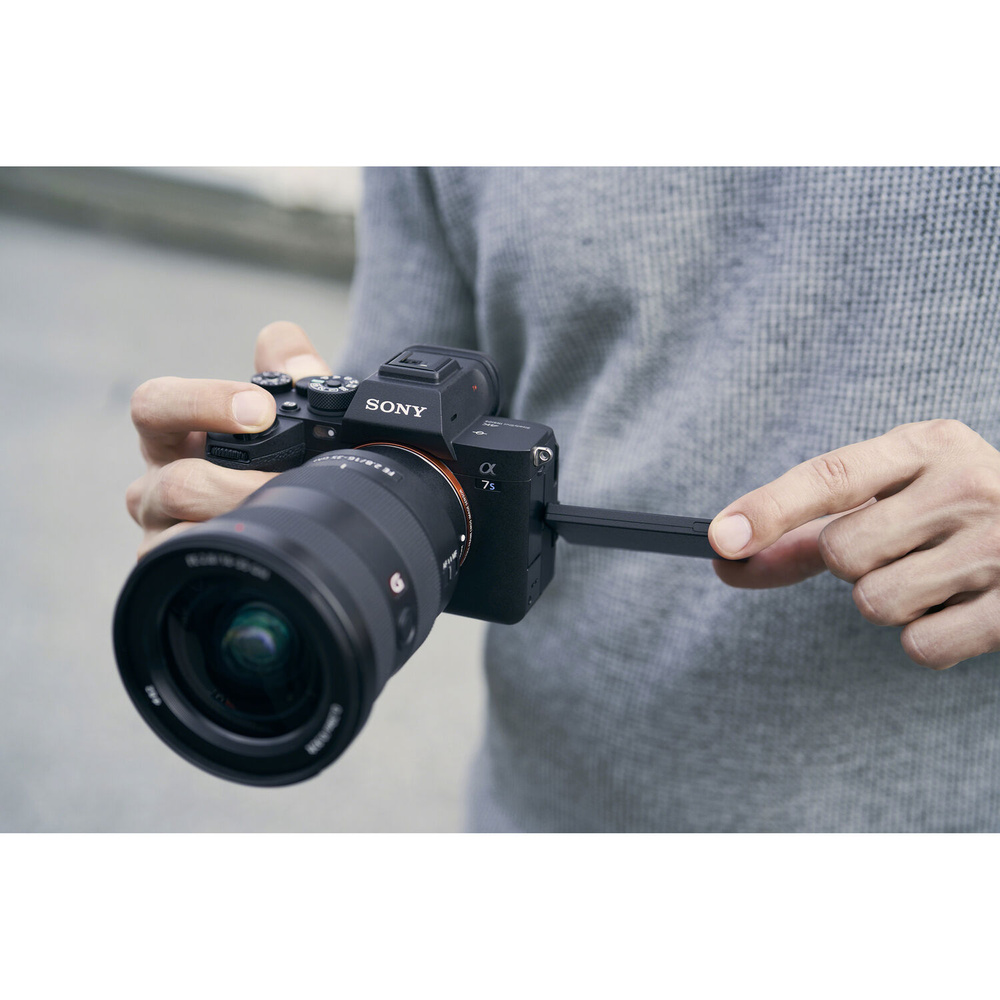
Line History: a7S (April 2014), a7S II (September 2015), a7S III (July 2020).
Gap by 2026: 5.5 to 6 years.
Historical Pattern: The a7S line has irregular intervals (1.5 years, then 5 years), but the current gap extends beyond even the long Mark II to Mark III wait and represents the longest silence in the line's history.
Thoughts: The evidence suggests strategic abandonment rather than delayed refresh. During the period the a7S line has been dormant, Sony actively developed alternative products serving the same audiences. The Sony FX3 (February 2021) uses the same 12-megapixel sensor as the a7S III but in a cinema-oriented body with better cooling and unlimited recording. The Sony ZV-E1 (2023) brought full frame video capabilities to the content creator market. Sony's video strategy has bifurcated: professional users are directed to the FX Cinema Line, while creators are served by the ZV series. The a7S occupied a middle ground for enthusiast video shooters who wanted a hybrid body, and that market segment may no longer exist as a distinct category in Sony's view. If the a7S IV were coming, Sony would likely have signaled it by now. The line may be finished.
For photographers and videographers looking to improve their filmmaking skills regardless of which camera they choose, the Introduction to Video: A Photographer's Guide to Filmmaking tutorial provides an excellent foundation.
Likelihood: 15-20%
The Quiet Sunsets
Fujifilm X-Pro4
Line History: X-Pro1 (January 2012), X-Pro2 (January 2016), Fujifilm X-Pro3 (October 2019).
Gap by 2026: 6 to 7 years.
Historical Pattern: The X-Pro cycle has run approximately 4 years on average. A 6-to-7-year gap would be nearly double that, unprecedented for this line.
Thoughts: The X-Pro4 faces a confluence of obstacles. The primary problem is component allocation: the X-Pro and X100 series share hybrid optical/electronic viewfinder technology requiring specialized manufacturing capacity. The X100VI remains supply-constrained and generates significantly higher revenue per unit of viewfinder capacity than an X-Pro4 would. In resource-constrained environments, Fujifilm's rational decision is to prioritize X100 production. Additional challenges compound the situation. The X-Pro3's controversial hidden rear screen polarized users, meaning any successor must either retreat to a conventional screen or re-engineer the mechanism entirely. The optical viewfinder faces increasing technical challenges as Fujifilm's lenses grow larger and physically block the OVF. At the price point an X-Pro4 would require ($2,400 to $2,600), it competes directly with full frame alternatives like the Sony a7C II and Nikon Zf. The most likely outcome is that the X-Pro line quietly sunsets, with the X100 series becoming the sole torchbearer of Fujifilm's hybrid viewfinder philosophy. I personally think the line is finished.
Likelihood: 10%
Sony RX100 VIII
Line History: RX100 (June 2012), II (2013), III (2014), IV (2015), V (2016), VA (2018), VI (2018), Sony RX100 VII (July 2019).
Gap by 2026: 6.5 to 7 years.
Historical Pattern: The RX100 received annual updates from 2012 through 2019, then complete silence. The gap represents a dramatic departure from established patterns.
Thoughts: The dormancy reflects strategic decisions rather than oversight. Sony made two critical pivots that hollowed out the camera's value proposition. The Mark VI and VII switched from the beloved 24-70mm f/1.8-2.8 lens to a 24-200mm f/2.8-4.5 travel zoom, sacrificing the low-light performance and bokeh that defined the line's appeal. Simultaneously, prices climbed to $1,200, positioning the camera to compete with entry-level full frame bodies. Then Sony actively cannibalized the line: the Sony ZV-1 launched in May 2020 at $799 with the fast 24-70mm lens the RX100 had abandoned. Sony looked at traditional photographers and video creators and bet on creators. Their response is more likely to be market exit than product refresh. The enthusiast compact market is not dead (the Fujifilm X100VI and Ricoh GR IV prove demand exists), but Sony has chosen not to serve it. I talk more about why the line is probably finished here.
Likelihood: 10%
Too Soon: Canon EOS R5 Mark III and Nikon Z5 III
Line History: EOS R5 (July 2020), Canon EOS R5 Mark II (August 2024). Z5 (July 2020), Nikon Z5 II (April 2025).
Gap by 2026: Approximately 2 years for R5 III; less than 1 year for Z5 III.
Historical Pattern: The R5 took 49 months for its first update. The Z5 took 57 months. Both lines refresh slowly by design.
Thoughts: The R5 Mark II launched in mid-2024 with significant upgrades including a new stacked sensor, improved cooling, and enhanced autofocus. A two-year turnaround to a Mark III would be unprecedented. The Z5 II launched in April 2025, less than a year ago, and entry-level lines refresh more slowly than enthusiast or professional bodies. A Z5 III before 2028 is essentially impossible. Photographers can buy these current models with confidence; they are not being replaced anytime soon.
Likelihood: 1-3% for R5 III; less than 1% for Z5 III.
What This All Means
Several patterns emerge from this analysis. The four-year refresh window has caught up with multiple cameras simultaneously. The R7, Z9, R3, Z7, and M12 have all entered or passed the typical four-year refresh point, creating natural clustering of potential releases and intense competitive pressure across segments.
The retro bet gets tested in 2026. If Canon releases an AE-1-inspired body, it will represent the next major domino after the Nikon Zf's success. Whether retro styling represents a sustainable market segment or peak nostalgia remains to be seen, and Canon's entry will help determine the answer.
The video hybrid identity is in crisis. The a7S line appears finished. The S1H has been dormant for over six years. Video capability is fragmenting into dedicated cinema lines (Sony FX, Nikon ZR) versus vlogging tools (Sony ZV). The "hybrid" middle ground is being consolidated into traditional midrange stills cameras and thus may be shrinking or disappearing.
APS-C is having a moment. Canon's R7 II is positioned as a flagship-level APS-C body backed by explicit executive commitment. Fujifilm's X-T6 and X-H3 represent the format's high end. The crop sensor is making a renewed case for itself, particularly for wildlife and sports photographers who benefit from the reach advantage.
Specialized products face extinction pressures. The X-Pro4's hybrid viewfinder falls victim to its sibling's success and manufacturing constraints. The RX100 dies from strategic pivot toward creators. The lesson is clear: when niche products depend on shared components with mainstream products, the niche loses. That hasn't stopped other weird cameras, though, like the X half of Sigma BF.
Conclusion
The cameras most likely to arrive in 2026 serve mainstream professional needs or capitalize on proven market trends. The Z9 II and R7 II address core professional and enthusiast demands. A Canon retro body would follow the path blazed by the Nikon Zf and Fujifilm X100 series. The Z7 III represents a competitive response that Nikon must make to remain relevant in the high-resolution segment.
The cameras least likely to arrive occupy niches that manufacturers have deprioritized or market segments that may no longer exist. The X-Pro4 cannot escape its sibling's shadow. The RX100 was abandoned in favor of creator-focused products. The a7S may have been rendered redundant by Sony's own product lines.
For photographers making purchasing decisions today, the takeaway is straightforward: base decisions on what exists now, not what might arrive later. The best camera is the one you can actually buy.






 English (US) ·