.png)
 2 days ago
8
2 days ago
8
With all the budget lens manufacturers available to a prospective buyer, it’s hard to separate the wheat from the chaff. Sirui is a well-known manufacturer of tripod gear, and when I heard they were making lenses too, I was very skeptical.
However, the Aurora 85mm f/1.4 that I reviewed completely changed my opinion, and now the second Aurora lens in the Sirui lineup is in my hands. I was anticipating similar greatness from this latest Aurora 35mm f/1.4, and the $549 price keeps it budget-friendly.
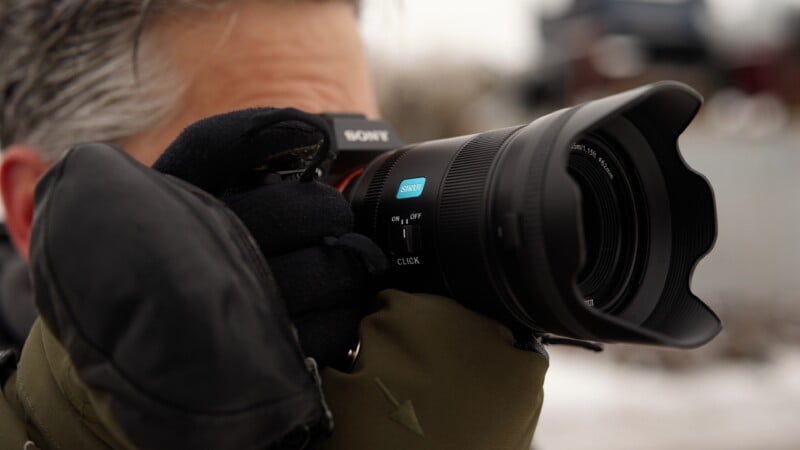 I took the Sirui 35mm out for a trip through industrial Calgary.
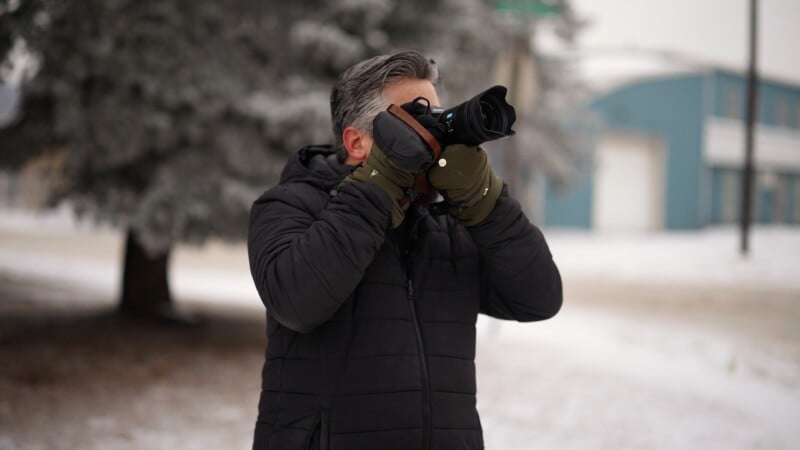
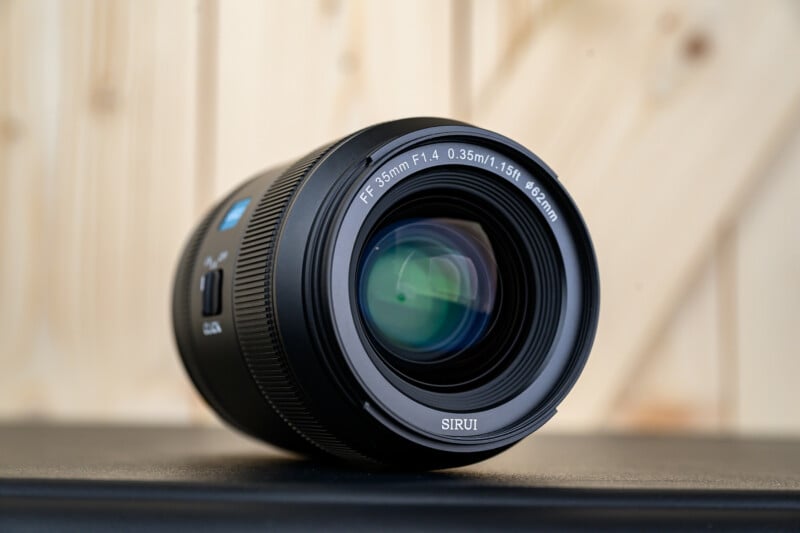 If you need a fast 35mm lens the Aurora has some really nice features.
Sirui Aurora 35mm f/1.4: How It Feels
The build quality of the Aurora 35mm is easily one of its best features. The machining work on the aluminum is solid, and the manual focus ring has a smooth-turning action. There is a true AF/MF selector switch on the side and even a customizable button.
 The Aurora 35mm f/1.4 is well-built and feels like a quality product.
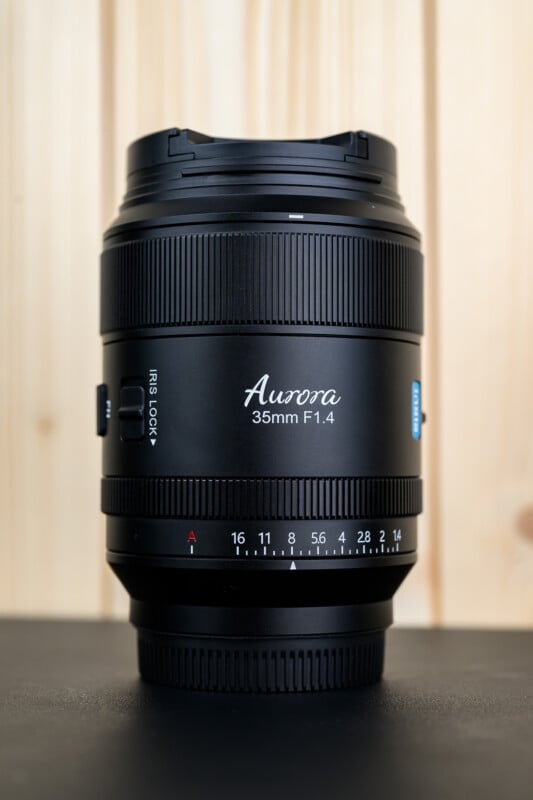
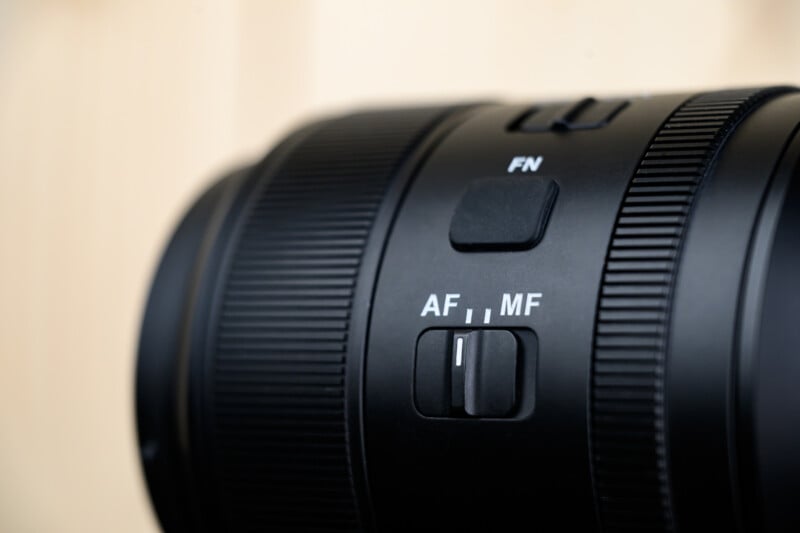 The aluminum body design is handsome and functional.
The Aurora lenses feature an aperture ring that can be set for both smooth or click-stop functionality, and the lenses are even weather sealed. You’ll also find a USB-C port located under the lens mount, which allows for any future firmware updates. It’s honestly very rare to see lenses this well outfitted, even at higher price levels.
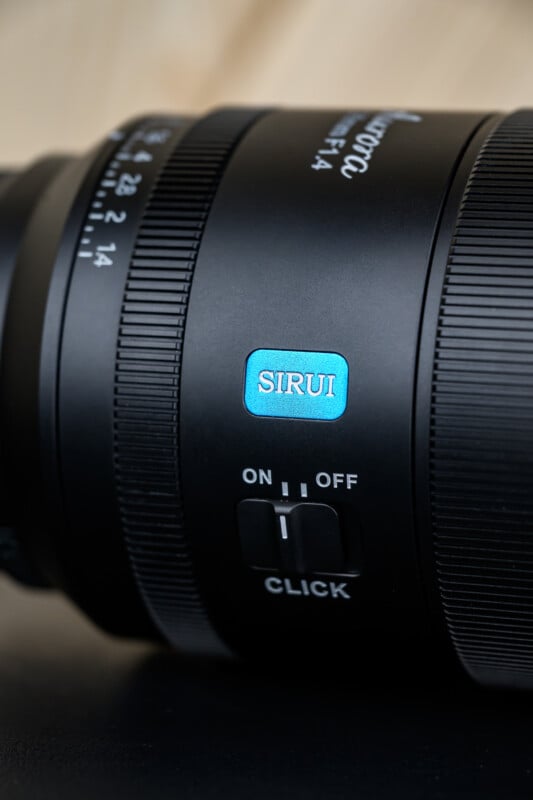 The aperture ring can be set to click or not.
The front of the lens has a 62mm filter thread, and there is a supplied petal-shaped hood to block extraneous light. The whole lens weighs around 17.3 ounces (490 grams), which is very comparable to other manufacturers making similar 35mm lenses. Overall, the Sirui feels well-made and feature-rich at a price range that normally has a lot of compromises and omissions.
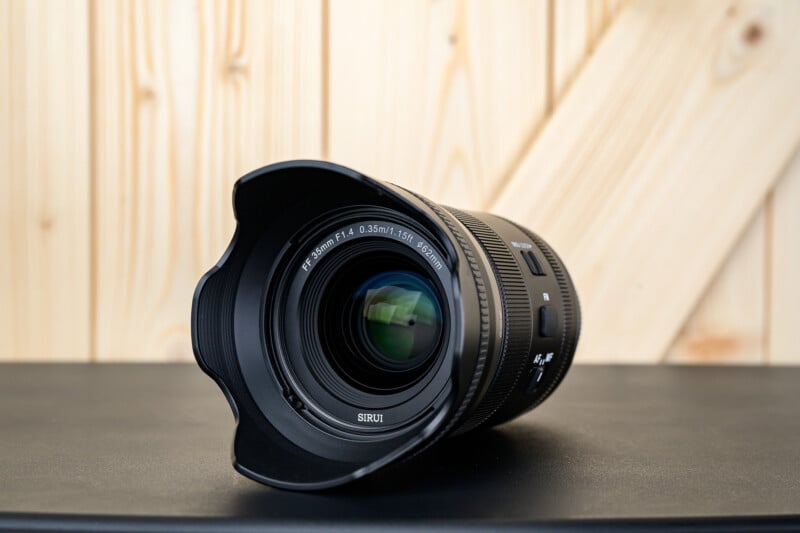 There is a hood provided with a proper locking button.
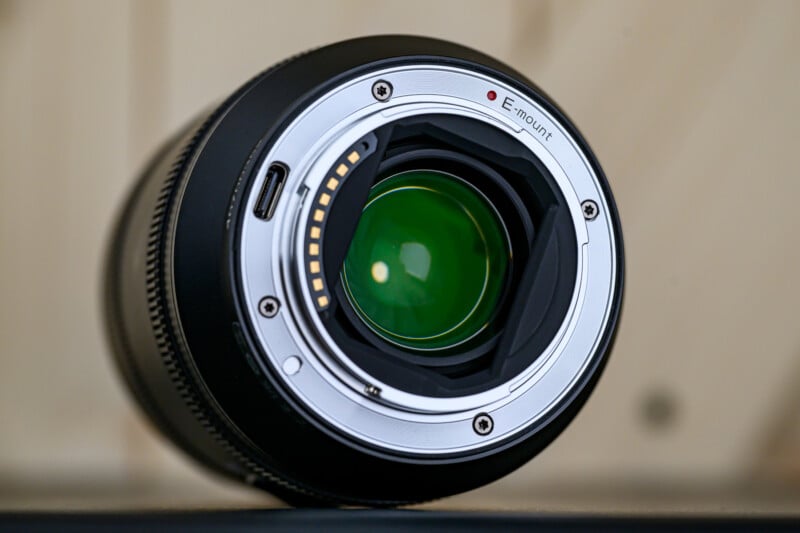 The lens has some weather sealing, and the connection port is protected.
Sirui Aurora 35mm f/1.4: How It Shoots
Good build quality is nice to have, but in the end, a lens has to perform well in the field. The Sirui Aurora 35mm f/1.4 does have some issues, but the speed of the focusing motor is not one of them. You see, the Sirui Aurora lenses feature what are typically slower STM autofocus motors to keep the cost down. When I reviewed the 85mm, I found the AF speed to be a little ponderous, with noticeable lag focusing from near to far. The 35mm has a similar motor within, and you do notice some delay when focusing.



However, the speed seems slightly better than the 85mm lens, and because the 35mm depth of field is more expansive, being super fast is slightly less critical. The slower AF speed is noticeable, but I never found it to be an issue when shooting on the streets, although in very demanding action situations, it might be intolerable. If you are into documentary or sports photography, you might want to look elsewhere, but for street and travel shooters, the focusing speed is adequate.



There are some optical compromises as well, and I think we should get those out of the way first. This lens is prone to flare a little bit. Shooting at wider apertures, some ghosting is visible, and this becomes more prominent as you close the aperture down. It’s not a terrible result, but it is enough that I would take more care when considering my angles and compositions with bright light sources around. Contrast is still well-retained, and the hood does a good job of helping out.
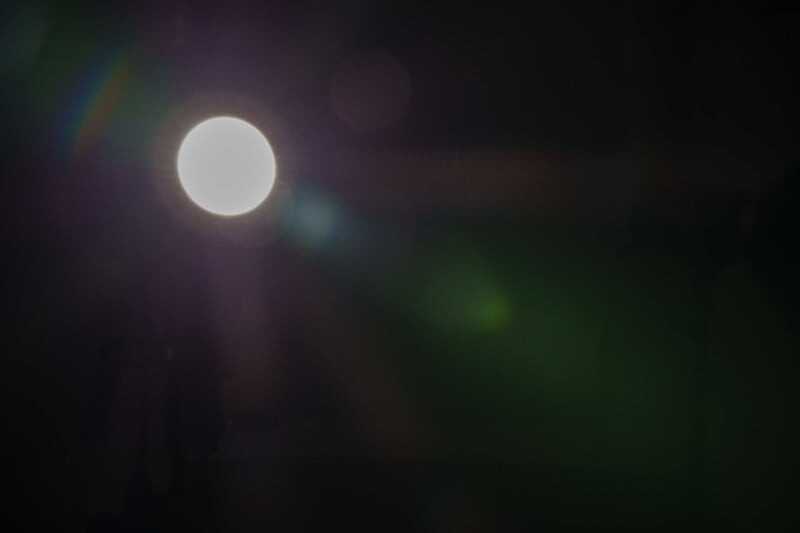 Flare can show up at tighter apertures, but it’s not a terrible result.
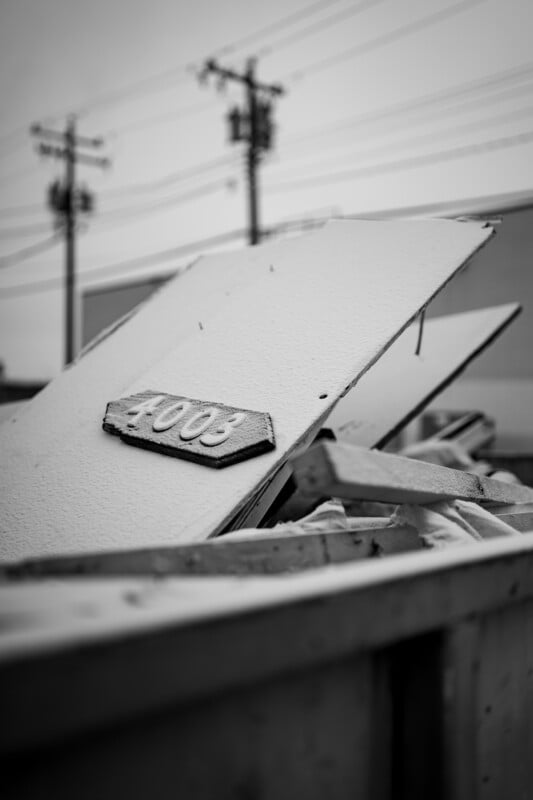
Longitudinal chromatic aberrations, or LoCA, will also show up when shooting at the widest apertures. This is hard to get rid of in editing, so the less, the better. However, the LoCA that is visible isn’t terribly strong in most situations. There is a propensity for purple color fringing as well, but this is easily dealt with when editing the picture.
 LoCA can be seen in both foreground and background areas of the image.
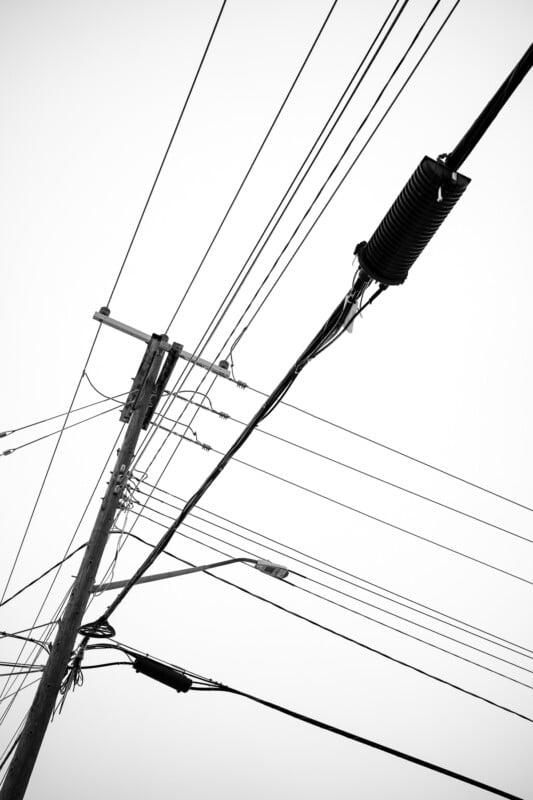
 You can also see some purple color fringing along the wire, but this is easily dealt with.
The main issue I have with the Aurora series of lenses is the middling bokeh performance. When shooting at f/1.4, you tend to get a more unpleasant-looking cat’s eye effect with clipped corners and an overall harsh or busy look to backgrounds. Onion rings and a strong halo are visible around highlights as well, which contributes to the busy-looking backgrounds. To be fair, this less appealing bokeh performance is common at this price, and is by no means unusable. Also, the bokeh at the 35mm focal range isn’t going to be as critical as it might be on the 85mm lens, for example.
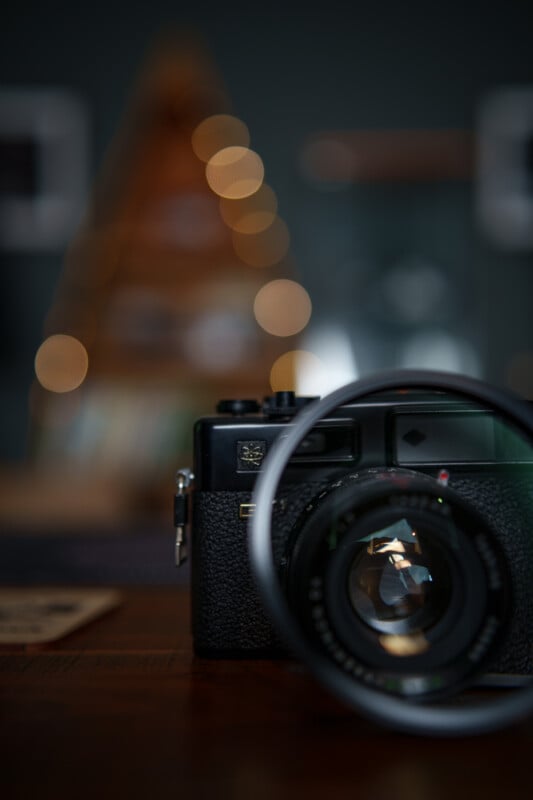 Bokeh can have some harshness and polygonal-looking highlights.
 Here is a good example of the harshness that can be present in out-of-focus areas.
What consistently impresses me about the Aurora lenses is their sharpness. The 35mm is full of detail and contrast in the center of the image at f/1.4. Stopping the lens down makes almost no difference because the resolution is already that good. Corners at f/1.4 show some vignetting, but the detail is acceptable, and it only gets better as the aperture gets tighter. The lens is essentially excellent at f/1.4 and has strong contrast throughout the image.
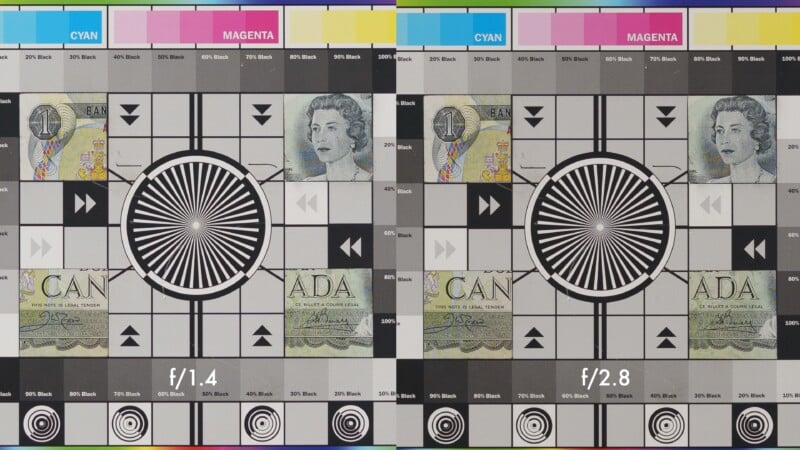 Sharpness is excellent in the center of the image regardless of the chosen aperture.
 Even corners are good at f/1.4 with some vignetting present.
Don’t Sleep on the Sirui Aurora 35mm f/1.4
Sirui plans to build a series of Aurora lenses to a total of five primes in the future. The 85mm was the first, and this 35mm is the second. I’m seeing a pattern forming with these lenses: they share excellent build quality and razor-sharp glass. There are definitely some compromises that result from the affordable nature of these lenses — which are available for E-mount, L-mount, and Z-mount, and even Fujifilm X-mount — but if you want a fast 35mm lens, the Aurora might be the best option out there.


Are There Alternatives?
In E-mount and L-mount, the Sigma 35mm f/1.4 DG Art would be a more expensive alternative with better optical performance.
On Z-mount, the Nikon 35mm f/1.4 gives very stiff competition considering its affordable price and excellent optical characteristics. Samyang/Rokinon makes a 35mm f/1.4 Prima lens with a very similar price and optical quality, but the lens itself is very basic and does not offer the sophistication present in the Sirui.
Should You Buy It?
Yes. In E-mount or L-mount, the Sirui represents awesome value for the dollar. It also makes me very excited to see what is in store for future Aurora lens releases.







 English (US) ·