.png)
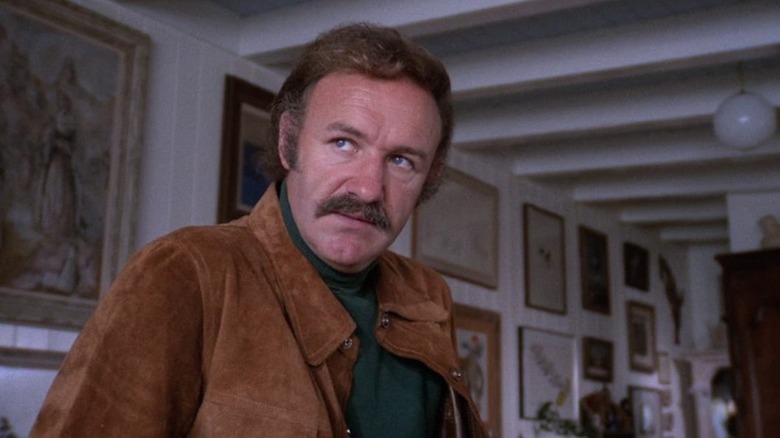
Warner Bros.
Film noir has had a tendency towards bleakness since the genre's birth in the 1940s, but it got downright desolate during the disillusionment of the 1970s. The United States' Camelot swagger was long gone. There'd been a spate of political assassinations, the Vietnam War meat grinder was chewing up young men at an alarming pace, and the increasingly paranoid President of the United States committed a crime that would force him to resign from office.
Justice, kindness, and hope were in short supply throughout most of the decade, and this was fertile ground for the cynical noir genre. Films like "Charley Varrick," "Across 110th Street," and "The Friends of Eddie Coyle" were mean and plenty violent; they threw viewers into the company of thieves and killers, men fully devoid of a moral code. The endings were often brutal, none more so than the hellish finale of "Chinatown," where we watch in stark horror as John Huston's Noah Cross drags his daughter Katherine away from the freshly shot Eveyln (Faye Dunaway), who is also Evelyn's daughter.
You never shake these movies off. They burrow into your soul, and stay there forever. One movie that's proved darkly resonant throughout my life is Arthur Penn's "Night Moves," a hybrid Los Angeles-Florida noir that arrives at its shocking terminus off the coast of the Keys. It's powered by a phenomenal Gene Hackman performance, and features a 17-year-old Melanie Griffith in her first credited role. It's a smart, twisty, ultimately haunting film, and no one was a bigger fan of it than Roger Ebert.
Night Moves is a four-star film noir
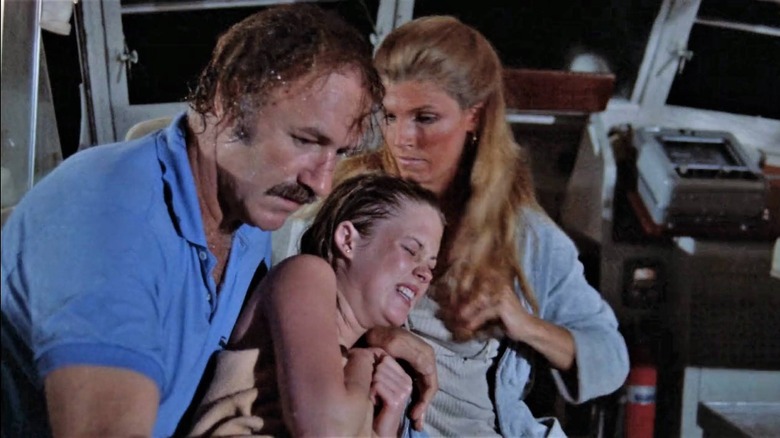
Warner Bros.
Roger Ebert gave "Night Moves" four stars upon its theatrical release in 1975, and opened his rave review by comparing it quite favorably to Stuart Rosenberg's noir "The Drowning Pool." That film starred Paul Newman as Lew Harper, a Los Angeles private investigator created by crime fiction legend Ross Macdonald. Like Hackman's Harry Moseby in "Night Moves," Harper finds himself embroiled in some sordid Southern intrigue involving, in Ebert's words, a "little-girl-lost" plotline. There's a lot going on in "The Drowning Pool," but it winds up being a rare Newman throwaway. No one's heart seems to be in this cold-around-the-heart tale.
Not so with "Night Moves," which benefits tremendously from a marvelously twisty original screenplay by Alan Sharp. Hackman's P.I. is shaggy in all the right ways. His wife is having an affair with a Malibu milquetoast, and the work being offered doesn't suit his temperament. When he's approached by a faded Hollywood actor (Janet Ward) to track down her 16-year-old daughter Delly (Griffith), whose trust fund the woman is raiding, he smells an easy paycheck. It proves to be anything but.
Harry finds Delly in the Florida Keys, where she's living with her stepfather Tom (John Crawford) and his girlfriend Paula (Jennifer Warren). When he returns Delly to her mother at around the midpoint of the film, you know the very worst is yet to come, and that the crashed, submerged plane that Delly and Paula discovered during a swimming jaunt is laden with dark secrets. I don't want to spoil a brilliant movie, but it shouldn't come as a surprise that Harry finds himself drawn back to the Keys. And that's where it all goes nastily sideways.
Ebert found Night Moves tough and truthful
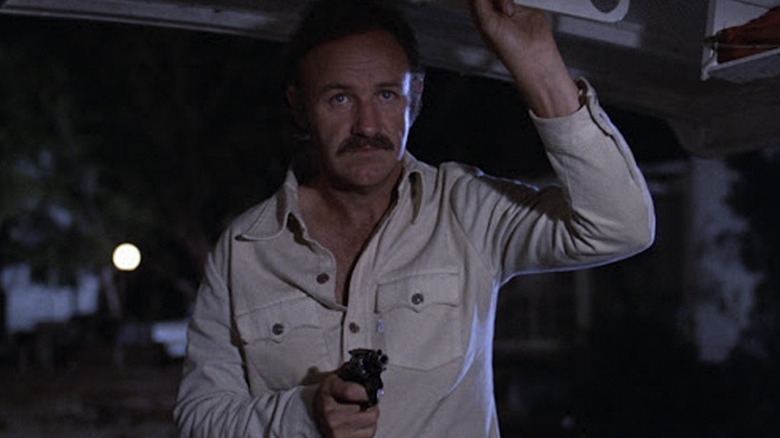
Warner Bros.
Ebert was especially knocked out by the unpredictable and unhurried plotting of "Night Moves." He loved the scene where Harry drops in on his wife and her paramour. It doesn't really move the plot forward, but it's a key to understanding Harry outside of his professional life. "[Harry's] confrontation with the man," wrote Ebert, "like so many scenes in the movie, is done with dialog so blunt in its truthfulness that the characters really do escape their genre."
He also singled out Warren, a bewitching, soulful performer who deserved much better from Hollywood, for praise. Ebert wrote that Warren "has the cool gaze and air of competence and tawny hair of that girl in the Winston ads who smokes for pleasure and creates waves of longing in men from coast to coast. Miss Warren creates a character so refreshingly eccentric, so sexy in such an unusual way, that it's all the movie can do to get past her without stopping to admire."
Ebert compares Hackman's Harry Moseby to Harry Caul of "The Conversation," but these are very different men. Caul is a bookish audiophile who isn't much for physical altercations; Moseby's a former football player who can brawl when called upon — and, sure enough, he finds himself in a down-and-dirty scrap late in the movie.
Ebert closes out his review thusly: "It has an ending that comes not only as a complete surprise — which would be easy enough — but that also pulls everything together in a new way, one we hadn't thought of before, one that's almost unbearably poignant." Amen. This is a masterfully crafted '70s noir that delivers a trio of rib-cracking blows in its closing minutes. The final shot is chilling. "Night Moves" leaves a mark.






 English (US) ·