.png)
 2 hours ago
3
2 hours ago
3
Why buy a dedicated monochromatic camera when a regular camera can take black and white photos? It’s more expensive, far less versatile, and made for a very small market of users. That’s the question I hear a lot, and I get it. But I would argue that photography isn’t always about the most efficient tool, or the easiest path to a final result.
Sometimes the journey really is the most important part of the experience, and if you love black and white photography, a dedicated camera just seems to fit right. Leica is no stranger to making these dedicated cameras and has heard complaining for many years from the naysayers — and rightfully so — that their niche products are overpriced.
The only other company to really give it a go has been Ricoh Pentax, and it’s arguable whether the K-3 III Monochrome made a meaningful impact. I never thought that camera would sell terribly well, as fun as it was to shoot, but now Ricoh has made a dedicated black and white GR IV Monochrome camera and the company may have gotten it right this time around… mostly: the $2,200 price is going to be hard to swallow.
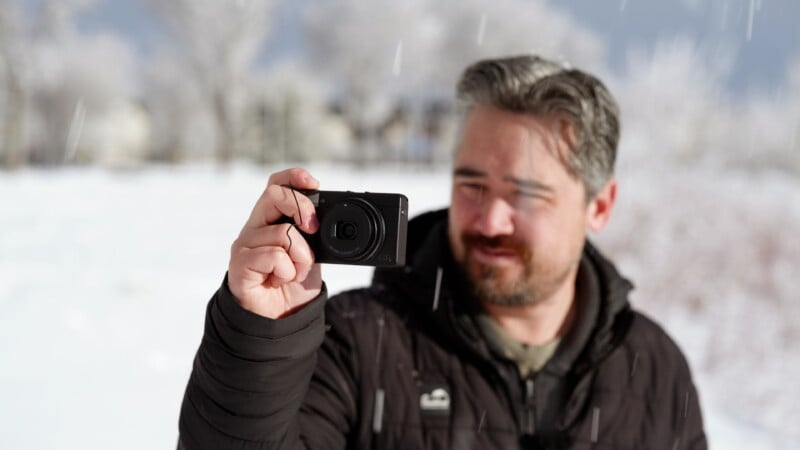 It really is a small travel companion that can be taken anywhere.
Ricoh GR IV Monochrome Review: How It Feels
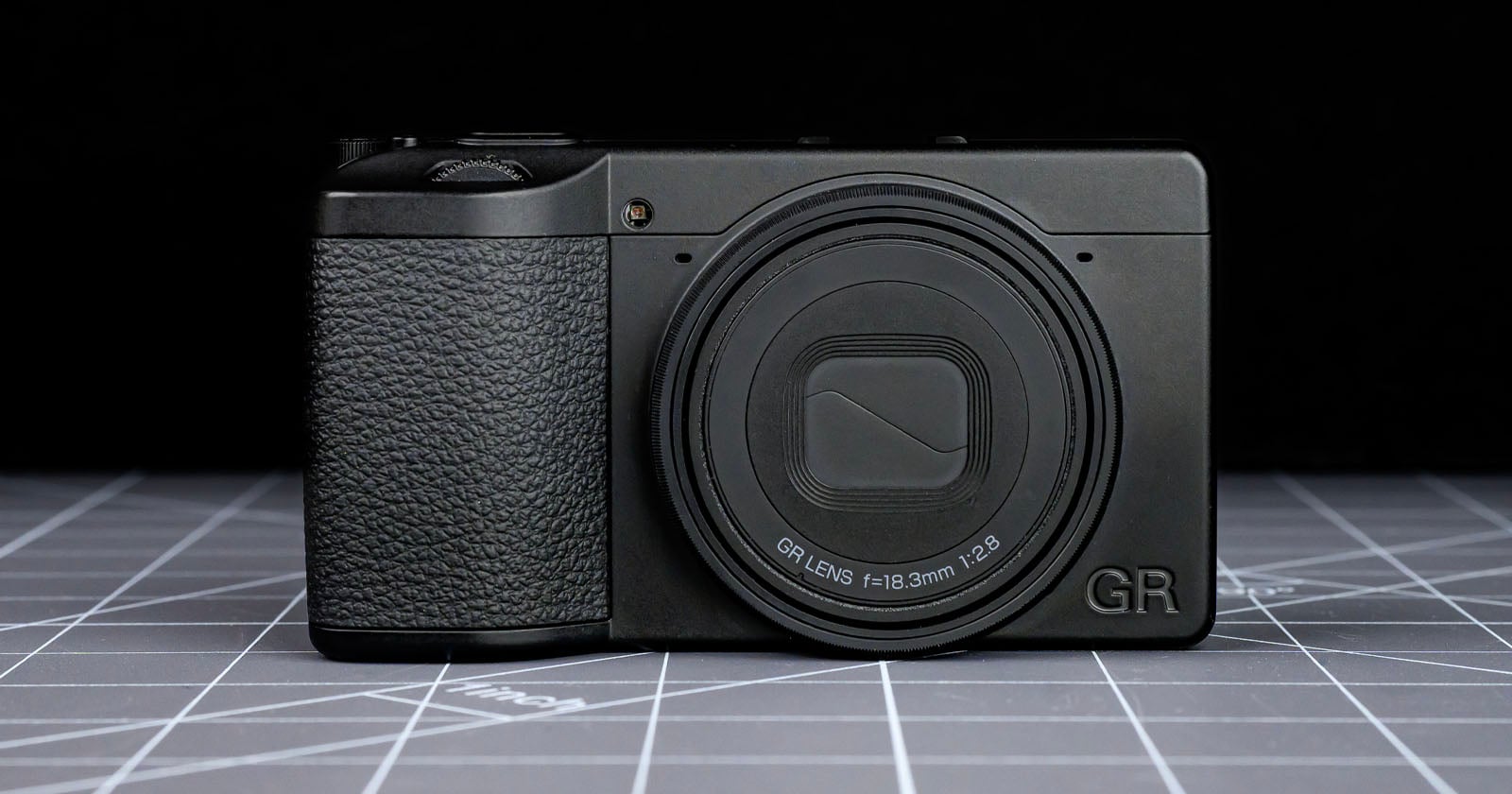
I should provide the context that I have already reviewed the baseline Ricoh GR IV camera, giving a detailed explanation of all the controls and features, so in this article, I will only give a brief overview. The GR IV Monochrome looks and feels almost exactly the same as the original GR IV, minus the white lettering of the original and the color filter array over the sensor. The GR IV is 2mm thinner than the GR III, making it very pocketable and Ricoh has made a return to the GR II layout of buttons and controls. I far prefer this setup and applaud Ricoh for doing so. At only 9.24 ounces (272 grams), the GR IV is incredibly portable.
 The GR cameras are ideal street and travel cameras that are discreet and portable.
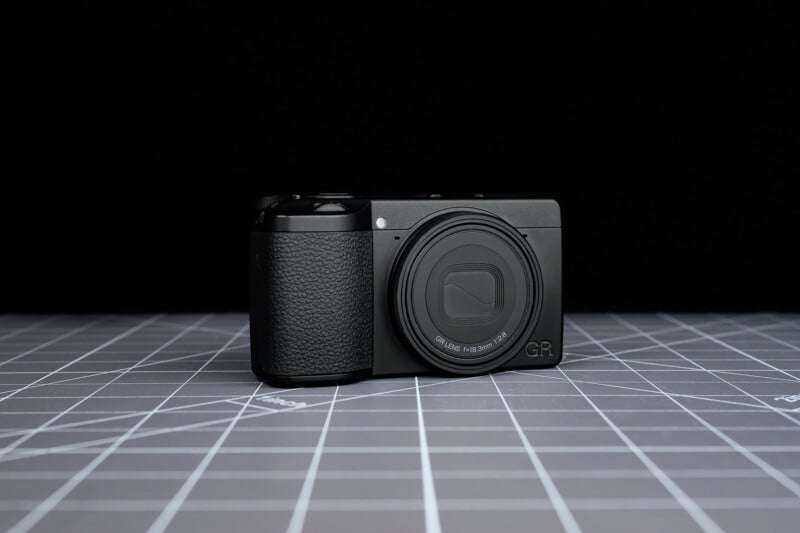 The GR IV is the best GR camera to date, and black and white only makes it better.
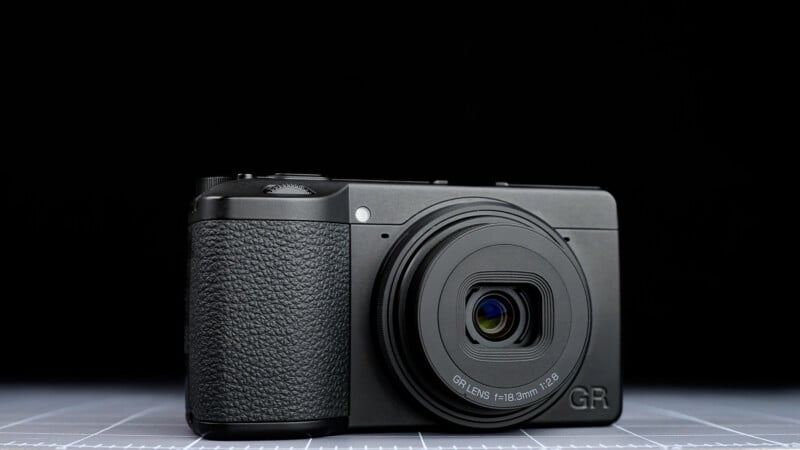 The updated lens still has an option to add filters via a bayonet adapter.
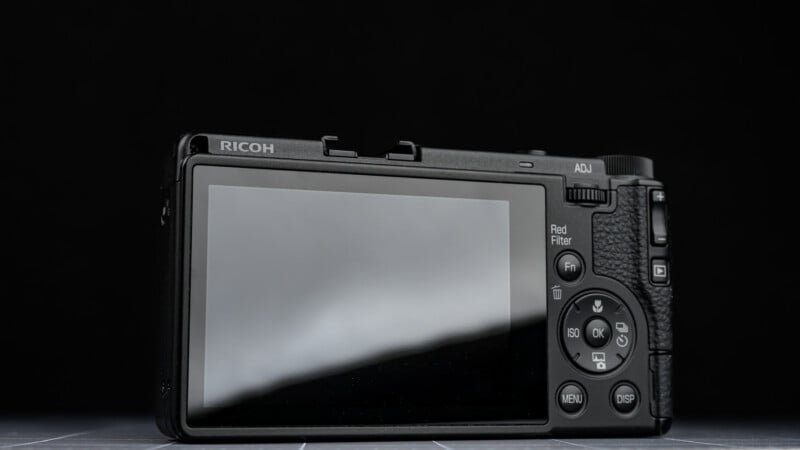 You only have a back panel to compose images with, so consider a separate optical viewfinder purchase.
You will get twin command dials with customizable push-in buttons incorporated, as well as a vertical plus and minus bar, which works well for exposure control. The mode dial is easy to use and locks in place, and all the controls are sleek so as not to catch or hang up on clothing when the camera is stored in a pocket. The grip is comfortable to hold, and the entire camera is easy to use one-handed. Sadly, that same sleek design means there is no place for an EVF, so you’ll be relying on the million-dot back panel display, or you might want to purchase an optional optical viewfinder to go in the hot shoe of the camera. This setup works surprisingly well, given that the Rioch GR IV uses a fixed 28mm full-frame field of view lens with an f/2.8 aperture.
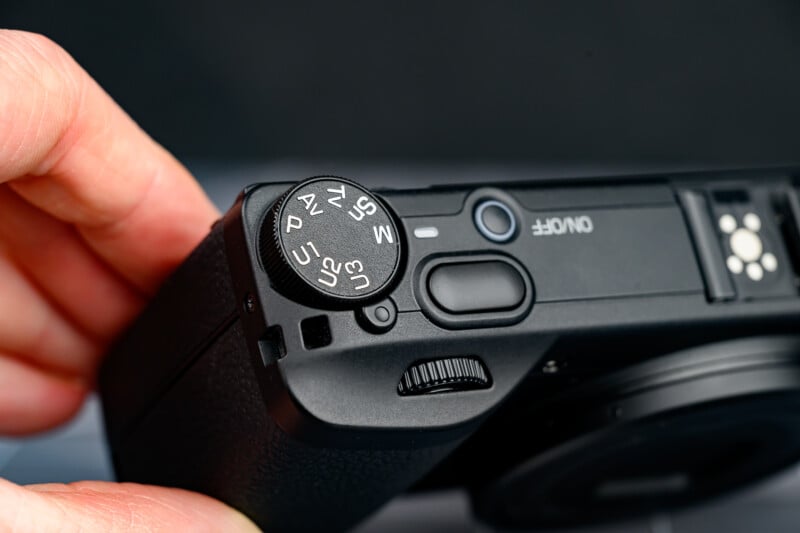 The older control scheme is way better than the GR III setup.
 The grip is slim and comfortable, and the camera is even thinner than the previous GR III.
Ricoh have updated the dust seals around the lens barrel, which should help with sensor dust issues, and you can get an accessory filter adapter that goes around the lens mount, too. Ricoh upped the battery life on the GR IV series to around 250 CIPA-rated shots. There is also around 53GB of internal memory, so an additional card is not necessarily required. If you do want extra storage, however, you are looking at the smaller microSD cards.
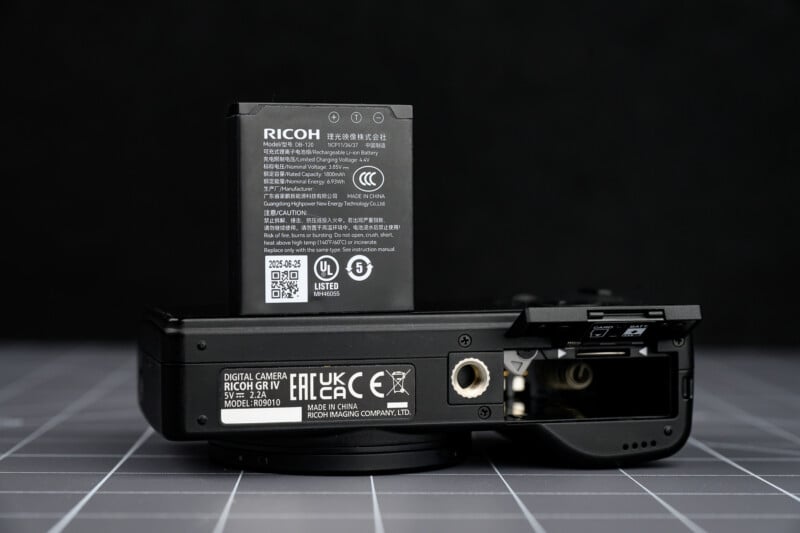 Battery life is improved, and the switch to microSD is a small price to pay for compactness.
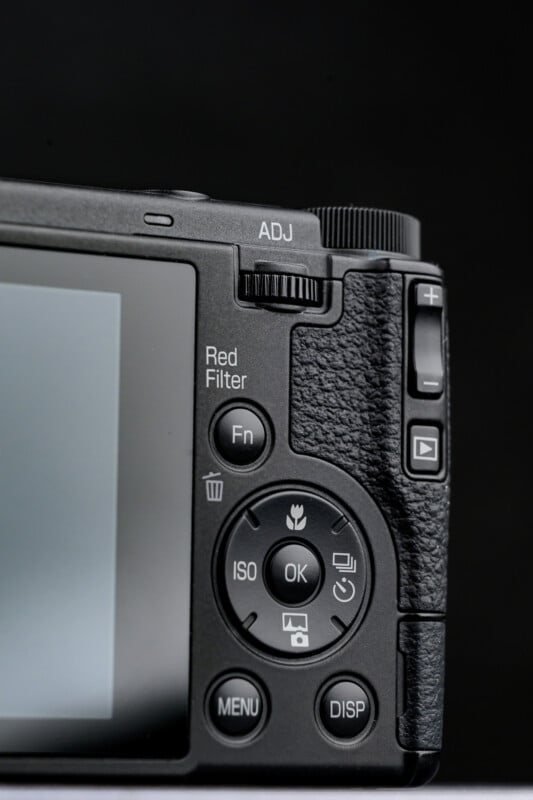 The controls are easy to use with just one hand on the camera.
Ricoh GR IV Monochrome Review: How It Shoots
The 18.3mm f/2.8 lens was updated from the previous models and sports better sharpness overall, with more clarity towards the corners of the frame. I really liked the close-up performance of this new lens and the overall improvements to sharpness, plus I really prefer a fixed 28mm full-frame equivalent field of view on a pocket camera. You also get a better image stabilizer in the camera, which now promises about six stops of performance. Everything about the GR IV platform just feels a little faster and a little tighter than before.
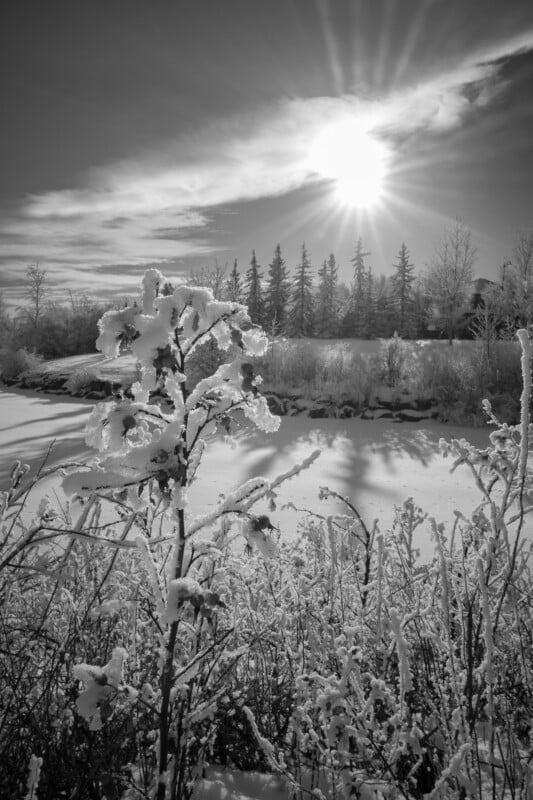 The new lens and smaller body are wonderful for taking pictures on the go.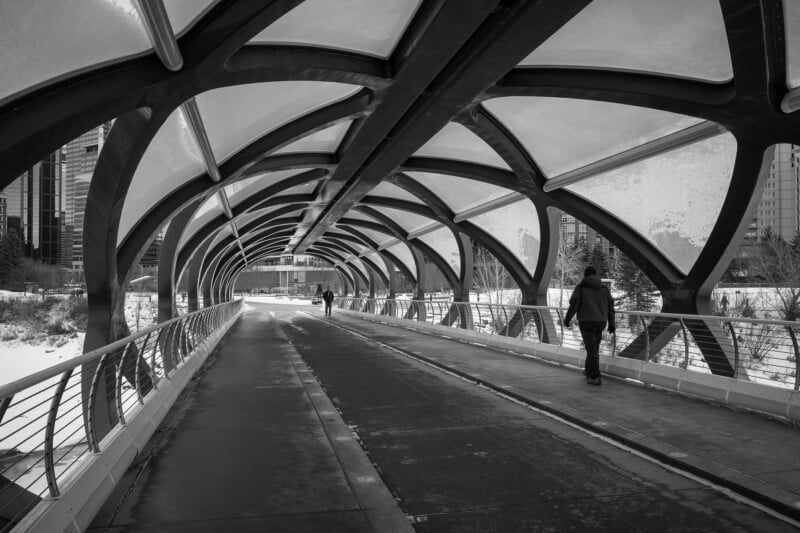
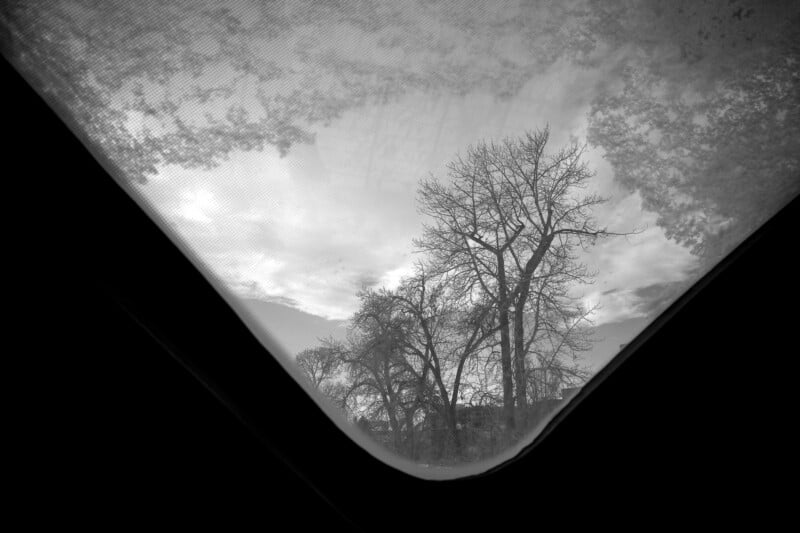
However, all of these features are already a known commodity from the base GR IV camera, so the real change lies in the new 26-megapixel sensor which has no color filter array on the GR IV Monochrome. The camera I tested was a version that was equipped with final firmware, so we are limited on what we can say about image quality results, but this is what we do know:
When you switch to a monochromatic sensor, you always get appreciable improvements to the overall image quality. There will be less shadow noise and better high ISO performance that can often be as much as one full stop better. I certainly noticed less noise and better detail than with the standard GR IV with a black and white profile, but we will test this further when we get final units. Regardless, there is a benefit to making a dedicated monochromatic camera, which black and white photography shooters will appreciate.
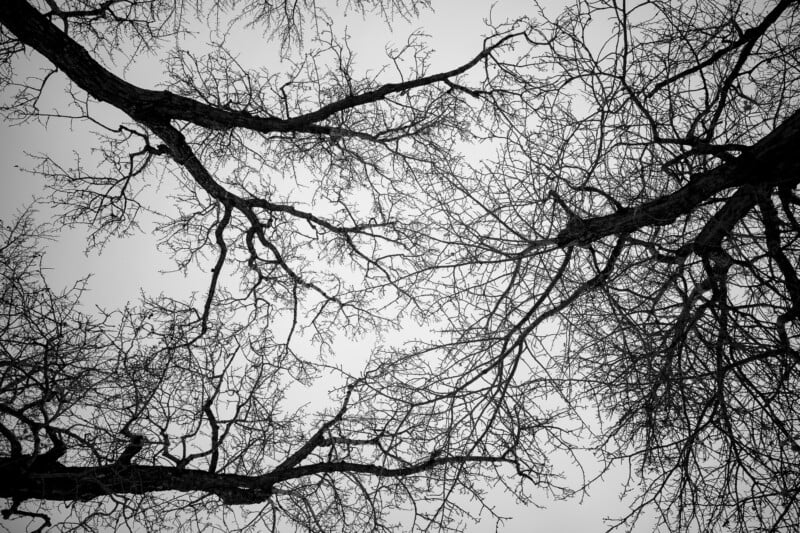
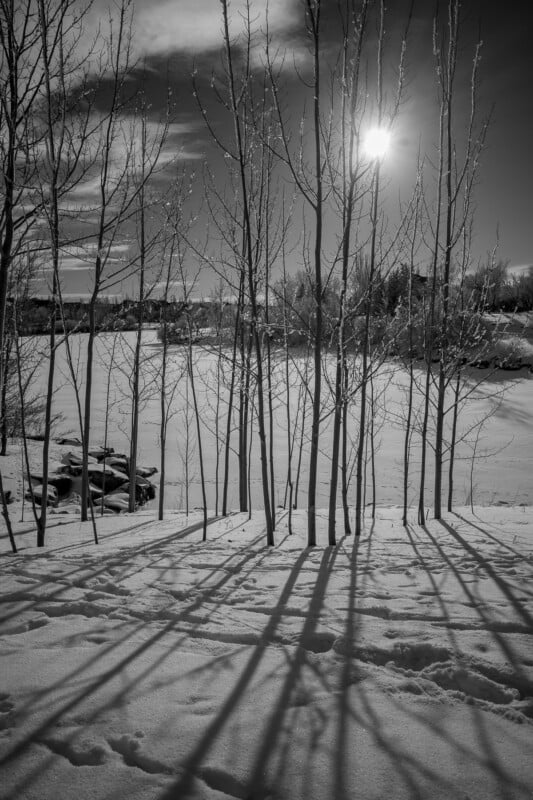 There is beauty in the black and white profiles and the detail is excellent.

Ricoh has also added six new monochrome profiles ranging from more dramatic high-contrast looks to very soft and tonally rich profiles better suited for harsh light. You also get a few custom profiles so you can make your own recipes, and the Ricoh RAW file format is always DNG, so they are easy to edit afterward, too.
I especially liked the addition of a physical red filter, which cuts about two stops of light and gives you a more dramatic-looking shot. Blue skies and greenery will go darker, and any warm colors will tend to brighten up. I often used a dark orange or red filter when shooting analog black and white film and found this to be a nice enhancement on the Ricoh. This means that the ND filter we would normally have is not available anymore, but you can always use a filter adapter and add your own filters. Ricoh have also changed the electronic shutter limit up to 1/16000 second as well, so if you want to cut light this way without using ND filters, you can.
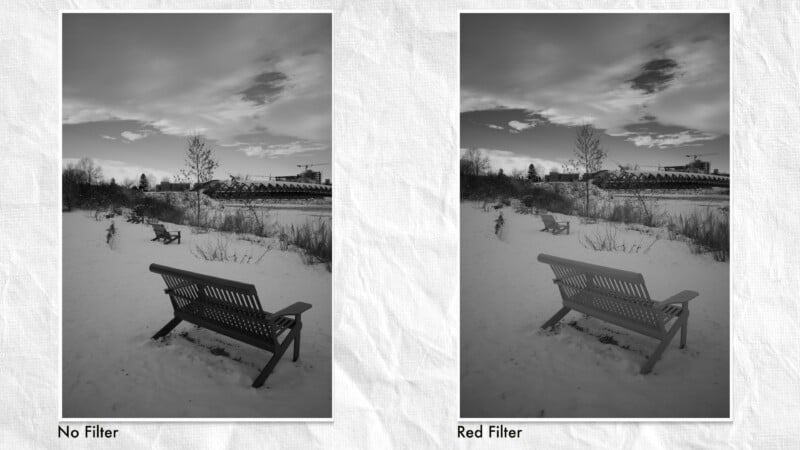 With and without the red filter can be clearly seen here.
 Ricoh GR IV autofocus works well for street photography and portraits, but the tracking module still needs work.

Ricoh GR IV Monochrome Review: Latest and Greatest
I fell in love with the base GR IV based on its many quality-of-life improvements. It is a popular camera that will probably sell every unit that Ricoh can deliver. This is also a line of cameras that will undoubtedly have many different iterations going forward, such as the popular HDF filter version. However, this is the first monochrome GR camera, and it is definitely about time. We need more alternatives to the Leica Q3 and M series Monochrom cameras, which are, of course, wildly expensive.
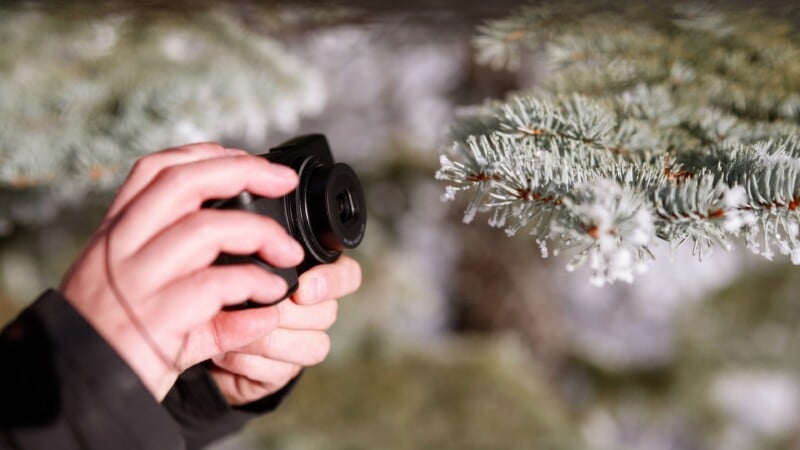 You can see just how close you can get to your subjects.
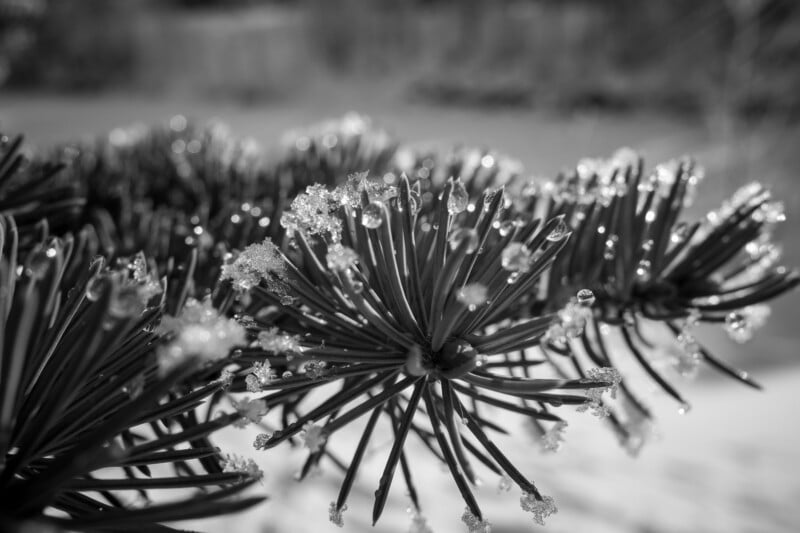 The lens is sharper overall and great for impromptu close-up shots.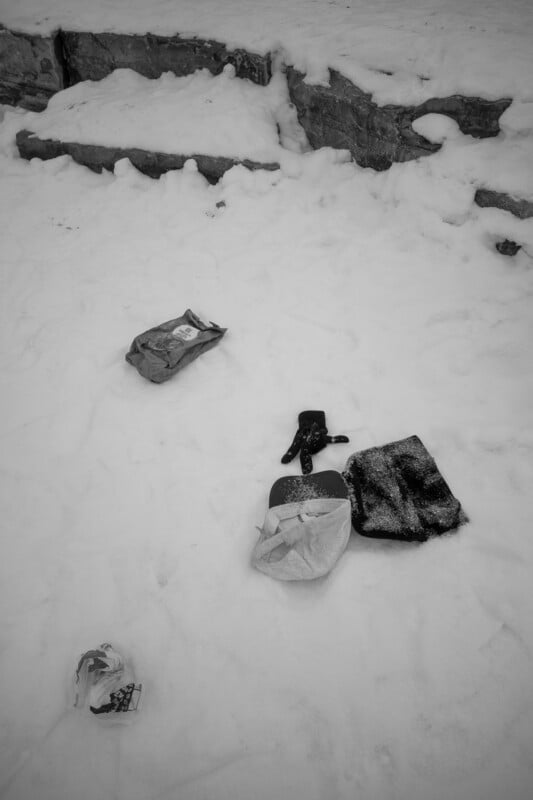
This brings us to the crux of the main issue working against the GR IV Monochrome camera: it is expensive. Nothing is Leica M or Q expensive, but the $2,200 price on the GR IV Monochrome represents a $700 premium over the standard model. The justification, I suppose, is that this camera is already a highly desirable niche product, with a relatively small target audience, and even at this price it will likely still sell out completely.
However, it still places a large hurdle in front of those looking to try it, making it hard to justify the extra cost over the standard GR IV. I absolutely want the monochromatic version for myself, but I absolutely cannot justify the extra cost. Lucky for Ricoh, there are assuredly enough prospective buyers who can.
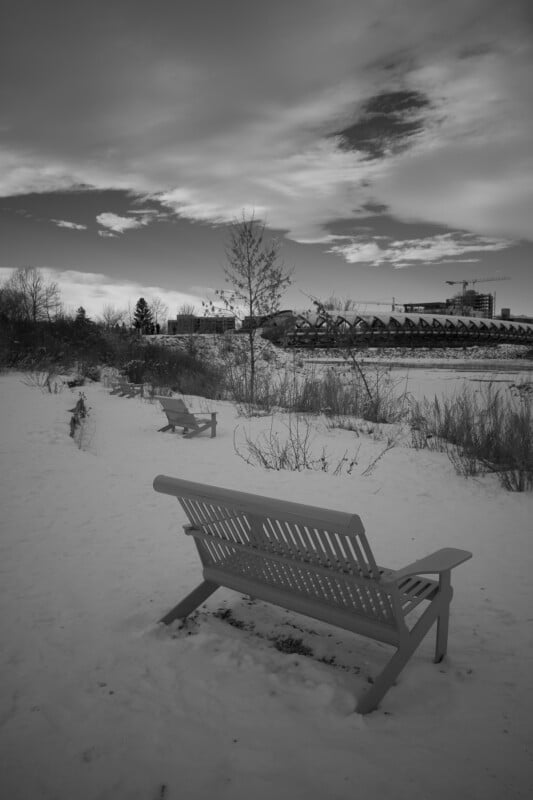 The red filter that is incorporated into the camera works perfectly.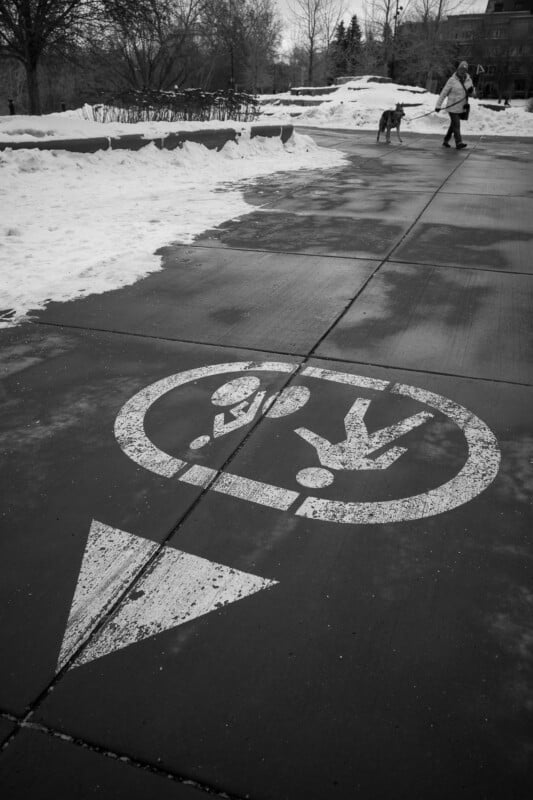
Are There Alternatives?
As stated already, the main competition is going to be the original GR IV, which is an enviable position for Ricoh to find itself in. Even the standard GR IV is quite expensive, but it looks like an absolute bargain in comparison.
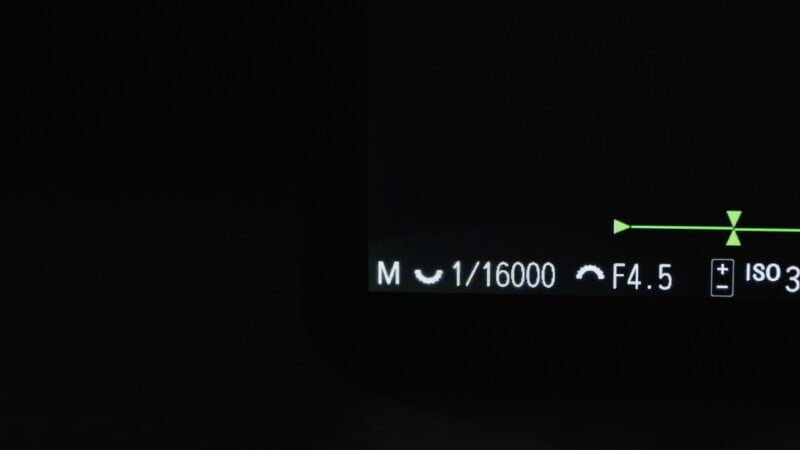 The lack of ND filter is made up for with a faster maximum electronic shutter speed.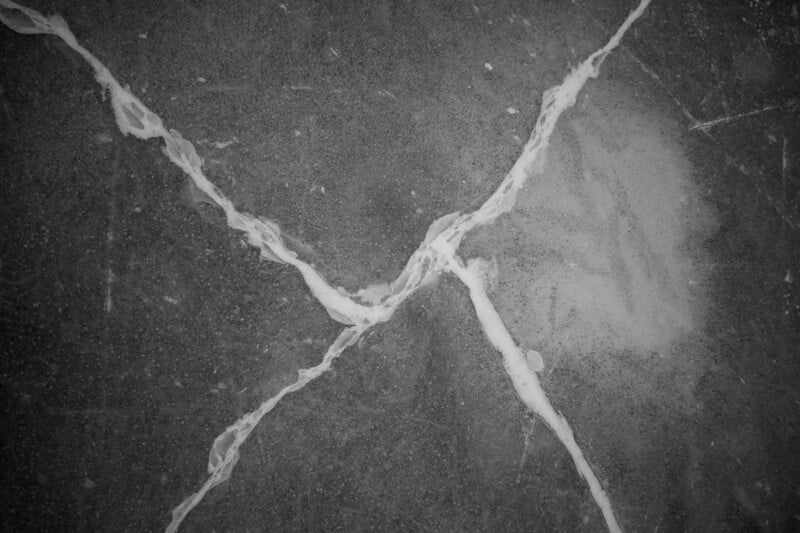
Should You Buy It?
I would still say yes, for two main reasons. This represents a fun and worthwhile purchase to a dedicated black and white photographer in the same way that I would recommend the otherwise impractical M11 Monochrom. And there is simply nothing else like it on the market that combines beautiful monochromatic imagery in such a capable and ultra-compact body design.



 English (US) ·