.png)
One year ago today, filmmaker Ondi Timoner was traveling in Europe at work on a new project when her phone pinged with an alarming bulletin: wildfire was tearing through Timoner’s Altadena neighborhood in Los Angeles. She would learn the walls had come down at the home she shared with her wife, musician and composer Morgan Doctor — fire consuming virtually all their possessions along with Ondi’s film archive.
Once Timoner got back to LA she immediately began documenting the devastation around her – the loss of her home and thousands of other dwellings in Altadena, a remarkable neighborhood known for its historically high percentage of home ownership by people of color. Today, on the one-year anniversary of the wildfires, the LA Times released Timoner’s Oscar shortlisted short documentary All the Walls Came Down, a personal and poignant account of what she, her wife and neighbors have faced as they coped with enormous loss and enormous obstacles to rebuilding their lives.
“All the Walls Came Down was born not from a desire to tell my own story, but from an overwhelming need to make sense of this historic disaster and to tell my community’s story,” Timoner writes in an essay for the LA Times. “I knew from documenting my father Eli’s last days as a way to survive his passing, which resulted in my film Last Flight Home that despite feeling intense pain and grief, if I didn’t muster the strength to document, I wouldn’t have the material to transform the experience down the road into something meaningful for others — if in fact there was something meaningful to share. So I teamed up with my nephew, Eli Timoner, whose parents also lost their Altadena home about a mile south of mine, and a number of local camera people, to capture the chaos that unfolded over the six months following the fire which destroyed more than 9,400 structures, over 6,000 homes, over 60% of the town.”
Timoner continues, “The film began as a meditation on impermanence and the fragility of everything we assume to be stable. But then, amid the devastation, I found something remarkable: We became more aware and caring of each other as neighbors than we ever were when we lived next door to one another.”

Early in All the Walls Come Down, Timoner and Doctor arrive at the charred remains of their home to find a sign posted by the Los Angeles County Department of Public Works emblazoned with the words “Unsafe. Do not enter or occupy.”
“I’m horrified,” Timoner says through tears as she and Doctor suit up in hazmat protective gear. “It was like my whole life. I loved it there. I’m still alive but look at that.”
A peacock – a frequent sight in the neighborhood – caws as in the background as the couple inspects the ruins, finding a burned canister containing a print of one of Ondi’s films. Doctor unearths the singed remains of a Hang, a metal percussion instrument she had played on all her recordings. Though ashen, the convex steel form still resonates to the rhythmic thump of her hands.
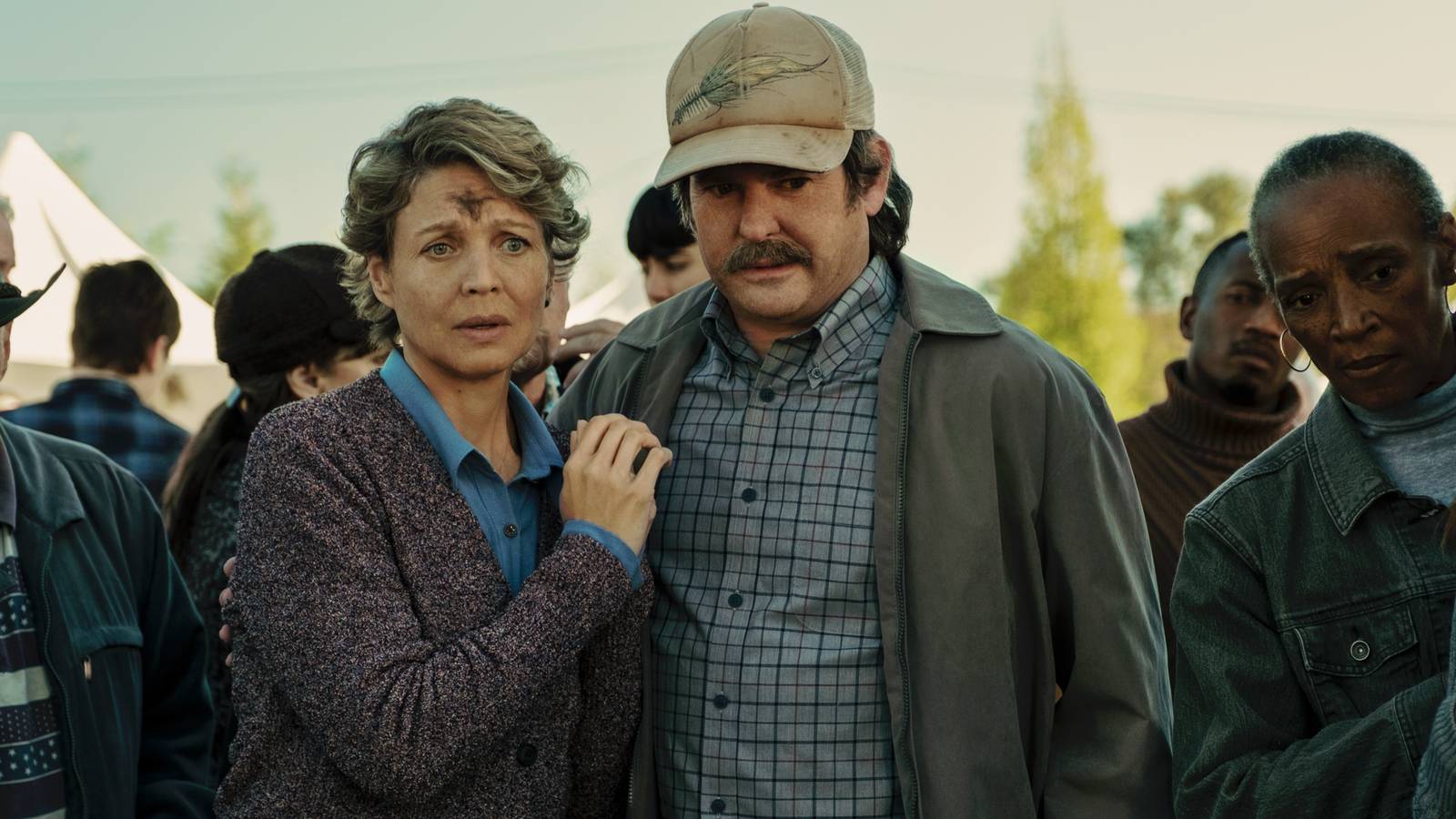
Soon, Timoner and Doctor will meet up with others who lived nearby, like Rand Vance Jr. and his family, reckoning with the loss of a home that had been in their family for generations.
“This was our family legacy,” he tells Timoner. “The insurance [company] let us know we’re underinsured. They said we’re about 170 grand short.”
Young Kael Hart and his family are forced to take up residence at a Travelodge motel after their home is destroyed. “I lost my house. I lost it, I lost everything that I have,” Kael says. “My mom didn’t even get the [box] of toys that I asked her to get! I’m very mad because I have some true memories about those toys.”
My colleague Damon Wise reviewed the documentary today, noting “this isn’t an angry film, more a celebration of the way in which so many different people, from so many different backgrounds, pooled what little they had to come back better and stronger rather than bend to defeat.”
In her essay accompanying the film on the LA Times website, Timoner concludes, “We titled [the film] All the Walls Came Down because when our once-siloed lives were forever changed overnight, and none of us could go home again, [t]he walls of race, class and culture also came down, and my neighbors and I found strength and healing in standing together as a community and helping each other.
“We might be the first climate refugees, but we won’t be the last. We live in a time of accelerating disaster, where fire, flood, and loss are becoming commonplace. But if walls can fall in an instant, perhaps the walls that divide us — between filmmaker and subject, between housed and unhoused, between past and future — can also come down.
You can watch the full documentary (for free) by clicking here.




 English (US) ·