.png)
It’s an expression of the purest, most genuine endearment that Iris (Maria Petrova), an 11-year-old girl in the island nation of Cyprus, displays toward her father Aris (Christos Passalis) just days after meeting him for the first time. The two of them are driving in his car. The mood is joyful since they’ve just pulled off a petty scam, and the young girl’s gaze is fixated on his bearded face, as if hoping to preserve this moment intact forever. Her visage is not one of outward excitement but of tenderness for this man who should love her.
“Hold Onto Me,” the first feature from Cypriot writer-director Myrsini Aristidou, departs from a recognizable premise — that of a child seeking affection from an estranged and ill-equipped parent — to find singular shades in the relationship it examines. Initially, neither party trusts the other, and the surprising but emotionally logical betrayal that prompts the film’s high-stakes climax carries a lovingly sincere intention. As their bond strengthens under strenuous circumstances, the actors’ performances evolve with the characters.
Trouble finds Iris after an afternoon hanging out with Danae (Jenny Sallo), an older girl, on a boat they “borrow” from an oblivious local man. When they get caught, Iris winds up in the police station while her mother is out of town. Aris shows up to bail her out, though he operates with ulterior motives. A stranger to her, he is in town for his father’s funeral, not to reconnect with the children he abandoned. From their first encounter, the fantastic Petrova holds her ground, playing Iris with assured pluckiness. He can’t intimidate her. The kid roams around town without adult supervision, hanging out among those older than her.
Without exoticizing the location, cinematographer Lasse Ulvedal Tolbølls finds moments to remind the viewer that the locale where the narrative unfolds is in fact an island on the Mediterranean Sea. Silhouetted figures on the beach at dusk lit by an impromptu fire give the impression of a careless, youthful night. Then, the camera turns to Iris, her face illuminated by the embers. She is alone while others surround her. The sea itself plays its narrative role, first as an avenue for escapism that Iris and Danae cherish and later as an ominous terrain where father and daughter confront the weight of their choices.
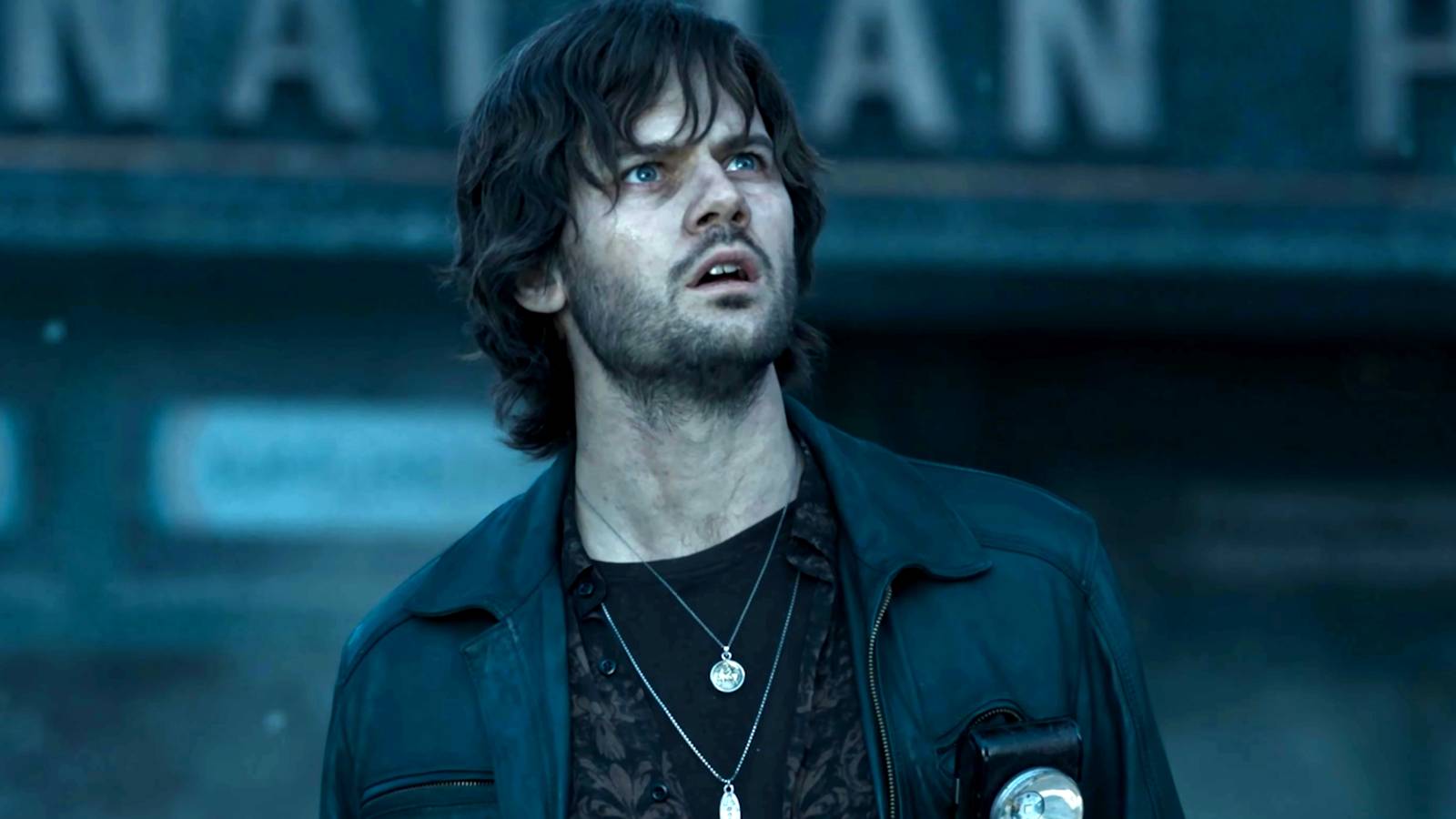
Iris’ mother and her older brother have moved on from needing Aris in their lives (mom has a new boyfriend, and the teenage boy is busy with his girlfriend). But while technically present, they too ignore Iris. In the absence of guidance or attention, Iris clings to the long-absent Aris like a source of belonging. Part of what Iris finds appealing about him as a father figure is his disregard for rules. A scoundrel who cheats anyone gullible enough to fall for his tricks, Passalis (the Greek actor known for playing the adult son in Yorgos Lanthimos’ “Dogtooth”) turns on the charisma to breathe life into the constantly smoking ruffian.
Following a victory at the horse races, Aris deems Iris his lucky charm. Her presence changes the dynamics of his antics, always for the better. When Aris tries to sell his deceased father’s belongings, the girl inspires sympathy from potential buyers. At a restaurant, he claims an unsanitary finding has made Iris ill and demands a refund. Later, during a life-or-death ordeal, she deters violence from coming his way. Aristidou portrays these interactions with a dose of bittersweet ambivalence. It’s no secret that Aris is using his daughter, who he never visited or supported before, to get himself out of a tough spot with his mafioso creditors.
In Iris’ eyes (which Petrova communicates nonverbally via smitten stares), bonding with Aris, even if under circumstances mostly advantageous to him, fills an empty cup within her. A shot of the two of them lounging under the sun is reminiscent of Charlotte Wells’ “Aftersun,” but the context here differs. Iris pretends to smoke in an effort to impress her dad, as well as to test whether he’ll behave like a traditional parent.
“Stay out of trouble,” he tells her constantly, knowing well he won’t follow his own advice. Aristidou implies that the adult and the minor speak a common language. Everyone else around them has matured and behaves in an age-appropriate manner. Aris should know better, but he still rejects responsibility. Conversely, Iris has been pushed to mature too quickly. Their common ground defies parent-child attitudes for most of the movie, until a turning point forces them to assume the respective roles they should have always had in this relationship. Aristidou utilizes Danae, whose controlling dad suffocates her with his seemingly overbearing rigidness, as a counterpoint to the other extreme of fatherhood.
An astute writer, Aristidou avoids including a screaming match typical of stories like this. At no point do we see Iris verbally reproach Aris or the latter explaining to her why they can’t be together. In skipping the melodrama, the filmmaker allows “Hold Onto Me” to feel more grounded in the unpredictability of reality, offering no guarantees that Aris will stay or that they will remain close. That’s the hope, but even if it’s only for a moment, what’s emerged between them is unvarnished and truthful. If affection has in fact developed, it was hard-earned and not given for granted based solely on blood ties.






 English (US) ·