.png)
 1 day ago
7
1 day ago
7
What do I do with my copy now?
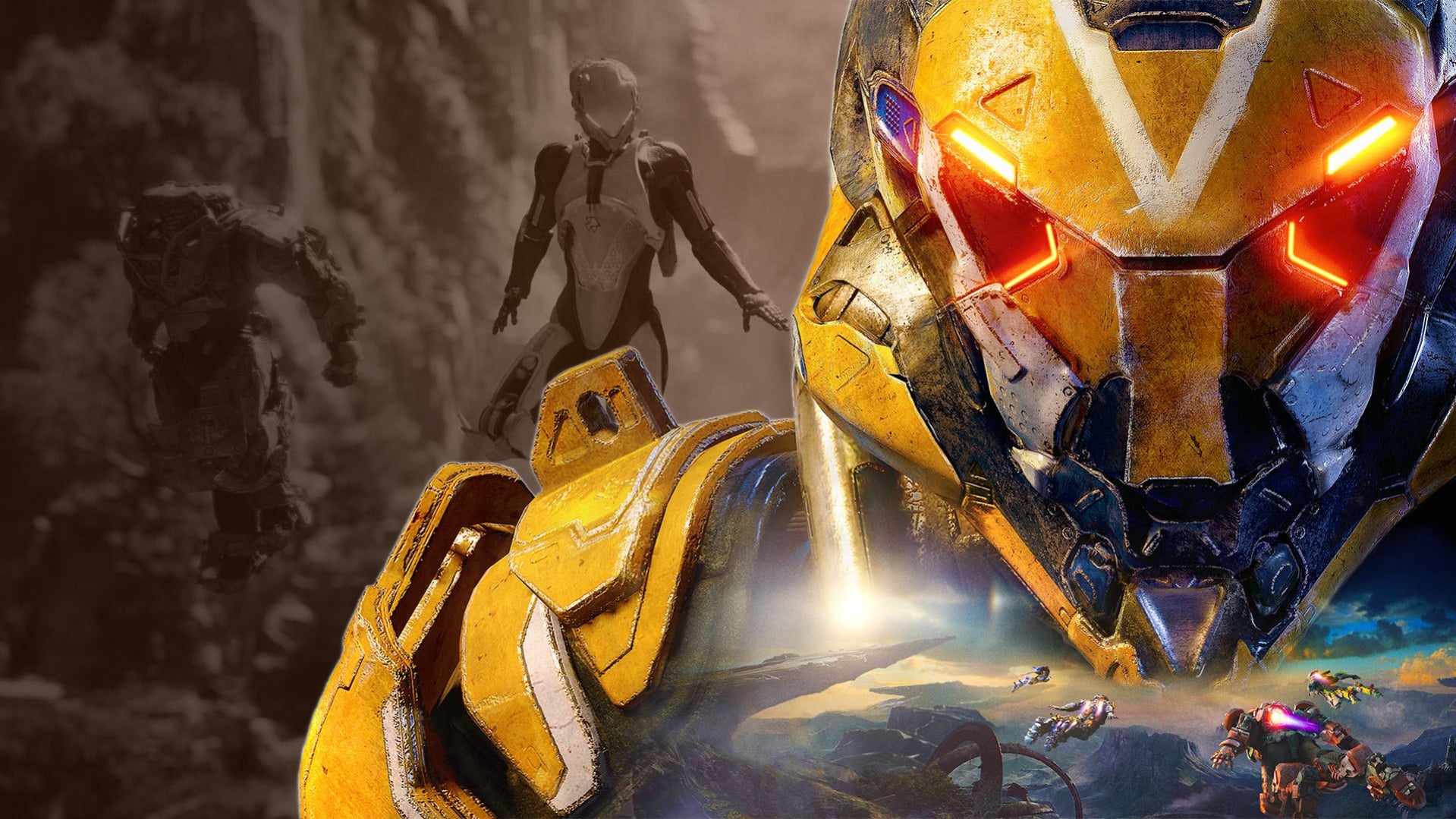
It's gone. In case you didn't know, the servers for BioWare's multiplayer game Anthem have been switched off, rendering this online game no longer playable. For all intents and purposes, Anthem no longer exists.
Rewind a week and I found myself in a second-hand trade-in shop eager to buy Anthem to experience its final moments myself. Anthem had been earmarked for closure for months, since the summer of last year, when 12th January, 2026 felt like a long time away. But in that shop, the day was nearly upon us. I wanted a physical copy because it was the only way someone who didn't own Anthem could play, since downloads of the game had stopped being sold, and an EA Play subscription no longer granted access to it.
Anthem for £2 - a pittance. Price is a kind of brutal shorthand language in shops like this, used to represent whether games are wanted or not, and Anthem, clearly, was not. In a few days' time, though, it would be worth less, literally worthless, a game you could own but not play. But I wanted it, though I made the mistake of buying for Xbox One and forgetting my Xbox Series S didn't have a disc drive. I had to order another copy online, a brand new PlayStation copy, to rectify my mistake. And it's a bizarre feeling excitedly opening a shrink-wrapped game knowing it only has days of life left.
It's a jarring sense of disbelief that I felt everywhere in Anthem when I played it. Whatever you think of BioWare's ill-fated multiplayer experience, it's shot at doing a Destiny, you can't accuse it of being cheap. Boosting through the skies of the moody jungle world of Coda, filled with colossal architectural ruins, which are grasped at and dragged down by viney tendrils of nature, is a spectacle of face-filling pleasure. Diving from the skies down into the water, and then through it, makes it even better. This dramatic and enlarged playground BioWare has built around the game's foundational idea of flying is frequently stunning. There are gigantic pipes to fly through, waterfalls to race by, and brooding skies to soar towards. Everywhere, massiveness abounds.
It isn't all zoomed-out detail either, because in the other half of the game, the walking around part in Fort Tarsis, your base, the intricacies are all up close. This is 'the BioWare part of the game', which is where the studio tried to deliver the kind of story-rich, character-rich experience it is famed for. Here you find - or found - dialogue options and characters who you could have relationships, of sorts, with. There was elaborate animation and high-quality voice work, and it was gorgeous, a place that married high tech and low tech, a bit like Star Wars in the desert areas - a place of cobbled stone fortresses housing advanced mech-suit garages. See it in the day, see it in the night. It's a place dense with detail and alive with activity. Six years after release, Anthem is impressive to behold.
I saw a brilliant comment on the Anthem subreddit, which is awash with fond farewells at the moment, in which someone described the game as the "greatest What If game" there's ever been, and they're right. To play Anthem is - or was (I can't quite adjust to the past tense yet) - to imagine what could have been done. Whether it was walking around Tarsiss imagining a single-player, storied BioWare experience taking place there, or flying through the jungles and wondering how a single-player game would work there.
Even as a co-operative multiplayer experience like Destiny, Anthem had potential. There was a mismatch between the two halves of the game but the bones of an enjoyable co-operative multiplayer game there. There was fun to be had. It just hadn't come together enough yet. It needed work, like all live service games do - constant work. And there were plans to do this work, to do a 2.0 overhaul, but they were, like so much else about Anthem, abandoned.
The effort that was poured into Anthem was plain to see. Those long years of development and mountain of invested money: you could see it and feel it. It's a realisation that makes it all the harder to accept something like this just being switched off and discarded - wasted, in a sense. Even harder is reconciling that with the people still playing the game, the people who'd, judging by their high character levels and elaborate paint jobs, been the people who propped the game up and populated it - gave it the life it had. All their time and energy soon to be gone, their characters taken away from them. It doesn't seem fair.
Plenty returned for the end. A mix of morbid curiosity and last goodbyes and unfinished achievement business has brought them back. How many it's hard to tell, because for all Anthem was an online multiplayer game, it didn't have large social spaces to bring them together - the closest was a Launch Bay where 15 people could get together - but I found people to do missions with easily enough. The Launch Bay was also fairly well populated when I visited an instance of it. And it's there I'd see the endlessly changing parade of people peacocking in their hard-earned armour, some waving, others loitering, wanting to share in some way in this moment.
What makes me angry is EA BioWare didn't do more to celebrate them and see them off with a hearty wave and a thank you. The company said thank you when it announced it was closing the Anthem service, but people say a lot of things - it's the actions that count. The actions here were... nothing. The in-game store still insisted on charging for goods until the end; merchants still expected your coin for crafting components; and mechanically the game still dished out meagre experience for you to slowly level up with. Nothing changed; the grind remained intact until the end.
Someone looking after the game could have fiddled with the dials, if there was anyone looking after the game. End-times are perfect times for being silly and breaking the rules, for removing restrictions and letting players who supported you be rewarded with consequence-free doses of delirious generosity. Have a party. Let players leave with a smile. Go wild. But no. Abandoned in death as it was in life, Anthem slipped quietly into oblivion.
On some level, I understand it, because why draw more attention to something you'd rather move on from? Anthem has been a ghost ship for years now. The 2.0 overhaul was scrapped in early 2021, which means nothing's really been happening in the game for five years now. Another way of looking at this closure could be that it was kept alive longer than it needed to be. But this moment does bring to the surface an increasingly important question which is what should happen to live service games in Anthem's position?
Should we, as players, really expect a game service to run and run and run if no one is playing it? Should there be protections in place that we won't lose access to games we've bought, or characters we've potentially spent hundreds of hours investing in? How should we handle the end of these live service games? Could their care be given over to the community? There are the sorts of questions movements like Stop Killing Games are trying to address, and they're good questions that deserve proper answers. Who knows? Maybe this won't be the end for Anthem after all.
But for now it's an ending. For now, these copies of Anthem I bought to experience it as it blinked out of existence are effectively useless. They are games I can look at on a shelf but not do anything with. I can't resell them, I can't give them away. Their only value is to a collector. And who would collect this? Endings are powerful because they frame what came before, but Anthem frames a story BioWare would probably rather forget. It's a story of a misguided gamble that ruptured the studio in a way it would never recover from. Anthem changed BioWare, and would have done even if the game was very successful. It was a turning point. Perhaps, in BioWare's history, it's one of its most important games, and now it's gone forever. How long, I wonder, until we say the same about the studio.




 English (US) ·