.png)
 Image via Warner Bros.
Classic movies get labeled timeless so often that the phrase can start to mean nothing. For me, a true 10 out of 10 is simpler: it still works on a modern brain with modern attention span, and it feels so intentional you cannot imagine removing a scene without breaking the whole machine.
The six films below hit that mark in completely different ways. Some are warm, some are brutal, some are formally daring, and some are just emotionally stimulating. While I understand why most people treat their favorites like museum pieces — I am treating the movies listed below on the grounds of whether I can throw one of these on tonight and still get wrecked, delighted, or hypnotized.
6 'Singin’ in the Rain' (1952)
 Image via MGM
The opening stretch of Singin’ in the Rain is pure joy, but it is also quietly ruthless about Hollywood illusion. Don Lockwood (Gene Kelly) smiling for the cameras while his real story is being rewritten in real time? The movie lets you enjoy the glamour of it all while showing you how manufactured it is. Plus, I love how the comedy never needs cruelty, just timing and honesty.
What makes Singin’ in the Rain flawless is the way every musical number also advances character. Kathy Selden (Debbie Reynolds) is not a decorative love interest but a moral compass calling out phoniness, even when she is being swept into the fantasy. Lina Lamont (Jean Hagen) is hilarious. The film was directed by Stanley Donen and Gene Kelly and carries a stage spectacle that feels effortless, and then also sneaks in a pretty biting satire of fame.
5 'Casablanca' (1942)
 Image via Warner Bros.
Casablanca pulls you in. You land in Rick’s Café Américain and instantly understand the rules: everyone is hiding something, and the price of survival is pretending you do not care. Rick Blaine (Humphrey Bogart) plays indifferent like it is armor, but you can feel the wound underneath before the movie even names it.
Moving forward once Ilsa Lund (Ingrid Bergman) appears, the film becomes a perfect pressure chamber. The love story works because it is not written like a fantasy but as if two people are trying to behave while history keeps grabbing them by the collar. And then, for me personally, Victor Laszlo (Paul Henreid) is the key to why this film hits that masterpiece-level. Casablanca refuses to make him a rival you can hate, which forces Rick’s choice to be about values, not jealousy.
4 'Sunset Boulevard' (1950)
 Image via Paramount Pictures
The first time you watch Sunset Boulevard, it feels like you are walking into a mansion that is already haunted, and that’s before anyone even says the word Norma. Needless to say, Norma Desmond (Gloria Swanson) is the reason this film has managed to survive for 75 years. Swanson plays her like a star who has been left in a dark room with mirrors, rehearsing greatness until it becomes delusion, and it is both funny and horrifying.
Here’s how I look at it: Sunset Boulevard’s director, Billy Wilder, has made Hollywood look like a factory that discards people, and then lets those discarded people build their own fantasy kingdoms out of rot. And that’s fascinating. Plus, Joe Gillis (William Holden) narrates like a man who knows the ending, and somehow that makes it more tense, not less.
3 'Psycho' (1960)
 Image via Paramount Pictures
Everybody should watch Psycho because it does this thing where you think you know what kind of movie you are in, and then it flips the whole vibe so hard you are instantly locked in. It starts off feeling like a tense, slightly messy story about someone making a bad choice and trying to deal with it, and then suddenly you realize the movie is playing a different game. It keeps you on edge the entire time.
And Norman Bates (Anthony Perkins) is the reason it still works. He is not scary in a loud way. He is scary because he feels like someone you might actually meet, and that makes every conversation in that motel feel uncomfortable even before anything happens. The movie also makes normal spaces feel creepy in a way that sticks with you, like you will look at a hallway and think twice.
2 'Seven Samurai' (1954)
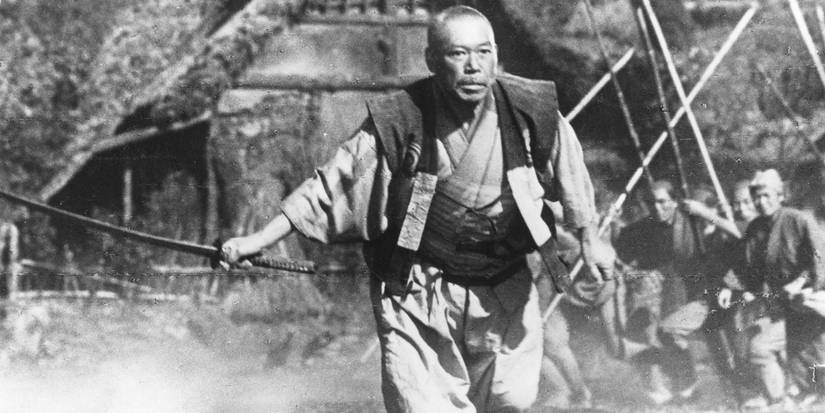 Image via Toho
Seven Samurai carries the blueprint for every “team gets assembled to protect people” story, but it actually does it better than most modern movies. The villagers are desperate, the threat feels real, and you get to watch the whole plan come together step by step, which is weirdly satisfying. Kambei Shimada (Takashi Shimura) is the kind of leader you trust immediately, like he has been through enough to keep everyone focused. The movie pulls you in fast, even though it is long.
And when the action finally hits, it is not polished or cute. It feels like chaos and mud and people making split-second choices. Kikuchiyo (Toshirō Mifune) is the wild card who makes the movie feel alive, because he is funny and angry and emotional in a way that balances out the calmer characters. By the time the final battle happens, you are invested enough that it actually hurts when things go bad.
1 'Citizen Kane' (1941)
 Image via RKO Radio Pictures
Citizen Kane tops because it is basically the best who-was-this-guy-really story ever. Instead of just telling you what to think, the movie shows you different sides of the same person through different people, and you slowly realize nobody fully understood him. Charles Foster Kane (Orson Welles) is fascinating because he is powerful and charismatic, but also kind of empty in a way that gets clearer the more you watch. The fact that the movie feels surprisingly modern for something that old is fascinating to me.
Plus, Citizen Kane’s plot is not just about money or fame. It is about how someone can have everything and still keep making choices that push people away. Jedediah Leland (Joseph Cotten) feels like the friend who sees what is happening but cannot stop it, and Susan Alexander (Dorothy Comingore) shows how cruel it can get when someone else’s dream becomes your whole life. The ending is the kind that makes you sit there for a second after it is done.

Citizen Kane
Release Date April 17, 1941
Runtime 119 minutes






 English (US) ·