.png)
 19 hours ago
8
19 hours ago
8
We are living in a paradox. Cameras have never been more capable, yet the experience of buying and using them is still frustrating in many ways. The sensors are incredible. The autofocus is borderline supernatural. The lenses are sharper than anything we had a decade ago. And yet, there's a lot that can still be improved.
This is the strange duality of the 2026 camera landscape. On one hand, the engineering teams at Canon, Nikon, Sony, Fujifilm, and others deserve genuine applause for what they have accomplished. On the other hand, someone in marketing and product planning desperately needs to spend a week living like an actual customer. What follows is my attempt at a fair assessment: five things the industry is doing remarkably well, and five things they are getting (sometimes badly) wrong.
Part One: What They Are Doing Well
1. Autofocus Is Finally 'Magic'
There was a time, not so long ago, when getting a sharp photo of a subject required genuine skill. You had to understand focus modes, anticipate movement, and master the ancient art of "focus and recompose." If you were shooting sports or wildlife, you spent years learning to track subjects with your thumb on a joystick while simultaneously managing exposure and composition. It was a craft, and like all crafts, it separated the professionals from the amateurs.
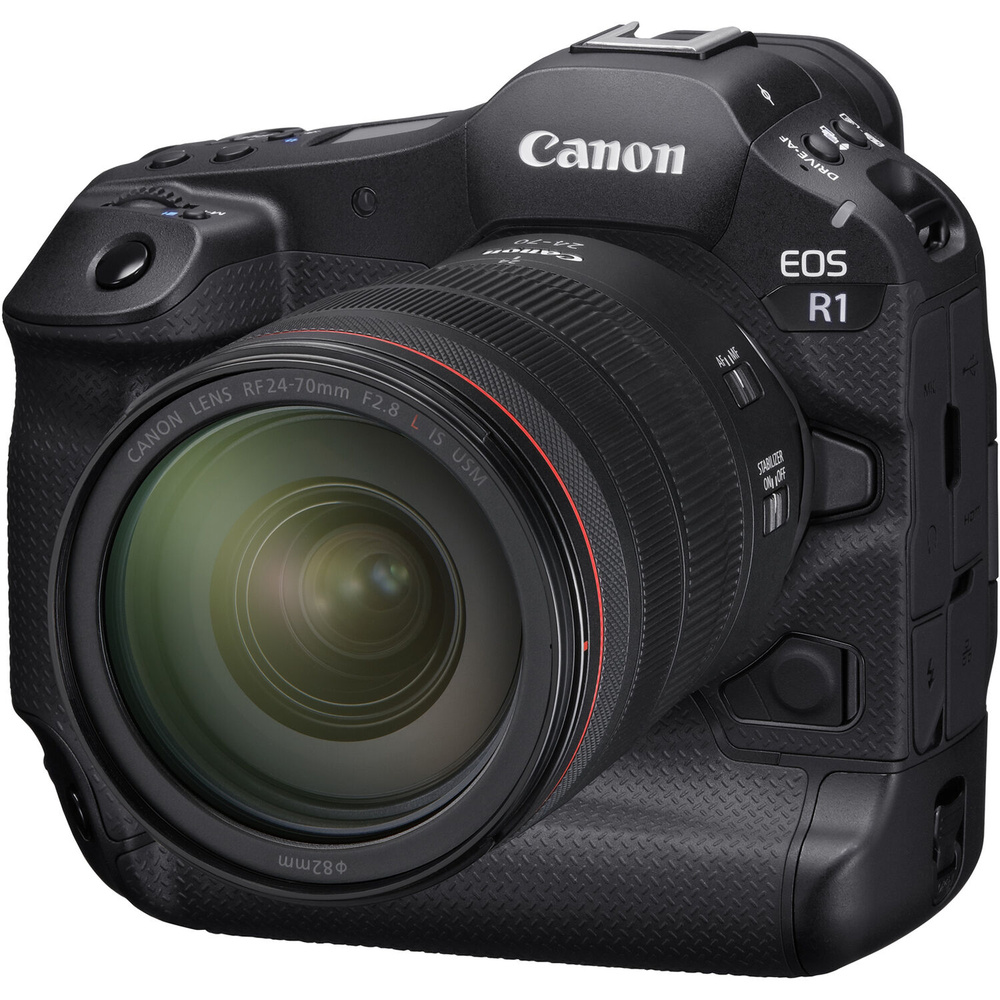 Those days are effectively over, and I mean that as a compliment. The AI-driven autofocus systems in modern cameras from Sony (a7R V, a9 III), Canon (EOS R5 Mark II, EOS R1), and Nikon (Z8, Z9) have reached a level of reliability that genuinely feels like magic. These cameras do not just find eyes anymore. They identify specific subjects, track them through occlusion, switch seamlessly between humans and animals and vehicles, and maintain focus with an accuracy rate that approaches perfection. Beginners can pick up a modern Sony body and nail shots of birds in flight on their first outing, shots that would have taken years of practice to achieve consistently with the equipment I learned on.
The impact of this cannot be overstated: these systems have democratized sharpness. The camera finally gets out of the way of the art. You can focus on composition, timing, and storytelling because the technical burden of achieving focus has been almost entirely offloaded to silicon. Yes, skill still matters. Yes, great photographers will always find ways to distinguish themselves. But the barrier to entry for capturing technically excellent images has never been lower, and that is unambiguously good for photography as a medium.
2. Embracing 'Soul' Over Specs (The Retro Trend)
For years, the camera industry seemed locked in a specifications arms race that nobody asked for. More megapixels. Higher burst rates. Bigger numbers on the side of the box. The result was a generation of cameras that looked and felt like the computer mice they were increasingly designed to resemble: ergonomic, perhaps, but utterly soulless. They were tools optimized for function with no consideration for form, and they sat on shelves gathering dust because nobody felt inspired to pick them up.
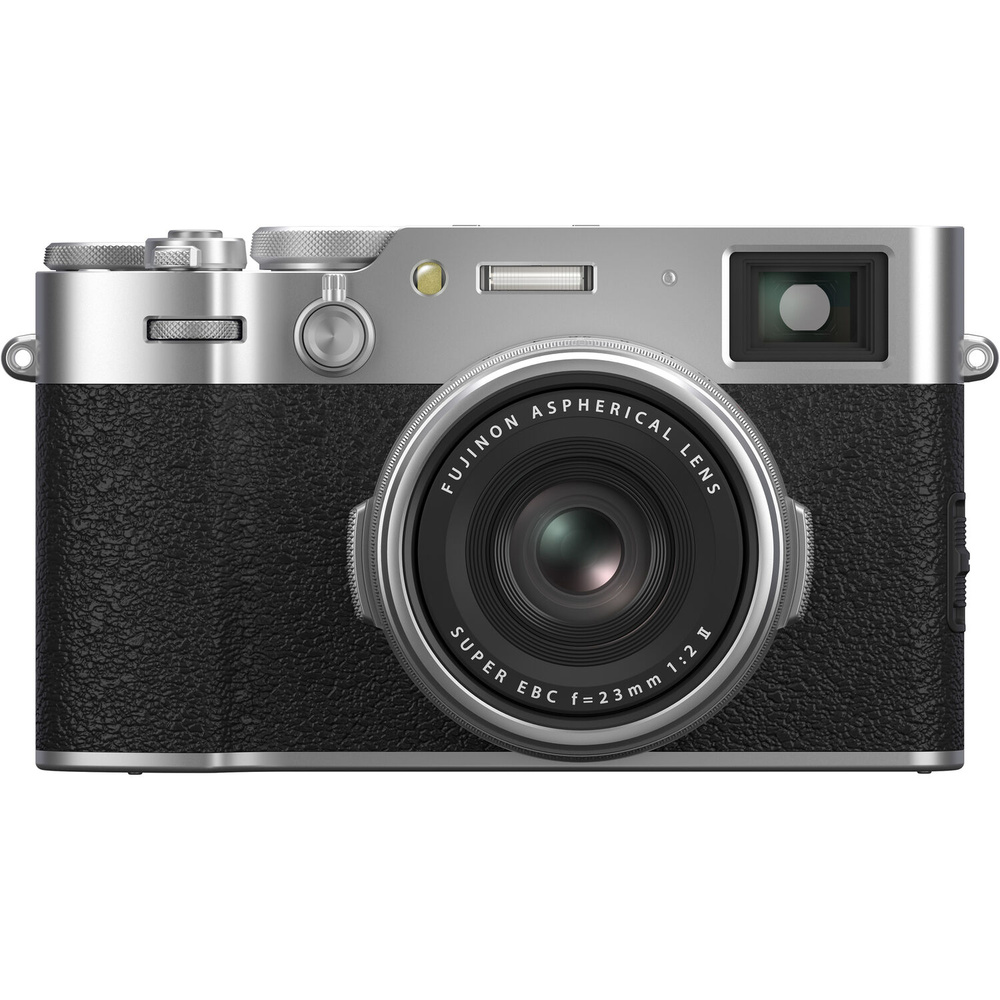 The retro movement has changed that, and it represents one of the smartest pivots the industry has made in years. The Nikon Zf, the Fujifilm X100VI, the Panasonic S9, and others have embraced the radical idea that cameras should be beautiful objects that make you want to use them. They feature tactile dials, vintage aesthetics, and designs that reference the golden age of photography. And here is the thing: they sell. The X100VI has been nearly impossible to find since launch. The Zf has a devoted following. These cameras have proven that in the age of the smartphone, the dedicated camera's path to survival runs through desire, not just capability. Nobody needs a dedicated camera anymore, so manufacturers must make products that people want in a way that transcends pure utility. The retro trend proves they are finally starting to understand this.
3. Opening the Gates to Third-Party Lenses
Sony deserves credit for leading this charge, even if their motivation was partly self-interested. When Sony opened the E-mount to third-party manufacturers, they were the underdog trying to build a lens ecosystem from scratch. Letting Sigma, Tamron, and others produce autofocus lenses for their system gave buyers more options and more reasons to invest in Sony bodies. It worked spectacularly. Now, even Canon and Nikon are slowly relaxing their grip on their respective mounts, and the entire market is better for it.
The practical impact for buyers is significant. You no longer need to spend $2,500 on a first-party 24-70mm f/2.8 when Sigma offers a version for $1,200 that delivers 95% of the optical performance. Tamron's compact primes for Sony cost a fraction of what Sony charges for their G-Master equivalents. Viltrox has emerged as a legitimate option for budget-conscious shooters who want fast apertures without the financial pain. Competition drives prices down and quality up, and the customer wins. Photographers have more flexibility than ever to build systems that match their budgets and needs.
4. True Hybrid Performance (No More Crippled Video)
It was not long ago that camera manufacturers deliberately crippled the video capabilities of their stills-oriented bodies. Canon was particularly notorious for this during the DSLR era, removing features that the hardware could clearly support in order to protect their Cinema EOS line. The message was clear: if you wanted to shoot video professionally, you needed to pay professional prices for a dedicated video body. Stills cameras were for stills.
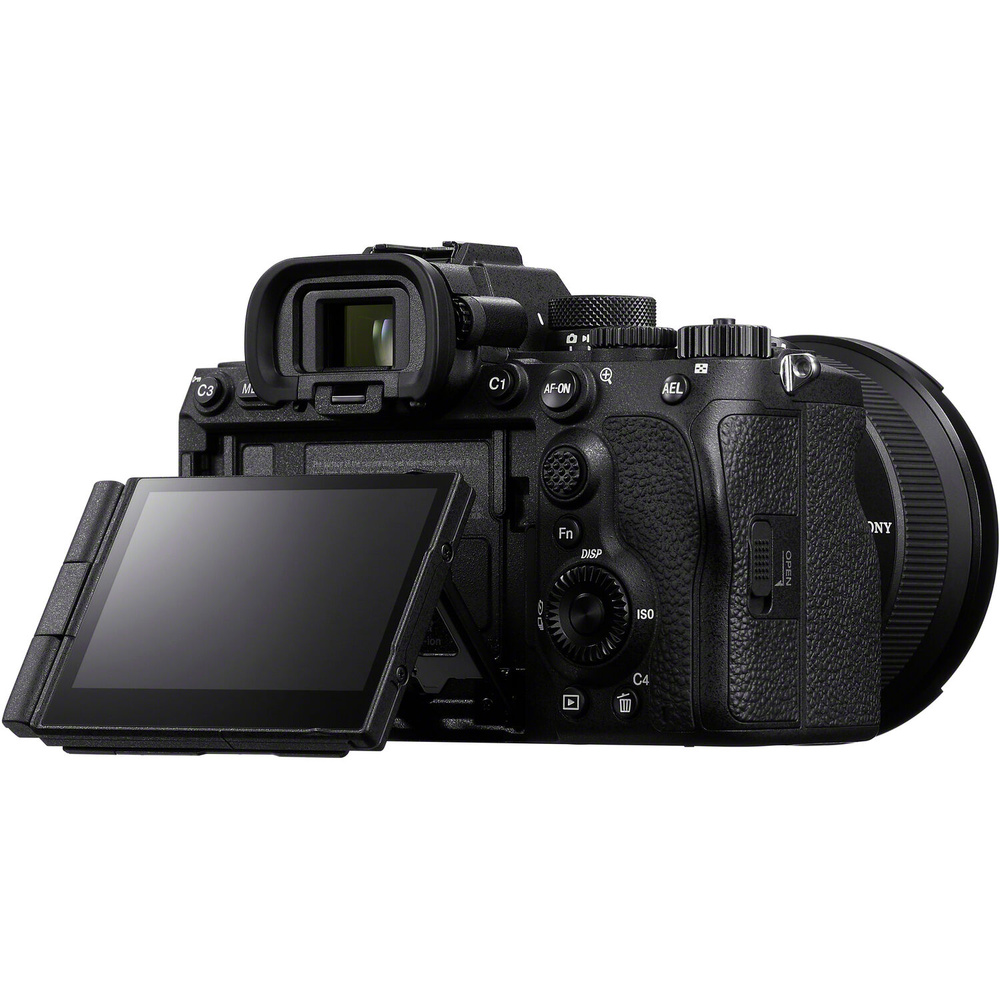 That artificial wall has largely collapsed. Today's standard mirrorless bodies shoot 4K 60p, 10-bit, Log profiles, and in some cases even internal Raw video. The Sony a7 V, the Canon EOS R5 Mark II, the Nikon Z8, and the Panasonic S5 II are genuine hybrid machines that excel at both stills and motion. The practical result is that the line between "photographer" and "videographer" has dissolved for a huge segment of the market. You can buy a single body that does both jobs well, which represents a genuine value proposition and a legitimate reason to choose a dedicated camera over a smartphone. This is exactly the kind of versatility manufacturers should be emphasizing as they fight for relevance.
5. Battery Life Is Closer to 'DSLR Good'
The early mirrorless era was defined by battery anxiety. Bodies like the original Sony a7 series and the Fujifilm X-T1 would chew through batteries at an alarming rate, and any serious shoot required a bag full of spares. Wedding photographers carried six or eight batteries and swapped them constantly. Travel photographers rationed shots like water in the desert. The electronic viewfinder was the culprit, constantly drawing power in a way optical viewfinders never did, and it felt like a fundamental compromise baked into the mirrorless concept itself.
That problem has been largely solved. Sony's Z-series batteries, Nikon's massive integrated grips on the Z8 and Z9, and improvements in power management across the industry have brought mirrorless battery life back to DSLR levels and beyond. You can shoot a wedding on one or two batteries again. You can travel without a dedicated battery bag. The "mirrorless anxiety" that defined the format's early years is gone for anyone shooting current equipment. This might seem like a minor point, but it mattered enormously for professional adoption, and the industry deserves credit for fixing it.
Part Two: What They Are Getting Wrong
6. The Decline of Kaizen (Firmware Abandonment)
There was a time when buying a flagship camera meant joining a long-term relationship. Fujifilm was the poster child for this philosophy, regularly pushing substantial firmware updates to cameras years after launch. The X-T2 received autofocus improvements, new film simulations, and video upgrades that genuinely extended its useful life. Owners felt like the company respected their investment and rewarded their loyalty. The Japanese concept of "kaizen," or continuous improvement, seemed baked into the product philosophy itself.
That era appears to be ending. Today, you buy a $3,000 camera body, and 18 months later, the manufacturer announces a "Mark II" version with software features that your existing hardware could almost certainly run. New subject detection modes. Improved tracking algorithms. Additional video codecs. These are not capabilities that require new silicon; they are software updates that could be pushed to existing bodies with a firmware revision. Instead, they become selling points for the next generation, and your "flagship" suddenly feels like yesterday's news. The message is clear: if you want the latest features, open your wallet again.
Even Fujifilm, once the gold standard for post-purchase support, has become stingier with updates as their product cycles have accelerated. Nikon has done better than most with cameras like the Z9, which has received transformative firmware updates including new video modes, autofocus improvements, and entirely new shooting capabilities. But Nikon's approach increasingly looks like the exception rather than the rule.
The problem is not just that this practice frustrates existing customers, though it certainly does. The deeper issue is that it teaches buyers to distrust the value proposition of any new camera. Why pay flagship prices at launch when you know the company will abandon software development the moment a successor is announced? Why not wait for the Mark II, or buy used, or simply hold onto your current body until it physically fails? The short-term revenue boost from forced upgrades comes at the cost of long-term brand loyalty and customer trust. In an era when smartphones receive years of software updates as a matter of course, the camera industry's firmware abandonment looks increasingly out of touch.
7. The 'App' Experience Is Still Embarrassing
Here is a question that should haunt every camera company executive: Why is it easier to AirDrop a 4K video between two iPhones than to transfer a single JPEG from a $4,000 Canon to a phone sitting right next to it? The answer is that camera companies have never taken software seriously, and it shows in every clunky, unreliable, inexplicably slow connectivity app they have ever shipped.
Canon's Camera Connect. Nikon's SnapBridge. Sony's Creators' App. These are not good applications. They are slow, they drop connections constantly, they require bizarre authentication rituals, and they make a simple task feel like a technical challenge. In a "share-first" world where photos that do not make it to social media might as well not exist for many users, this friction is the industry's biggest weakness. Apple proved years ago that the transfer of images from capture device to sharing platform should be invisible and instant. Camera companies are still treating it as an afterthought, and they are losing customers because of it.
8. The Computational Photography Gap (The Biggest Existential Threat)
Take your iPhone 17, point it at a dark scene, and hold the shutter for five seconds. Night Mode will deliver a sharp, well-exposed, noise-free image with no tripod required. The phone is capturing multiple frames, aligning them, stacking them, applying intelligent noise reduction, and merging the result into a single output that looks better than any single exposure could. It does this automatically, instantly, and without any user intervention required.
 Now try the same shot with your $4,000 Sony or Canon. You will need a tripod, careful technique, and probably 10 minutes in Lightroom to achieve a comparable result. The dedicated camera, for all its superior hardware, feels lacking by comparison because it is not doing any of the computational work that phones have been doing for years. Camera manufacturers have the processors. They have the raw data. They are simply refusing to implement the software that would bring in-camera stacking, intelligent HDR, and AI noise reduction to their products. OM System stands as the lone exception, having actually committed to computational features, but the other major manufacturers remain inexplicably resistant. This is the gap that will kill the dedicated camera if it is not addressed. Superior sensors mean nothing if the output requires extensive post-processing that phones have made obsolete.
9. Scarcity and the Supply Chain Game
Being placed on a six-month waitlist for a mass-produced consumer electronics item is not acceptable in 2026. Yet this is exactly the situation facing anyone who wants a Fujifilm X100VI, a Ricoh GR III (the GR IV is doing better), or until recently, a Nikon Zf. These are not limited-edition collectibles. They are standard production cameras that should be sitting on shelves in adequate quantities.
The result of this scarcity, whether intentional or simply the product of poor demand forecasting, is predictable and damaging. Customers turn to gray market sellers and pay inflated prices. Scalpers buy up available stock and resell at massive markups. Legitimate buyers become frustrated and either abandon their purchase or develop lasting resentment toward the brand. If companies are genuinely failing to forecast demand, they need to improve their planning. If they are intentionally constraining supply to maintain hype and premium pricing, they are playing a dangerous game that prioritizes short-term buzz over long-term customer relationships.
10. Confusing Naming Schemes and Lineups
Pop quiz: Is the Canon EOS R8 better than the Canon EOS R7? What about the EOS R6 Mark II? How does the Nikon Zfc relate to the Zf? Is the Sony ZV-E10 II a step up or a step down from the a6700?
If you cannot answer these questions confidently, don't worry. Neither can most people, and that is the problem. Camera lineups have become bloated and confusing, with naming conventions that follow no discernible logic and model differentiations that seem designed to maximize SKU count rather than serve customer needs.
The solution is obvious: fewer models with clearer positioning or, at the very least, better naming schemes. Entry-level, enthusiast, professional. APS-C, full frame. Simple names that communicate where a product sits in the hierarchy. Instead, manufacturers flood the zone with variations that differ in minor ways and compete with each other as much as they compete with rival brands. It is a mess that serves nobody, and it makes the already-intimidating process of buying a camera even more confusing.
Conclusion
The camera industry in 2026 presents a study in contradictions. The engineering teams have delivered machines that capture images with unprecedented quality and reliability. Autofocus systems are remarkable. Sensors are incredible. Lenses are optically superb. The technology has never been better.
But the customer experience has not kept pace. Connectivity remains embarrassing. Computational photography has been ignored. Supply chains fail to deliver products people want to buy. Naming schemes confuse rather than clarify. These are not engineering problems; they are business and product planning failures that undermine everything the engineers have accomplished.
To survive the next decade, camera companies need to stop competing with each other on specifications and start competing with smartphones on seamlessness. The path forward is not more megapixels; it is better apps, smarter software, accessible pricing, and lineups that customers can actually understand. The technology is ready. The question is whether the companies can get out of their own way long enough to deliver it in a form that people actually want to use.






 English (US) ·