.png)
 4 hours ago
8
4 hours ago
8
The photography industry has entered 2026 at a fascinating inflection point. What follows are 11 predictions for where the industry is headed, covering hardware, software, legal frameworks, and market dynamics. Some of these trends are already visible if you know where to look; others represent logical conclusions from forces already in motion.
1. The "Signed" Camera Expands Beyond Flagships
Forget the film camera revival that never quite materialized at scale. The defining hardware trend of 2026 will be the continued adoption of C2PA (Content Credentials) signing in camera bodies beyond the flagship tier. Leica and Nikon have been early movers here, with Sony engaged in the broader Content Credentials ecosystem. This year, we are likely to see signing capabilities expand from flagship and select professional models into higher-volume lines as implementation costs fall and workflow integration matures.
The expansion will not be seamless. Photographers who have enabled signing features on current bodies have noted real-world tradeoffs. These engineering challenges explain why manufacturers have been cautious about making signing standard across their lineups. As performance costs decrease, expect signing to migrate down-market, but the timeline depends on how quickly the tradeoffs become negligible.
The implications remain significant regardless of pace. A photograph captured on a C2PA-enabled camera carries an unbroken chain of provenance from the moment the shutter fires. For working professionals in photojournalism, legal documentation, or commercial advertising, this capability will transition from "nice to have" to "required for the job."
2. AI Disclosure Becomes a Contractual Reality in Key Sectors
The word "authenticity" has been floating around industry discussions for years, but 2026 is when it moves from marketing buzzword to liability clause in specific high-stakes sectors. Photojournalism, regulated industries, and high-liability advertising will lead the way in standardizing contract language around AI disclosure and provenance documentation. The broader commercial photography market will follow more slowly, but the direction is set.
The drivers here are more about reputational and brand safety than copyright purity, though both matter. Courts and copyright registries remain unsettled on AI-generated imagery, but clients commissioning work do not need legal clarity to decide they want protection. Requiring raw data or C2PA manifests as proof of work insulates brands from the reputational risk of being caught using undisclosed synthetic imagery, regardless of how copyright law eventually shakes out.
What will matter increasingly is a clear taxonomy of image creation. The industry is moving toward distinguishing between capture-only work, conventional editing (color correction, cropping, exposure adjustments), AI-assisted editing (sky replacement, background extension, object removal), and fully generative composites. Many clients will accept AI-assisted editing if disclosed and bounded, because advertising has always tolerated heavy manipulation. The line many will not cross is synthetic people, products, or logos passing as photographed reality (though some will and already have, to mixed reactions). Photographers who understand this taxonomy and can document where their work falls within it will find contract negotiations easier than those who cannot.
3. The Compact Market Bifurcates: Premium vs. the Void
The great compact camera shortage of recent years will resolve, but not in the way most buyers hoped. The market is splitting into two distinct tiers with nothing in between.
At the high end, premium compacts like Fujifilm's X100 series successors and the Ricoh GR IV line will see stabilized inventory and aggressive pricing at $1,600 and above. These cameras target the wealthy hobbyist and the professional seeking a pocketable second body. Manufacturers have realized this segment is both profitable and defensible against smartphones in ways that cheaper compacts never were.
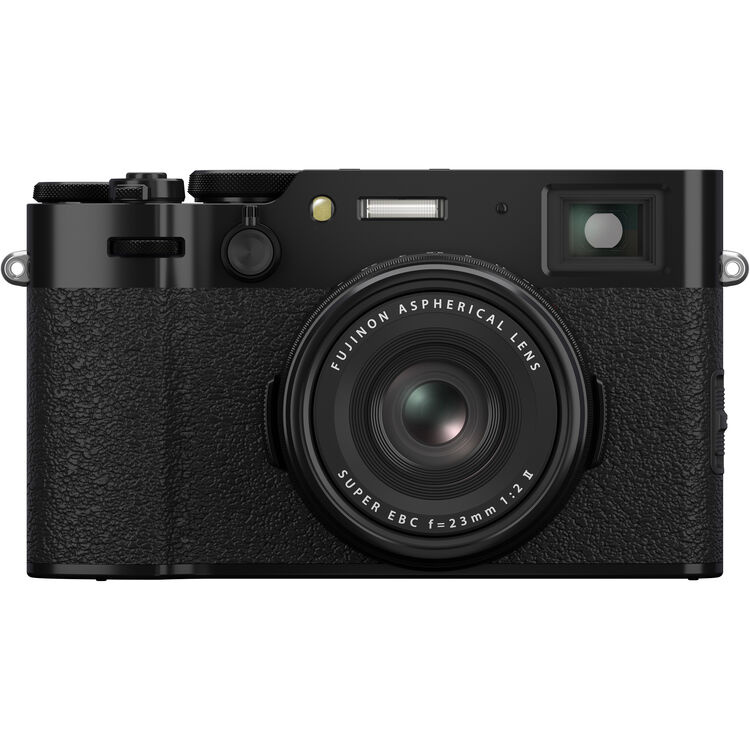 At the low end, there is just about nothing. Manufacturers will not revive the cheap $300 point-and-shoot, and the "TikTok digicam" demand that has kept 2010-era CCD cameras artificially expensive will remain unserved by new inventory. If you want that aesthetic, your only option is the secondary market. The sub-$500 dedicated camera is effectively extinct for new purchases.
4. The "Tariff Tax" Resets the Entry Level
Tariffs will reshape demand more profoundly than any technological innovation this year. Following price hikes in 2025, manufacturers will follow suit as trade pressures persist.
This price reset significantly shrinks the entry-level mirrorless tier. The $600 to $800 new camera, the traditional on-ramp for enthusiasts upgrading from smartphones, largely ceases to exist as a viable category. Budget-conscious buyers face a choice: dive into the used market or conclude that their smartphone is good enough and exit the dedicated camera ecosystem entirely. The practical result is a further contraction of the dedicated camera user base toward a wealthier core. Whether this is sustainable long-term is an open question, but it is the reality manufacturers are creating through pricing decisions made under tariff pressure.
5. The Provenance Ecosystem Starts Closing the Loop
Hardware-level signing (Prediction 1) is only half the equation. 2026 is the year we will see meaningful movement toward building out the rest of the ecosystem, even if a fully closed loop from capture through editing to publication remains a work in progress.
On the software side, expect Lightroom and Capture One to move toward non-destructive credential preservation, even if it is not yet the default behavior. The goal is a workflow where importing a C2PA-signed image logs your edits in a way that maintains the chain of authenticity. Eventually, you will be able to prove not just that an image was captured by a specific camera but that subsequent adjustments were made by a human editor using legitimate tools rather than wholesale AI generation. We are not there yet, but the direction we're headed is obvious. (If you want to get ahead of the curve on professional editing workflows, Fstoppers offers The Complete Capture One Editing Guide, which covers the software in depth.)
On the platform side, the early adopters will start surfacing this information to end viewers. LinkedIn, Instagram, and news aggregators are candidates to experiment with "Captured by Camera" badges for C2PA-signed images. Think of it as the blue checkmark of photography, except instead of verifying the identity of the account, it verifies the provenance of the image itself.
The biggest question mark is whether anyone will care. Call it the Viewer's Dilemma: even if platforms display provenance badges, will the general public pay attention? Or has the flood of synthetic imagery already conditioned people to assume everything might be fake regardless of what metadata says? Public apathy and learned skepticism may be the largest hurdles to C2PA adoption, bigger than any technical challenge. The infrastructure can be built, but its value depends on viewers trusting and acting on the information it provides. For photographers, the competitive advantage of provenance documentation may initially matter more in B2B contexts, where clients and editors care deeply, than in consumer-facing platforms where the badge might be ignored entirely.
6. Third-Party Lenses Continue Breaking the Walled Gardens
The proprietary mount era is showing cracks, but the story is more complicated than a simple "walls come down" narrative. Canon's RF mount will see expanded third-party options through multiple pathways rather than a single dramatic opening.
The first pathway is official licensing, which has been more permissive for APS-C than full frame. Sigma and others have announced RF-mount lenses, but Canon's public stance on full frame RF third-party support has been measured. Any expansion will likely be selective: certain focal lengths, certain categories, certain partners.
The second pathway is the continued relevance of EF-mount workarounds. Some third-party manufacturers emphasize EF-mount releases because the EF-to-RF adapter lets them serve RF shooters without navigating RF licensing. For budget-conscious photographers, an adapted EF lens may remain the practical choice even as native RF options slowly expand.
The gradual influx of more affordable lenses through these pathways will help drive mirrorless adoption among holdout DSLR users. The calculation that kept photographers clinging to their EF-mount bodies starts to shift when alternatives exist. The direction is clear, even if the pace is gradual and the pathways are multiple.
7. Stock Photography Platforms Pivot or Perish
The middle class of stock photography agencies will collapse this year. The generalist model cannot survive when Midjourney and its competitors can generate generic imagery for pennies. Why pay $50 for a handshake photo when you can generate one indistinguishable from stock in seconds?
Survivors will split into two distinct tiers. The first is synthetic: cheap, AI-generated imagery for clients who need visual filler and do not care about authenticity. The second is verified: premium, human-captured imagery with C2PA metadata proving provenance. This tier serves clients for whom authenticity matters, whether for legal reasons, brand positioning, or editorial credibility. The middle ground, generic human-captured imagery at generic prices, has no defensible position.
8. Computational Photography Expands Beyond Early Adopters
OM System has been pioneering computational features in dedicated cameras for years, from Live ND to High Res Shot to their handheld astrophotography modes. But 2026 feels like the year larger manufacturers start taking this direction seriously. Expect Canon and Sony to signal increased interest in integrating capabilities like software-based neutral density simulation and AI noise reduction into their camera systems, even if fully mature implementations take longer to arrive.
This gradual shift blurs the line between shooting and editing in ways that will make some photographers uncomfortable. A handheld long exposure that the camera composites from multiple frames? A clean high-ISO shot that the camera de-noises before writing the file? These capabilities will be presented as features, and for many working photographers, they will be genuinely useful. The philosophical question of what constitutes a "real" photograph becomes murkier, but the practical reality is that cameras helping photographers get the shot in challenging conditions have obvious market appeal. Computational photography is no longer just a smartphone marketing term or an OM System specialty; the major players are starting to recognize it as the direction the industry needs to move.
9. The Used Market Becomes Essential, Not Optional
High new prices (see Prediction 4) will make the secondary market not just attractive but necessary for a huge segment of photographers. What was once a choice, buying used to save money, becomes the default path for anyone not willing or able to pay premium prices for new gear. This shift has profound implications for how photographers think about building and maintaining their kits.
For working professionals, the used market becomes a strategic resource rather than a fallback. The smart money will be on identifying bodies and lenses that hold value well, buying them gently used, and reselling them when needs change. The days of buying new and eating massive depreciation are ending for all but the most flush shooters. For enthusiasts and those entering the hobby, the used market is simply where photography lives now.
Watch for manufacturers to respond by launching or expanding Certified Pre-Owned programs. As new sales slow under tariff pressure, Canon, Nikon, and Sony have strong incentive to capture margin on the second and third sale of the same camera body rather than ceding that revenue entirely to third-party resellers. A manufacturer CPO program offers buyers additional confidence (factory inspection, limited warranty) while letting the manufacturer participate in transactions that currently happen without them. Whether this cannibalizes new sales or simply acknowledges market reality is a calculation each company will make differently.
The psychological shift matters as much as the economic one: buying used is no longer a compromise, it is how serious photographers operate in an era of $2,000 mid-range bodies and tariff-inflated prices.
10. Analog's "Friendly Face" Expands Industrial Capacity
While 35mm film continues to struggle with chemical costs and supply constraints, instant photography has emerged as the industry's golden goose. Fujifilm's massive capital investment in Instax production, announced in late 2025, will bring new production lines online by fall 2026. This capacity increase is not the behavior of a company chasing a fad; it is the behavior of a company that views instant film as a permanent, high-margin product category.
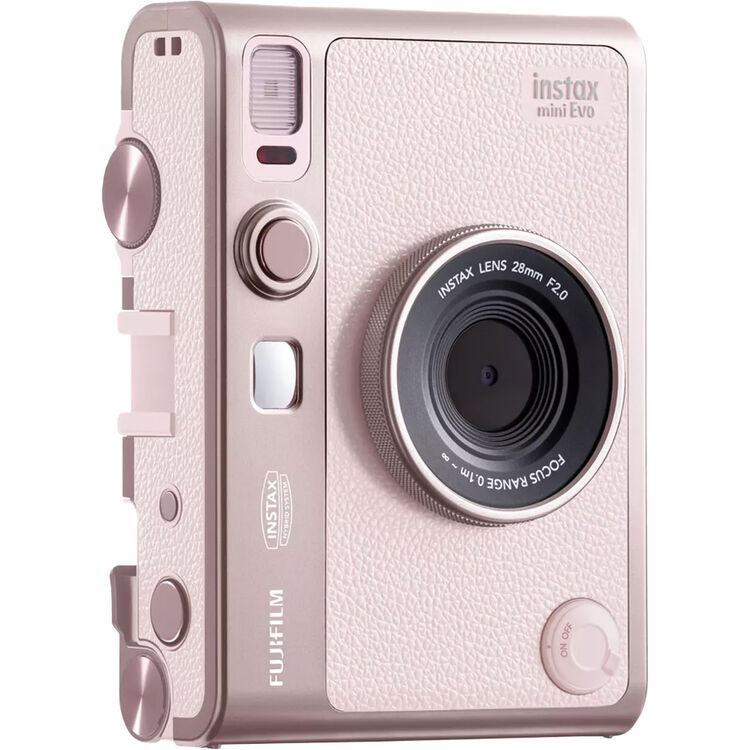
Instant photography serves as the perfect on-ramp for the next generation of analog shooters. The instant feedback loop captures the tangible appeal of film without requiring the patience and expense of 35mm development. For manufacturers looking at a dedicated camera market that is otherwise contracting, instant represents genuine growth potential among younger demographics who might never buy a $2,000 mirrorless body but will absolutely buy a $100 Instax Mini and a lifetime supply of film packs.
11. Video and Hybrid Creators Drive R&D More Than Still Photographers Want to Admit
Here is an uncomfortable truth for those of us who think primarily in terms of stills: a lot of camera development is increasingly justified by video creators, and 2026 will make this harder to ignore. The predictions above are largely stills-forward, but the market is not. Hybrid shooters and dedicated video creators represent growing segments that manufacturers cannot afford to neglect.
Even the computational photography trend (Prediction 8) may arrive first partially as video features rather than stills headline items. Computational stabilization beyond what IBIS can achieve mechanically, rolling-shutter mitigation: these capabilities serve video shooters immediately and may only later migrate to stills capture as secondary benefits. When Canon or Sony announces a body with impressive computational features, read the spec sheet carefully.
This is not a complaint so much as an observation about where the money is. Still photography is a mature market with modest growth prospects. Video and hybrid content creation is where younger creators are entering and where premium pricing faces less resistance. Manufacturers follow the growth, and in 2026, that growth is not coming primarily from people who shoot stills.
Looking Forward
The photography industry is becoming smaller, more expensive and more serious about authenticity, while simultaneously being reshaped by creators whose primary medium is not the still image. The casual shooter is being priced out or redirected to smartphones. The professional is being asked to document their work with unprecedented rigor. The gear market is splitting into premium and used with little in between. And through it all, the question of what makes a photograph "real" is being answered not by philosophers but by cryptographic signatures and contractual requirements.
Whether you find these trends exciting or dispiriting likely depends on where you sit in the ecosystem. For the industry as a whole, 2026 represents a year of clarification, when the forces reshaping photography stop being abstract trends and become concrete realities you encounter every time you buy a camera, sign a contract, or post an image online.







 English (US) ·