.png)

Curious from birth, Fiona is a music writer, researcher, and cultural theorist based in the UK. She studied her Bachelor of Music in London, specializing in audiovisual practices, and progressed to a Master’s in Arts and Culture from the University of Groningen in the Netherlands. Her MA research focused on the societal impact of sound within urban communities and how the narratives of art can contribute to their shaping and commentary.
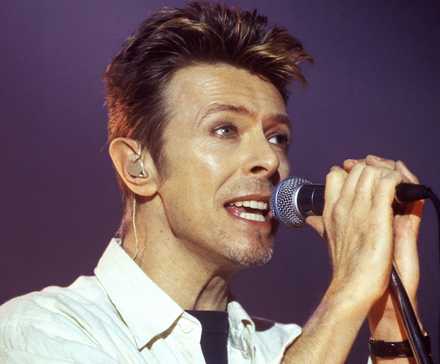
As the world marks the tenth anniversary of his passing, David Bowie’s legacy remains unshakable. The star was a visionary who explored much more than just music as he continuously challenged the boundaries of artistic identity throughout his career, perhaps most notably in the ‘70s. But Bowie’s twenty-eighth and final album released in his lifetime, Blackstar, stands as his ultimate final crusade.
Blackstar’s precise arrangements and full sound served as a true parting gift to the world, bravely transforming his own mortality into art. The fearless, jazz-infused masterpiece was released just two days before his death, which was a poignant conclusion to his personal and musical life. A decade on, Bowie’s genius still looms large in the musical world, confirming that he will always be the Starman.
The Genius of David Bowie and his Personas
Bowie was a true creative force throughout his career, with multiple reinventions. He challenged existing boundaries of music and its possibilities, defying notions of genre and tradition to carve a fearless blueprint for popular Western music. He was, of course, a talented musician, but was a key figure in expanding musical artistry into a wider cultural phenomenon.
Bowie rose to mainstream fame in the 1970s, when he released a staggering 12 studio albums, including Ziggy Stardust, Station to Station, Young Americans, and the Berlin Trilogy. Within this decade alone, Bowie reinvented himself multiple times by creating personas that were developed and curated as part of the records. Think of the Thin White Duke and Station to Station, and perhaps rather obviously, Ziggy Stardust. These figures were more than dress-up characters and matching images for Bowie’s records, but a way of extending the existence of his music from a simply sonic existence to a transmedial, holistic piece of conceptual fiction. The worlds Bowie created thus formed an entire narrative world, soundtracked by his own music. In that sense, Bowie was a truly unique visionary in realizing the potential that popular music had in the complete mirroring of cultural realities.
Related
These personas of David Bowie were undeniable points of interest, but also just fun. This combination of fascination, fantasy, and downright fun was a genius blend that helped audiences cope with the serious aspect of the personas. The nitty-gritty of their purpose was to critique and comment on social and political issues of the time. This was highlighted in an exaggerated sense of alienation and apocalypse with Ziggy Stardust, arguably a representation of the hardships of minorities and the glimmer of hope a new, more accepting decade could bring. More controversially, the “mad aristocrat,” perhaps fascistic tendencies of the Thin White Duke, reflected the hollowness, amorality, and lack of emotional connection that could occur as a result of overindulgence and lack of contact with a grounded, real world.
Beyond the 1970s, Bowie never stopped playing with personas and toying with the imaginations and boundaries of his audiences. The ‘80s saw the rise of a dancing David, with upbeat, catchy, replenished energy after his journey back to health after the heaviness of the ‘70s. Then, the ‘90s slowly but surely saw the development of electronic sounds, eventually resulting in the obscenely underrated breakbeat and drum & bass-influenced Earthling, released in 1997. Don’t panic, traditionalists, he still used guitars for the record. In his continuous exploration, Bowie just kept getting stronger, even if this work was less recognized. He no longer needed to prove his worth, he was a living legend.
The Rise Of the Underrated 'Blackstar'
David Bowie’s last record, Blackstar, was released just two days before his passing, hitting stores and streaming services on January 8th. This notably coincided with the star’s 69th birthday, which gave an added element of celebration and personal significance. Blackstar not only feels like a full circle moment for the life of Bowie, but a symbol of his greatest musical abilities crystallized into one final masterpiece.
Blackstar is a truly fearless record that is a synthesis of all of Bowie’s explorations of genre, instrumentation, concept, and mood over his career. While Bowie wasn’t exactly certain Blackstar would be his last album, the imagery of mortality and illness is striking in the accompanying music videos for the album, particularly for Lazarus. Speaking about the record, long-time Bowie collaborator Tony Visconti described Blackstar as Bowie’s “parting gift” to the world.

Related
Visconti describes the recording of Blackstar as a seamless, quick process, guided by masterful musicianship and cool, reassured confidence. It was a process of pure focus that used jazz musicians, and the result is a genuine paragon. While the music itself feels maximalist, there is no part of it that is excessive, and the entire album is an act of necessity—the golden ratio of artistic input.
At the time of release, Blackstar received great reviews. Writer Ryan Dombal wrote in Pitchfork that “Bowie will live on long after the man has died. For now, though, he’s making the most of his latest reawakening, adding to the myth while the myth is his to hold.” Looking back, this particular comment is eerily poignant, but perfectly summarizes the increasing value of Bowie’s genius as the world began to realize the possibility of losing him. Ten years after his passing, it’s a special time to appreciate Bowie’s catalog over the years, and Blackstar is a truly wondrous conclusion.







 English (US) ·