.png)
The 2000s were quite a revolutionary time for horror. This decade took the grounded realism of the 90s to a more cynical and aggressive extreme. It gave rise to the “torture porn” wave through franchises like Saw and Hostel. At the same time, studios went all in on remaking classic horror like The Texas Chainsaw Massacre and The Hills Have Eyes. There was also a surge of English-language remakes of foreign hits like The Ring and The Grudge, which brought J-horror aesthetics into the mainstream.
But the decade often gets brushed off as just that. The torture porn phase and the loud jump scare era that came before so-called elevated horror took over in the late 2010s. That reputation sells the 2000s short. This list digs deeper than the remakes and the shock-value movies; it celebrates the true masterpieces that came out during this time. Because the 2000s were doing far more interesting and daring things with horror than they usually get credit for.
10 ‘The Orphanage’ (2007)
 Image via Warner Bros. Pictures
Produced by Guillermo del Toro and directed by J.A. Bayona, The Orphanage is a Spanish-language horror film centered around a mother and her young son, who insists he has five invisible friends. After a strange encounter with one of them, the boy suddenly disappears. In the aftermath, his mother is left drowning in grief, and she begins hearing spirits that may or may not be trying to help her find the boy.
What makes The Orphanage so special is how it uses horror to tell a tragic story about maternal grief rather than just scare the audience. In many ways, it did for the 2000s what The Babadook later did for the 2010s. The film was met with overwhelming praise. It received a 10-minute standing ovation at the Cannes Film Festival and won seven Goya Awards (Spain’s Oscars), including Best New Director and Best Original Screenplay. Its success also proved that non-English horror films could break through internationally and connect with mainstream audiences.
9 ‘The Others’ (2001)
 Image via Dimension Films
The Others tells the story of a devout mother and her two children, who suffer from a rare photosensitivity condition that makes sunlight deadly to them. Because of this, their mansion is kept in permanent darkness, with thick curtains drawn at all times and strict rules about doors never being opened until the previous one is locked. After the previous staff mysteriously disappeared, the mother hires three new servants. And soon after their arrival, strange and unsettling things begin happening inside the house.
This is a slow-burn movie that steadily chips away at the protagonist’s mental state until paranoia and fear completely take over. And what secures its place on this list is its legendary ending. The third-act twist is considered one of the greatest in horror history, right alongside The Sixth Sense. It completely reframed haunted house movies by forcing viewers to question who the real intruders are in these stories. The film’s impact was so lasting that it was added to the Criterion Collection in 2023, which solidified its status as one of the most important films of its era.
8 ‘The Descent’ (2005)
 Image via Lionsgate Films
 The Descent follows a group of friends who head out on a caving expedition, but their adventure quickly turns into a nightmare when they become trapped underground with no way out. For the first half, the film plays like a 127 Hours-style survival thriller. The tension comes from collapsing tunnels and the fear of being buried alive with no help coming from the outside world.
Then the group realizes they may not be alone in the caves, and it turns into a full-on horror movie. The creatures in this movie are pure nightmare fuel. What makes it even worse is the visual aesthetic. Everything looks dark, murky, and disgusting. There are even some night vision scenes where it is hard to fully tell what you are looking at, but when it finally clicks, it is genuinely horrifying. The Descent has a way of breaking through horror fatigue. Even if you think you are completely desensitized and nothing scares you anymore, this is the kind of movie that definitely will get under your skin and make you seriously consider turning it off.
7 ‘Frailty’ (2001)

Image via Lions Gate Films
Frailty tells the story of a single father who suddenly receives a revelation from God. He believes God has chosen him to kill demons secretly living on Earth in human form, and he pulls his two young sons into this mission. The younger boy idolizes his father and fully buys into the cause, while the older son is sceptic and convinced his dad has completely lost his mind.
What makes it so intriguing is the fact that the father isn’t portrayed as abusive or unstable before the visions. He is an ordinary, hardworking man who believes he has been given a divine task. And that’s the chilling biblical question the movie raises. What would you do if God told you to kill someone? Where does faith end and madness begin? You are never sure if the father is carrying out God’s will or simply murdering innocent people. That uncertainty builds all the way to a final twist that is so effective it makes you want to immediately rewatch the movie with a completely different perspective.
6 ‘The Mist’ (2007)
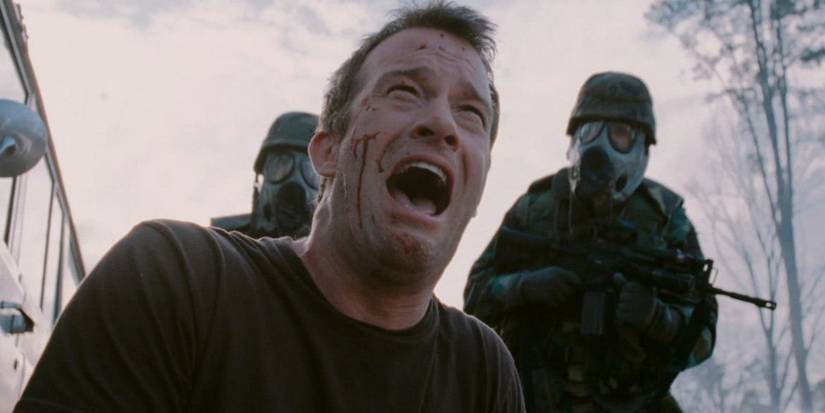 Image via Dimension Films
Based on the Stephen King novella of the same name, The Mist follows a group of people trapped inside a supermarket after their town becomes engulfed in a mysterious fog. And they soon realize that hiding in the mist are monsters that attack and kill anyone who dares step outside. On the surface, it sounds like a creature feature, but that is not where the real horror lies. The film brilliantly shows how quickly reason collapses and how easily religious fanaticism can take over when survival is on the line.
And then there is the nihilistic ending. Few films have ever left audiences feeling so hollow. If The Shawshank Redemption was about the power of hope, then The Mist is about the absolute absence of it. When King read the script for the movie, he wished he had come up with this ending instead. And he also emphasized that once in a generation, a movie should come along that truly angers its audience. The Mist did exactly that.
5 ‘American Psycho’ (2000)
 Image via Lionsgate
Although the movie has had a revival in recent years, with Patrick Bateman (Christian Bale) being misinterpreted as some kind of sigma male icon for Wall Street bros, American Psycho was actually trying to do the complete opposite. The character is meant to be a razor-sharp satire of toxic masculinity and shallow 1980s materialism. Bale delivers a phenomenal performance playing an awkward, almost anti-charismatic void of a man who tries to project confidence but constantly feels hollow and artificial.
Unlike most slasher movies, you don’t spend the film wondering who the killer is, and there is no sympathetic victim to latch onto. The entire film is filtered through Bateman’s fractured mind. By committing fully to his delusional perspective, the film challenges the audience to separate reality from fantasy. That approach was daring at the time and went on to influence a wave of modern psychological thrillers that blur those same lines.
4 ‘28 Days Later’ (2002)
 Image via Searchlight Pictures
Before 28 Days Later, zombies were almost always depicted as slow, stumbling corpses you could usually outrun. This film completely revolutionized the subgenre by introducing zombies infected by the Rage virus, who sprint at predatory speed. That one change made them infinitely more terrifying, and it was so impactful that it went on to influence nearly every major zombie project since, most notable examples being World War Z and The Last of Us.
The film also nailed its look. Shooting on consumer-grade digital camcorders stripped away the Hollywood gloss and gave everything a gritty, dirty, almost anarchic feel. 28 Days Later proved you did not need expensive gear to start making movies, and it helped push horror toward more inventive and experimental filmmaking.
3 ‘Paranormal Activity’ (2007)
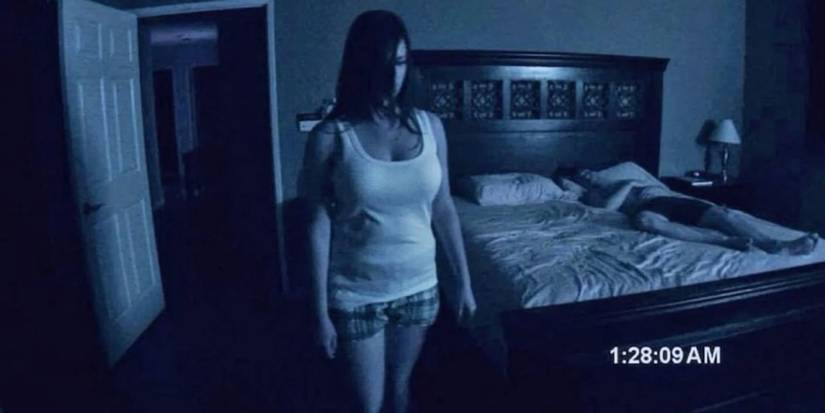 Image via Blumhouse
Paranormal Activity took the found footage style popularized by The Blair Witch Project and brought it to a suburban home. And it specifically targeted the universal fear of what happens while you are at your most vulnerable: asleep in your own bed. The film relied on silence and the anticipation of mundane events, like a door creaking, keys falling, or footprints appearing in powder, to build horror. But all of it felt far more sinister and demonic than any CGI monster. It felt real, like the kind of ghost stories you hear at bonfires and half believe even though you pretend you do not.
In movies like these, there's usually an exorcism and the spirit is banished from the body. That’s not what happens here. All these mundane events build up to an ending where the film violently shifts from subtle scares to overt horror. The husband is killed, and the possessed wife simply walks out, leaving the idea that she is still out there somewhere. The film was a breakout hit and went on to earn $193 million worldwide on a tiny $15,000 budget. It also launched a whole horror franchise and kicked off a decade-long wave of found footage horror like V/H/S, Hell House LLC, Grave Encounters, and As Above, So Below.
2 ‘Final Destination’ (2000)
 Image via New Line Cinema
Final Destination introduced the idea of a slasher movie without an actual slasher. It starts with a teenager having a sudden premonition that the plane he is on is about to explode. He panics and convinces a few people to get off with him. Moments later, they watch the plane blow up exactly like he predicted. They survive the crash, but it quickly becomes clear that Death is not done with them. One by one, the survivors start dying in freak accidents, all part of Death’s design.
The kills play out like Rube Goldberg machines of absolute carnage. The camera lingers on completely ordinary objects. A clothesline over a bathtub. A leaking computer monitor. A gas stove left on for just a second too long. And the tension comes from trying to guess what will go wrong and how badly. The idea that the killer could be the fabric of life itself tapped into a very different kind of fear, something far more existential than anything most horror movies had done before.
1 ‘Lake Mungo’ (2008)

Image via Arclight Films
Lake Mungo tells the story of a family trip that ends in tragedy when their 16-year-old daughter goes missing during a swim. Her body is found days later, and her death is ruled an accidental drowning. After the funeral, however, strange things begin happening in the family’s home, and her brother sets up cameras to capture what they believe might be her ghost.
The film arrived at the peak of the found footage craze, but it took a very different approach. It uses a faux documentary style that feels so convincing that many viewers originally believed it was real. The film sets up a pretty typical horror story, then subverts those expectations with a plot twist that turns the movie into a far more tragic psychological drama. Then, in its final moments, Lake Mungo delivers just one single jump scare in the entire movie, and it’s often cited as one of the greatest in cinema history. It feels completely earned because it’s built on every twist and turn that came before, and it leaves you replaying the movie in your head, rethinking everything you just saw.

Lake Mungo
Release Date January 29, 2010
Director Joel Anderson
Writers Joel Anderson





 English (US) ·